








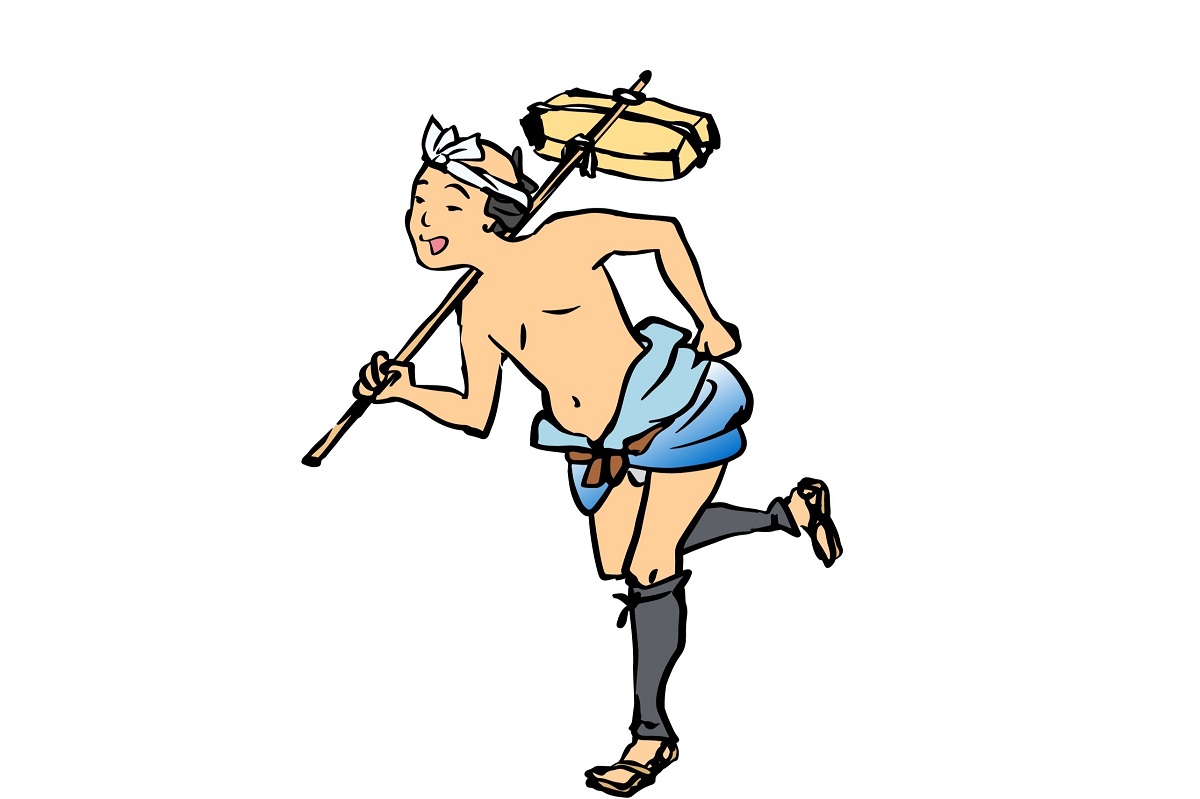
When you hear the word “Hikyaku”, you might picture a half-naked runner sprinting through old Japanese streets in a historical drama.
But in reality, Hikyaku were far more than just fast runners.
Hikyaku were a courier system—and the people who worked within it—that developed mainly during Japan’s Edo period (1603–1868). Using nothing but human strength, they transported letters, official documents, and goods across long distances.
In today’s terms, they were a combination of postal workers, delivery drivers, and high-speed communication networks, all rolled into one.
Why Were Hikyaku So Important in the Edo Period?
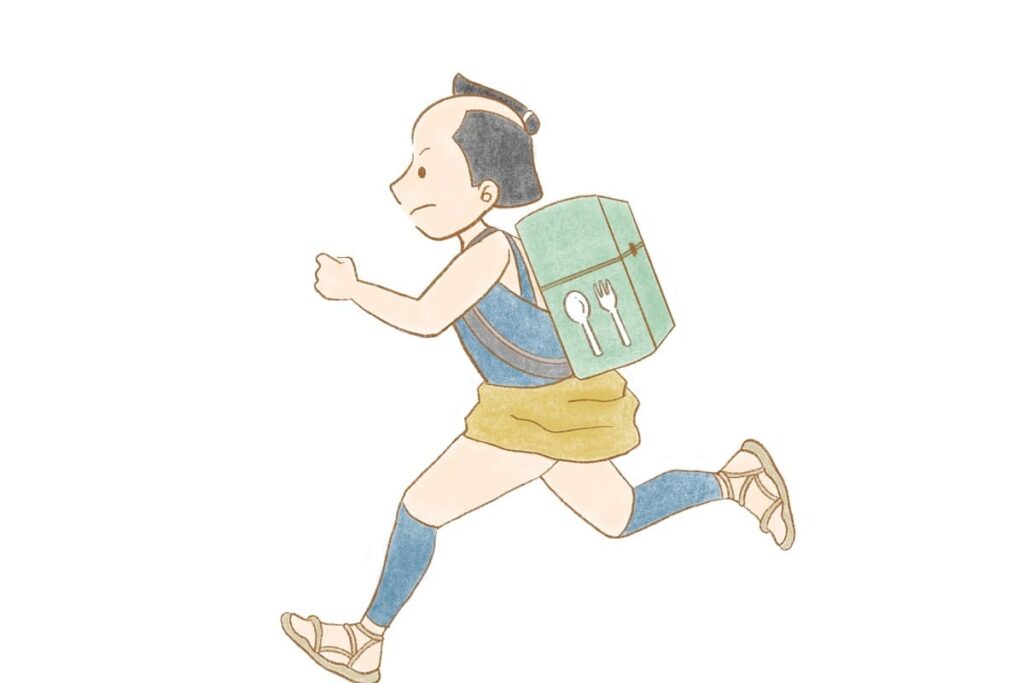
During the Edo period, Japan experienced political stability and economic growth. This led to increased movement of people, goods, and information.
However, there were:
- No trains
- No cars
- No telephones
Fast and reliable communication was essential—and that responsibility fell on the shoulders of the Hikyaku.
They supported:
- Government administration
- Daimyo (feudal lord) governance
- Commercial activity
- Everyday communication between ordinary people
In many ways, Hikyaku were the lifeline of Edo-period society.

I didn’t know there were different types of hikyaku.
Types of Hikyaku and Their Roles
Not all Hikyaku were the same. Their duties differed depending on who they served.
Tsugi Hikyaku (Relay Couriers)

Tsugi Hikyaku were official couriers of the Tokugawa shogunate.
Their main task was to transport highly important government documents. To maximize speed, they used a relay system, changing runners or horses at each post town along the route.

Being a tsugi hikyaku sounds like a huge responsibility!
Thanks to this system, there are records showing that messages could travel:
From Edo (Tokyo) to Kyoto in as little as three days
Considering the distance and the era, this speed was astonishing.

Traveling from Tokyo to Kyoto in just three days is amazing. I couldn’t do that even on a bicycle.
Daimyo Hikyaku (Feudal Lord Couriers)
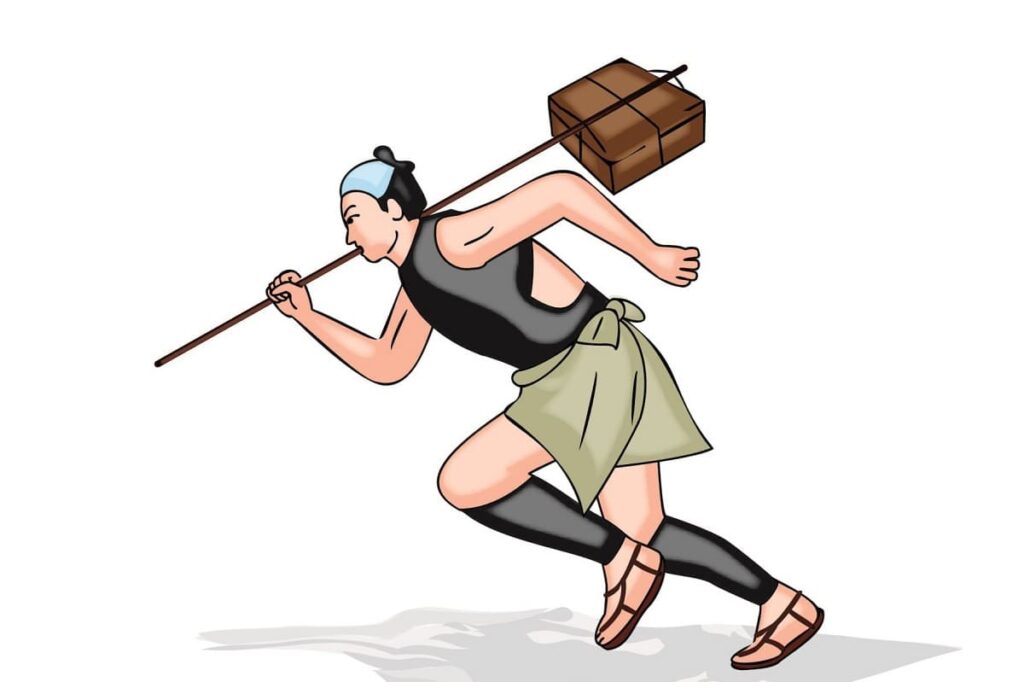
Daimyo Hikyaku were employed by individual feudal domains.
They carried messages between a daimyo’s home territory and Edo, where many lords were required to reside due to the sankin-kotai (alternate attendance) system.
For a daimyo, fast communication with his domain was critical, making these Hikyaku highly trusted individuals.
Machi Hikyaku (Town Couriers)

Machi Hikyaku served the general public and merchants.
As commerce grew, these couriers became increasingly important. Eventually, they were organized into businesses known as Hikyaku wholesalers, allowing ordinary people to send letters and packages.
This system is often considered the origin of Japan’s modern delivery services.
Hikyaku Clothing: Designed for Speed
The typical Hikyaku outfit seen in movies and TV shows was not just for dramatic effect—it was extremely practical.
Upper Body
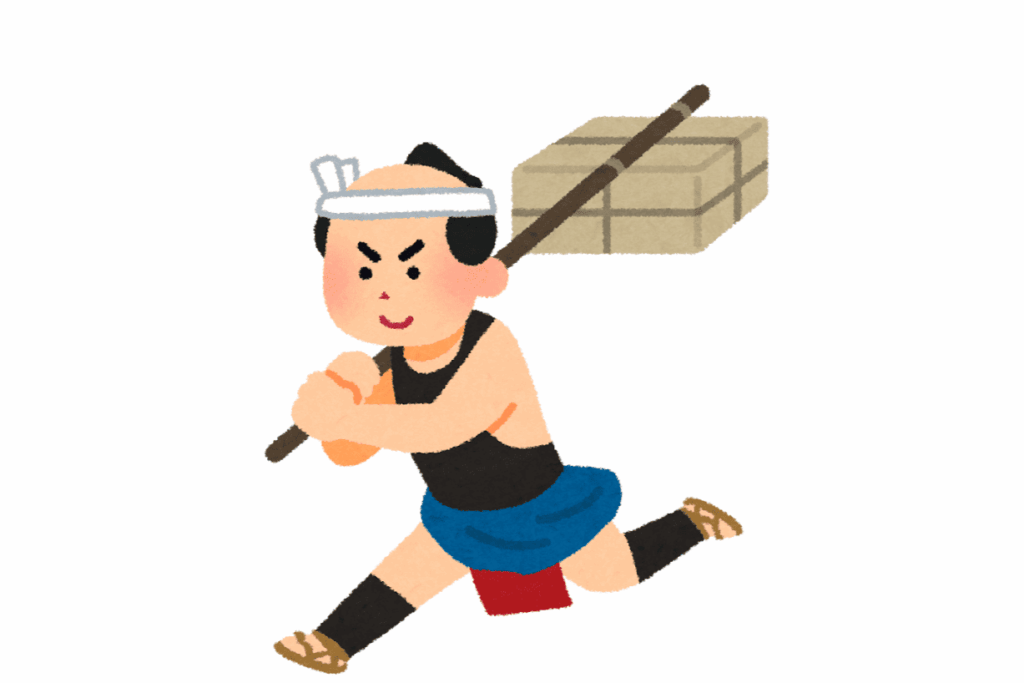

- Haramaki (belly wrap)
Originally worn for warmth, many Hikyaku wore only a haramaki on their upper body, similar to a tank top. - Kosode (short kimono)
Short and easy to move in. In summer, sleeves were sometimes cut off entirely. - Hachimaki (headband)
Used to absorb sweat and maintain focus.
Lower Body

- Kimono hems were rolled up for easier movement
- Some outfits were so light that a fundoshi (loincloth) could be seen

If you are interested in Fundoshi,
check the article below as well!

For long journeys, Hikyaku wore kyahan (leg wraps) to protect their lower legs.
Some also wore a koshimino (waist apron) for additional coverage.
Footwear
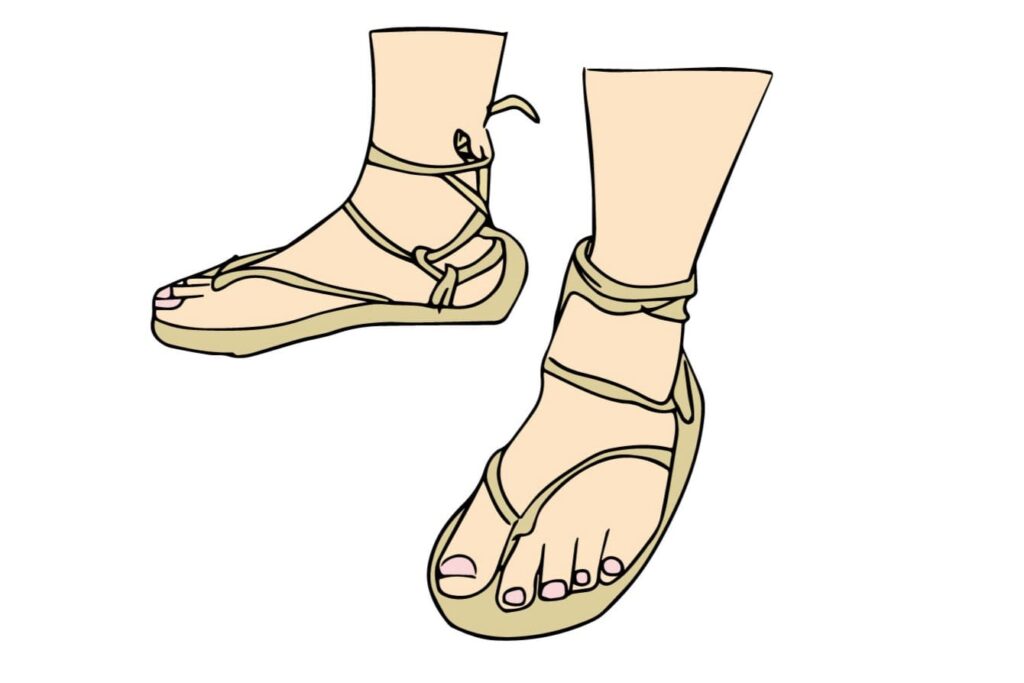
- Waraji (straw sandals)
Waraji wore out quickly, so runners carried or replaced them frequently along the route.
Equipment
Some records mention that Hikyaku:
- Carried letters attached to the end of a short stick
- Wore small bells to alert people of their approach
Official couriers, especially Tsugi Hikyaku, typically dressed in this lightweight style.
The Secret of Hikyaku Speed: Nanba Running
One of the reasons Hikyaku could travel such long distances was their unique running technique.
What Is Nanba Running?
Nanba running—also called Hikyaku running—is a traditional Japanese running style.
In modern running, the body twists as opposite arms and legs move forward. This twisting creates forward momentum but also causes resistance.
Nanba running minimizes this twisting.
Nanba running is the style where you move your right hand and right foot together, right? I kind of want to try running a marathon using that technique.
How Nanba Running Works
- The shoulders do not swing widely
- The same side of the body moves in coordination
- Arms move more vertically from the elbow rather than swinging forward and back
By reducing body rotation, energy is used more efficiently.
Nanba running has advantages such as making very little footstep noise and allowing you to walk without disturbing your kimono.
Incredible Endurance
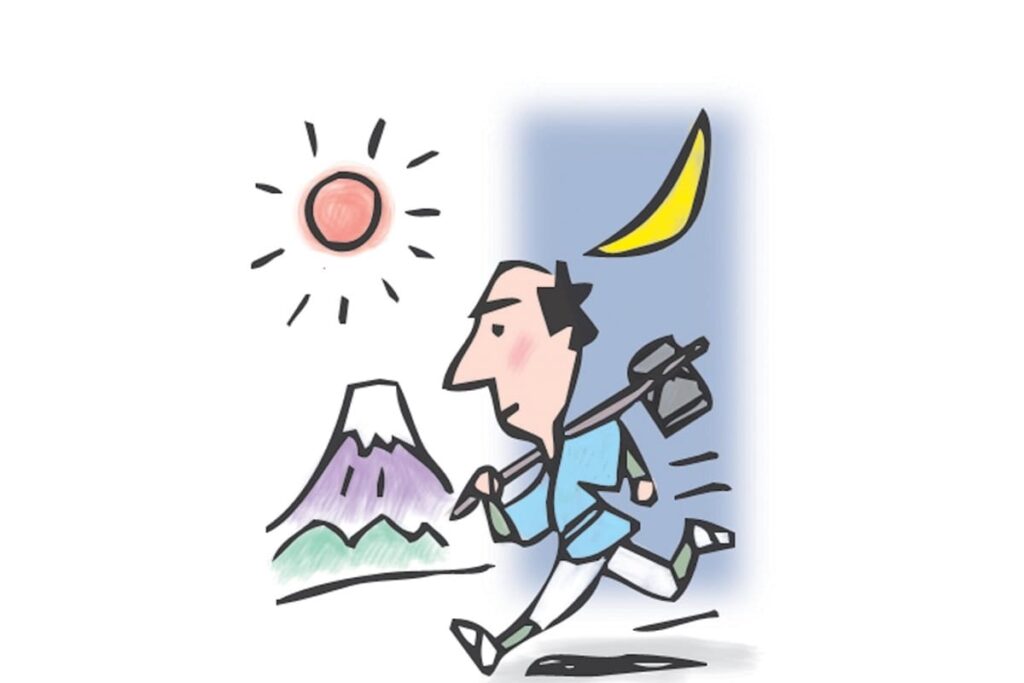
Thanks to this technique, Hikyaku were said to be able to run:
- 100 kilometers (62 miles) per day, or even more
This is one of the reasons why Hikyaku—and even ninja—were believed to possess almost superhuman endurance.

It’s hard to believe they could run 100 kilometers in a single day. It makes me want to learn Nanba running even more.
Hikyaku: The Backbone of Edo-Period Japan
Hikyaku supported:
- Government communication
- Feudal administration
- Commercial distribution
- Everyday correspondence
They formed a highly efficient, human-powered logistics network long before modern technology existed.
Conclusion: More Than Runners—Masters of Efficiency
Hikyaku were not simply fast runners.
They represented a sophisticated system built on:
- Organization
- Smart clothing design
- Efficient movement techniques
Together, these elements created one of the most impressive human-powered delivery systems in history.
The next time you see a Hikyaku in a historical drama, remember:
That runner may have been capable of traveling over 100 kilometers in a single day.
The Hikyaku were the unsung heroes who kept Edo-period Japan moving—and their legacy still runs deep today.

If you are interested in Japanese culture, and you love gaming, you may love these games! Let’s play!

Yes! Let’s play!

Comments