









Japan’s New Year season has a special atmosphere—streets brighten up, homes become festive, and tradition takes center stage. One of the biggest reasons for this shift is the presence of New Year decorations, which have been cherished in Japan for centuries.
From shimenawa and kadomatsu to kagami mochi and hagoita, each decoration has a deep meaning rooted in Japanese culture. By learning the significance behind them, you can enjoy Japan’s New Year traditions on a whole new level.

In this article, we’ll introduce some of the most iconic New Year decorations in Japan, explaining why they are displayed, how they are used, and when to put them up.
- What Are Japanese New Year Decorations?
- Why Do Japanese People Decorate for the New Year?
- Shimenawa – A Sacred Rope That Protects the Home
- Kadomatsu – A Symbolic Welcome for the New Year Deity
- Kagami Mochi – The Most Iconic New Year Decoration in Japan
- Shōgatsu Flowers – Elegant Floral Arrangements for the New Year
- Mochibana – A Traditional New Year Decoration Resembling Blossoming Flowers
- Hagoita – A Traditional and Decorative New Year Good-Luck Charm
- Can You Buy Japanese New Year Decorations Online?
- Conclusion – New Year Decorations Bring Good Fortune and Tradition to Life
What Are Japanese New Year Decorations?
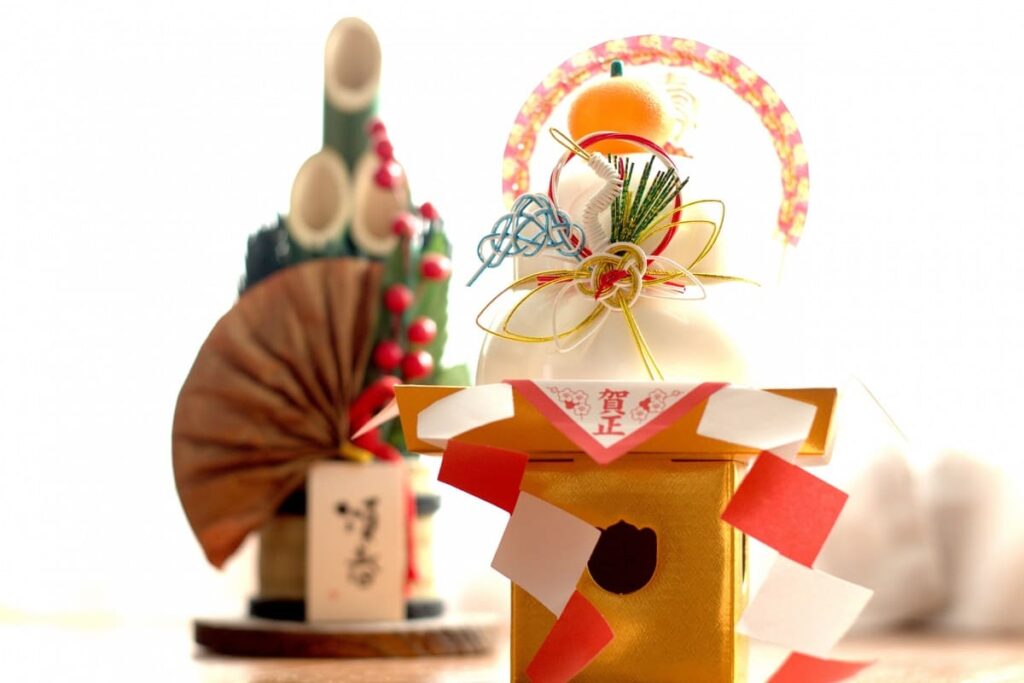
Japanese New Year decorations are traditional items displayed at homes and entrances to celebrate the New Year and welcome Toshigami, the deity believed to bring good fortune and blessings. These decorations are deeply rooted in Shinto beliefs and symbolize purification, protection, and hopes for a prosperous year ahead.
Common Japanese New Year decorations include shimenawa, kadomatsu, and kagami mochi, each with its own unique meaning and role. Rather than simple ornaments, these items serve as spiritual symbols that connect daily life with Japan’s long-standing cultural and religious traditions.
Why Do Japanese People Decorate for the New Year?
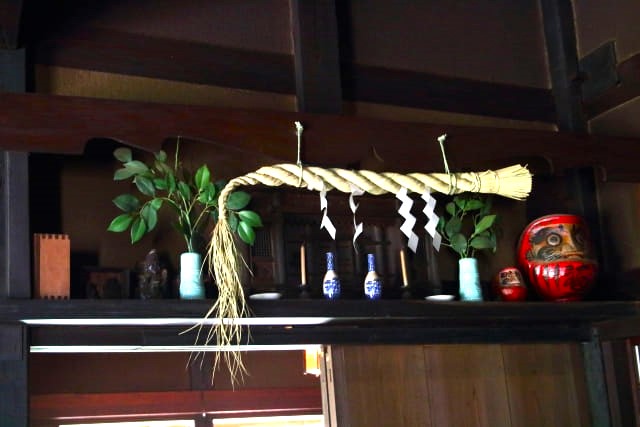
Japanese people decorate for the New Year to purify their living spaces and invite positive energy for the year ahead. In Japanese culture, the New Year is not simply a change of date but a spiritual reset, marking a fresh beginning for both the home and the mind.
Traditionally, New Year decorations are believed to welcome Toshigami, who brings health, happiness, and a good harvest. By displaying these decorations, families show respect for the gods, express gratitude for the past year, and prepare themselves to receive good fortune in the coming one.
Shimenawa – A Sacred Rope That Protects the Home
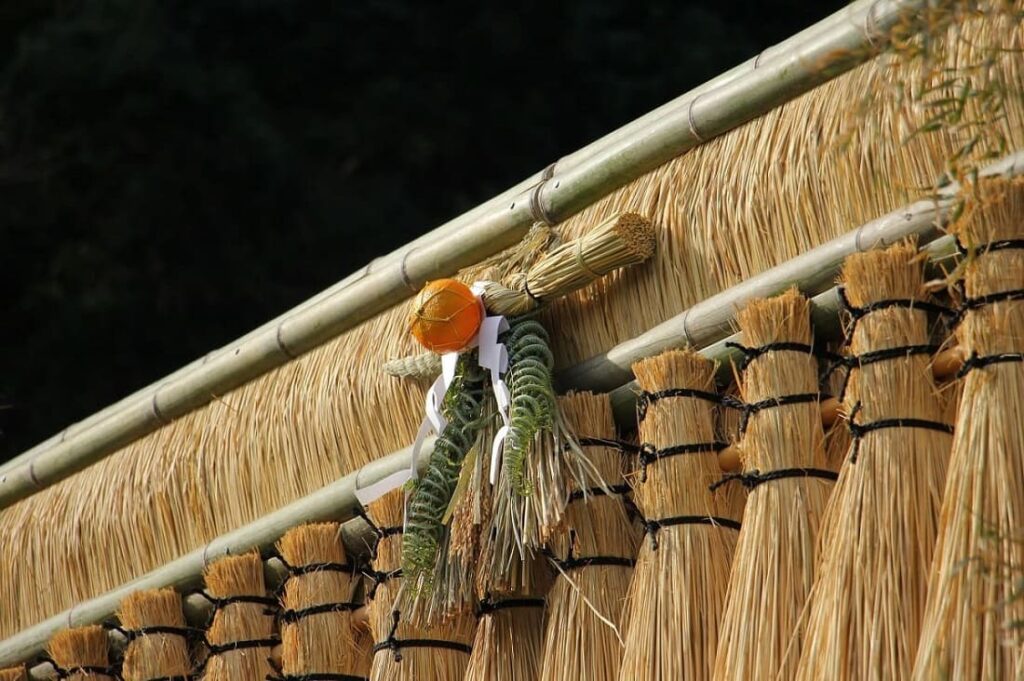
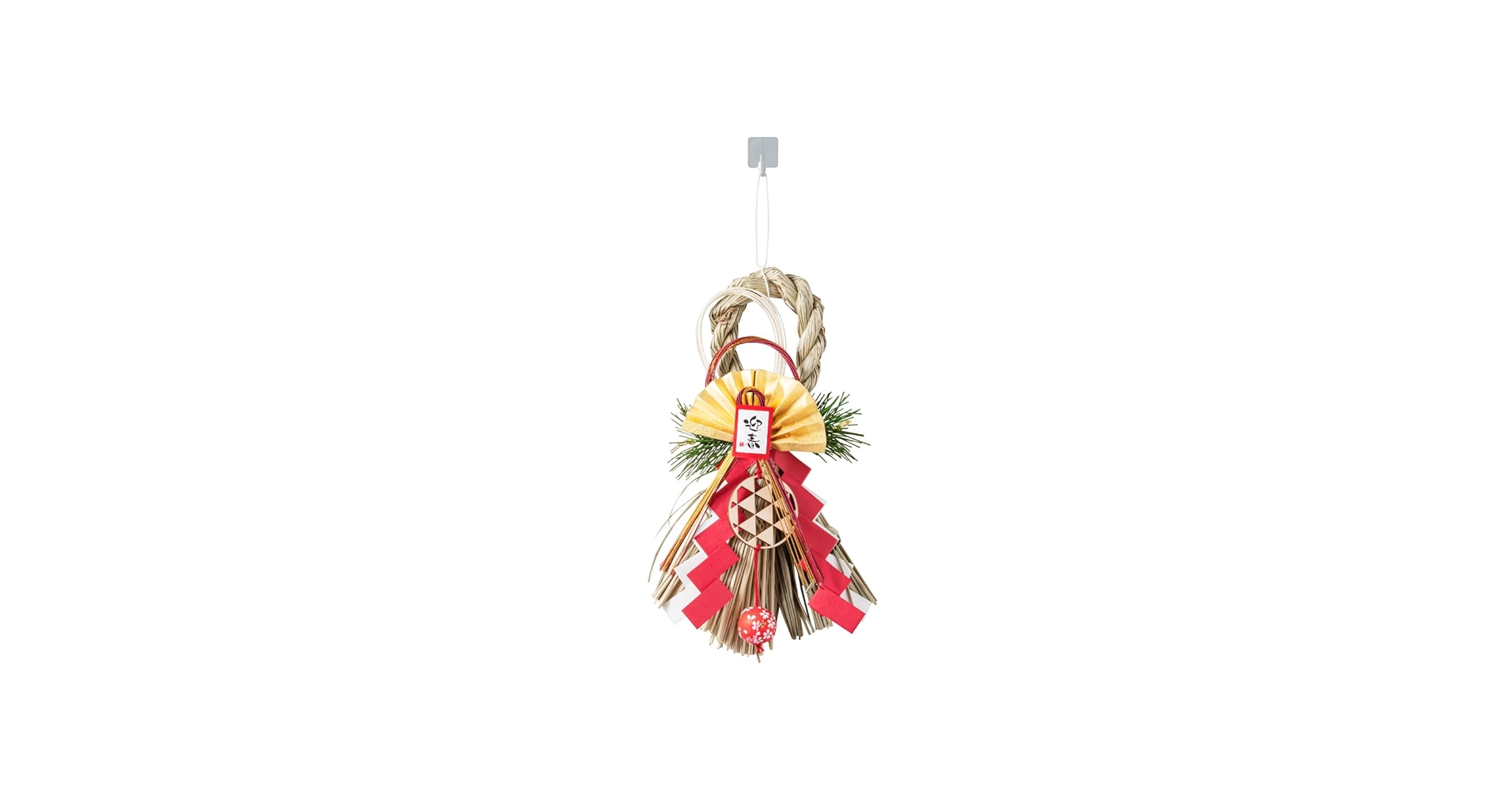
One of the most recognizable New Year decorations in Japan is the shimenawa, a sacred rice-straw rope usually hung on doors or entryways.
● Meaning of the shimenawa
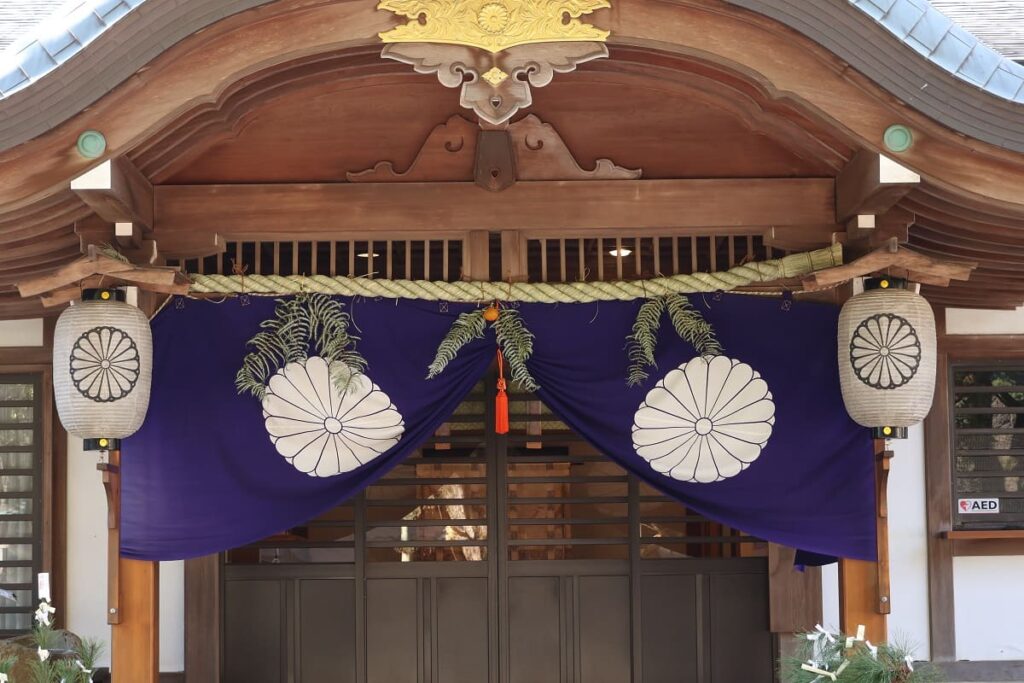
In Japanese tradition, a shimenawa marks a sacred, purified space. It keeps away evil spirits and shows that the area is ready to welcome the Toshigami, the deity of the New Year.
By placing it at the entrance, families express a wish to invite good fortune and protection into their homes.
● Various styles
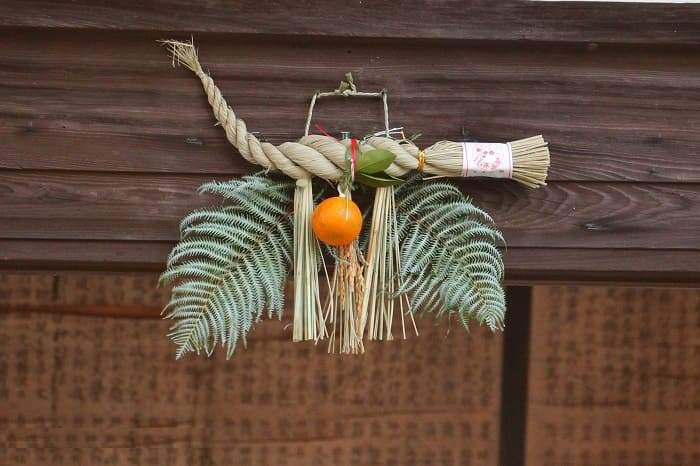
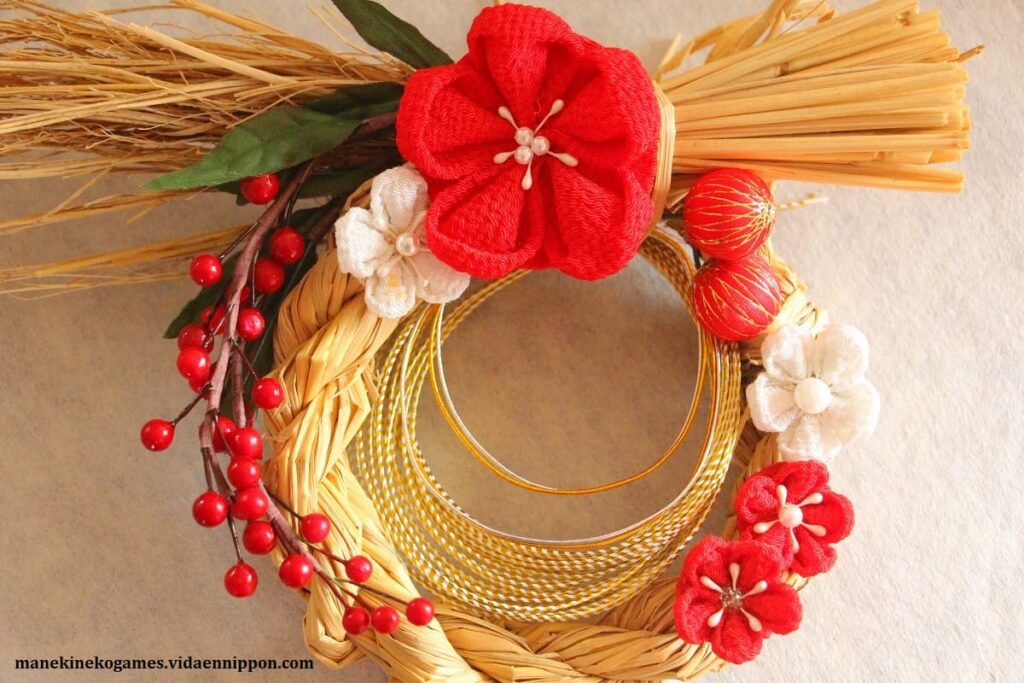
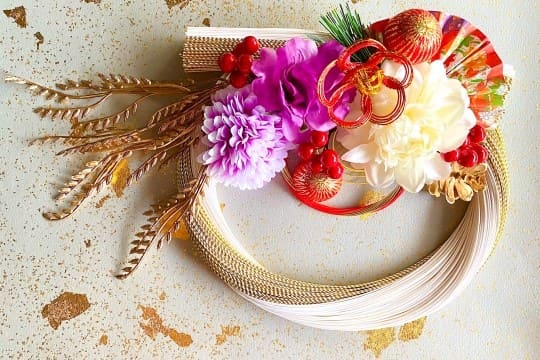
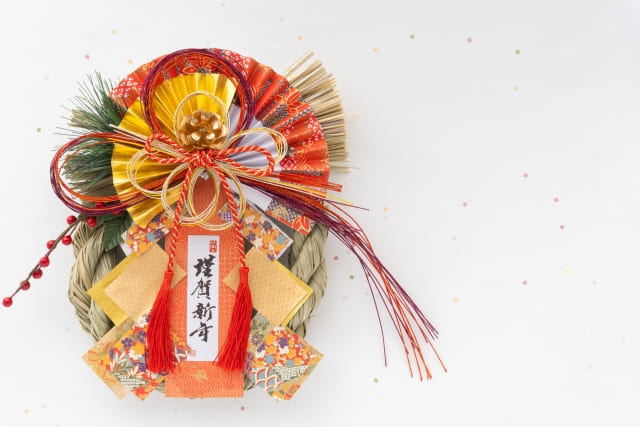
Today, shimenawa designs range from traditional straw ropes to modern, stylish versions featuring:
- Water cords (mizuhiki)
- Dried flowers
- Compact car-sized shimenawa
You can choose based on the atmosphere you want for your home.

Shimenawa start appearing in supermarkets, department stores, and home-improvement stores around late November. There are so many styles and designs these days that it’s hard to choose just one!
● When to display
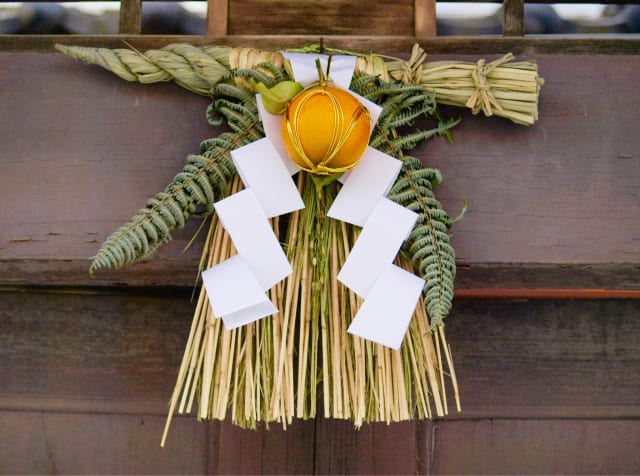
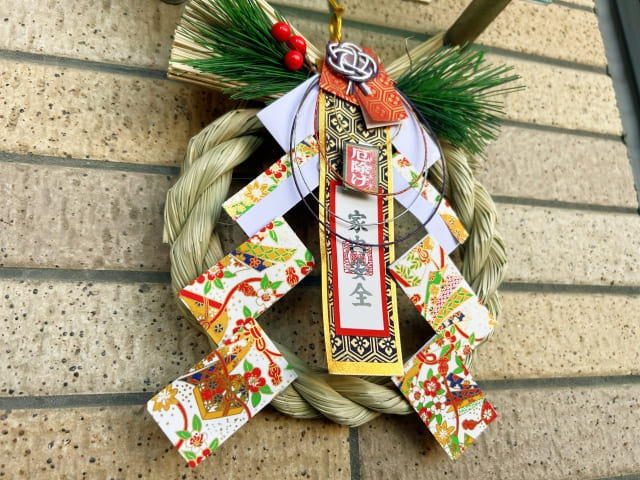
Traditionally displayed from December 26–28.
December 29 is avoided due to the superstition of “double misfortune,” and December 31 is considered too last-minute (“one-night decoration”).
Shimenawa are kept until January 7 or 15, depending on the region.

In most of eastern Japan, it ends on January 7, while in western Japan it’s often observed until January 15, which is known as Koshōgatsu (Little New Year).
For more detail about Shimenawa, please check the article below.
Kadomatsu – A Symbolic Welcome for the New Year Deity
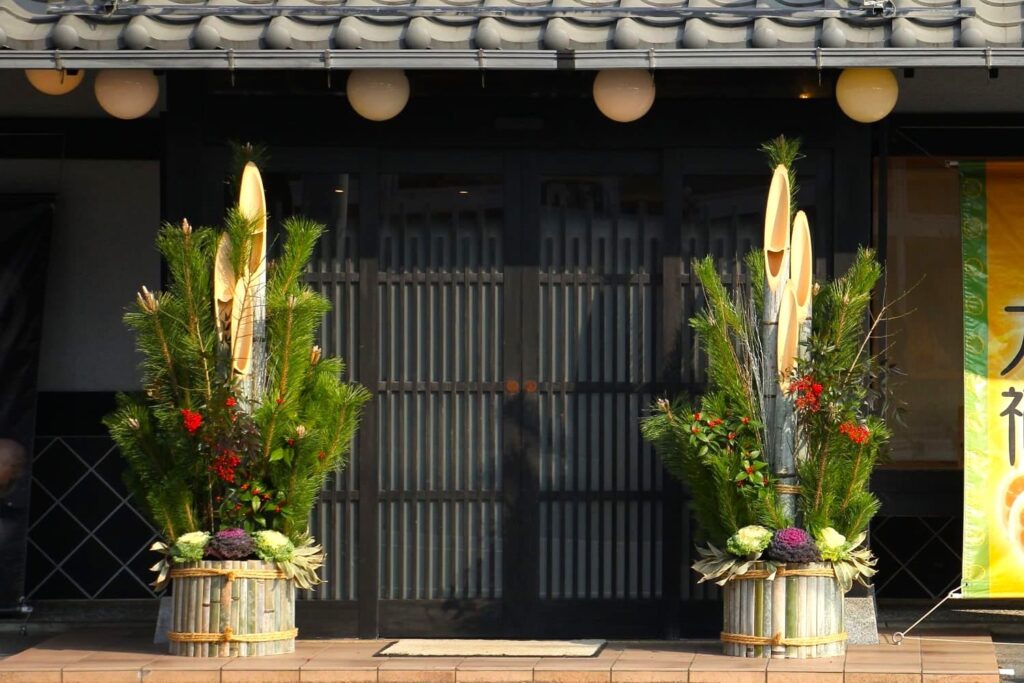
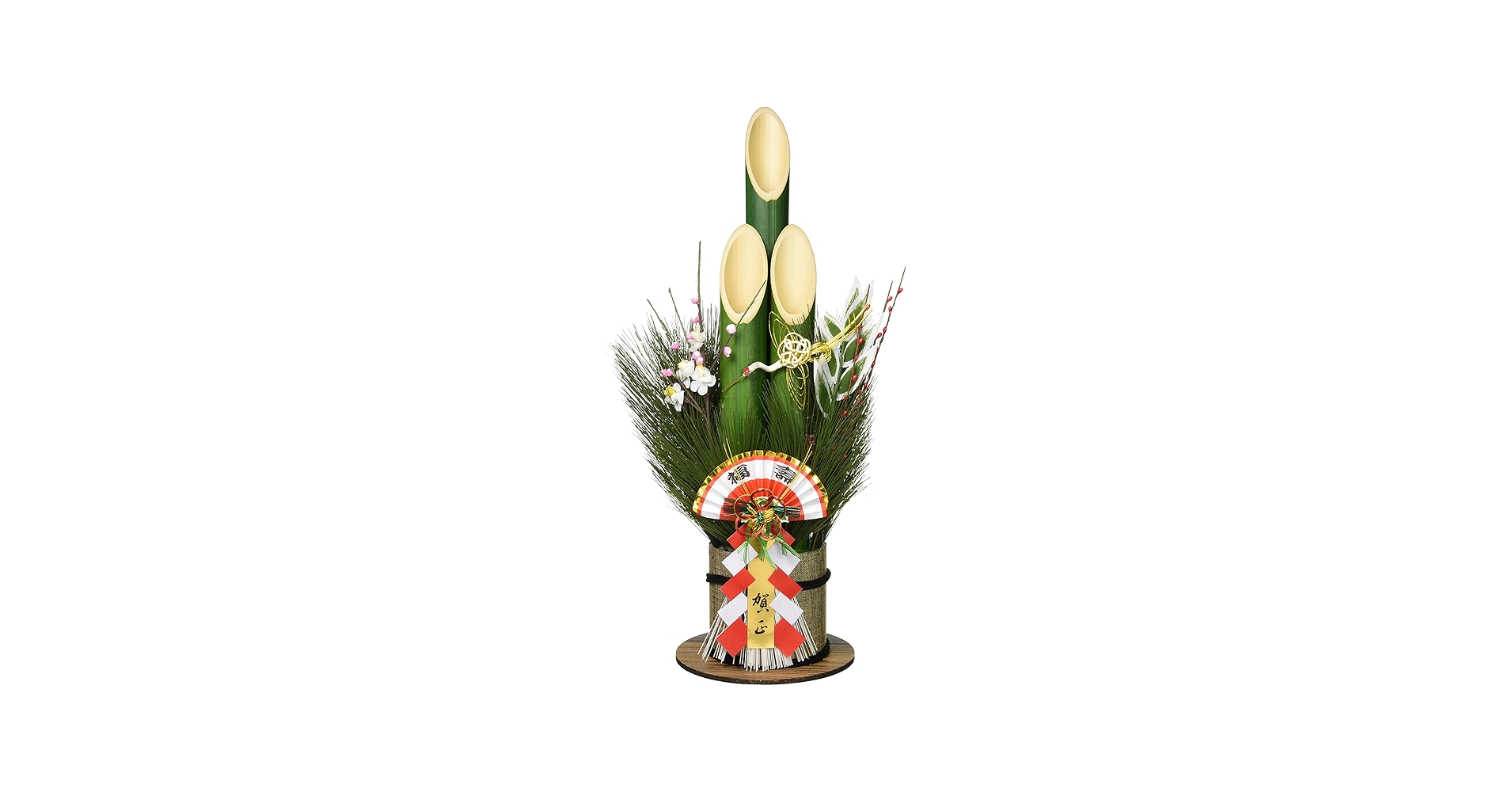
Another iconic New Year decoration in Japan is the kadomatsu, placed at entrances of homes, shops, and hotels.
● What kadomatsu symbolizes
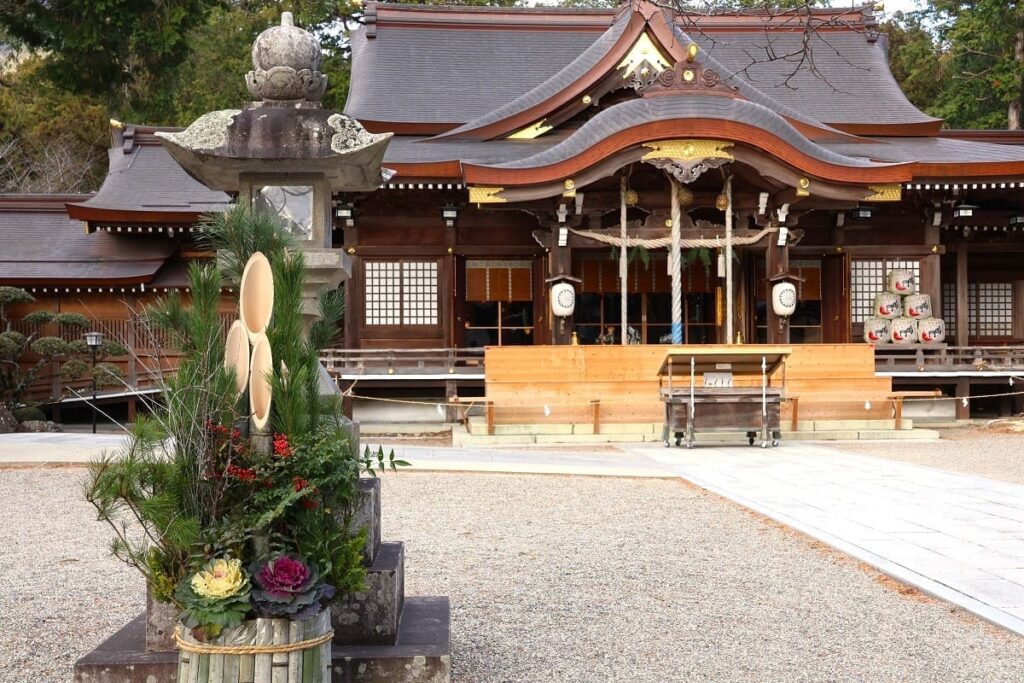
Kadomatsu serves as a guidepost and resting place for the New Year deity. Its components each hold special meanings:
- Pine: longevity
- Bamboo: growth, upward energy
- Plum blossoms: resilience in winter
Together, they invite prosperity and good fortune into the household.

I absolutely love kadomatsu! They’re so festive, and I even have a dream of making my own one day to celebrate the New Year.
● Modern variations
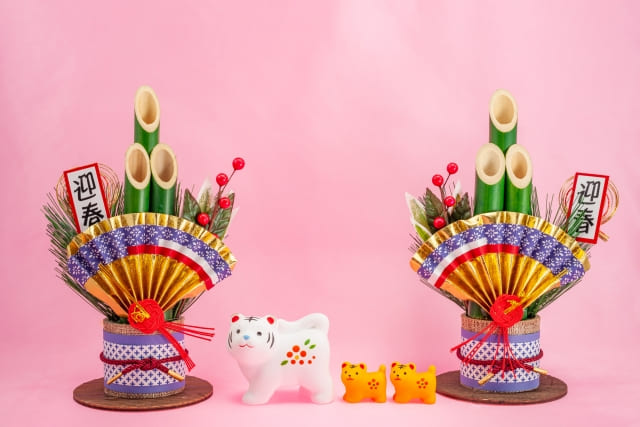
While the classic pine–bamboo–plum set is still common, modern versions include:
- Indoor mini kadomatsu
- Slim designs for apartments
- Contemporary decorative arrangements
● Display period
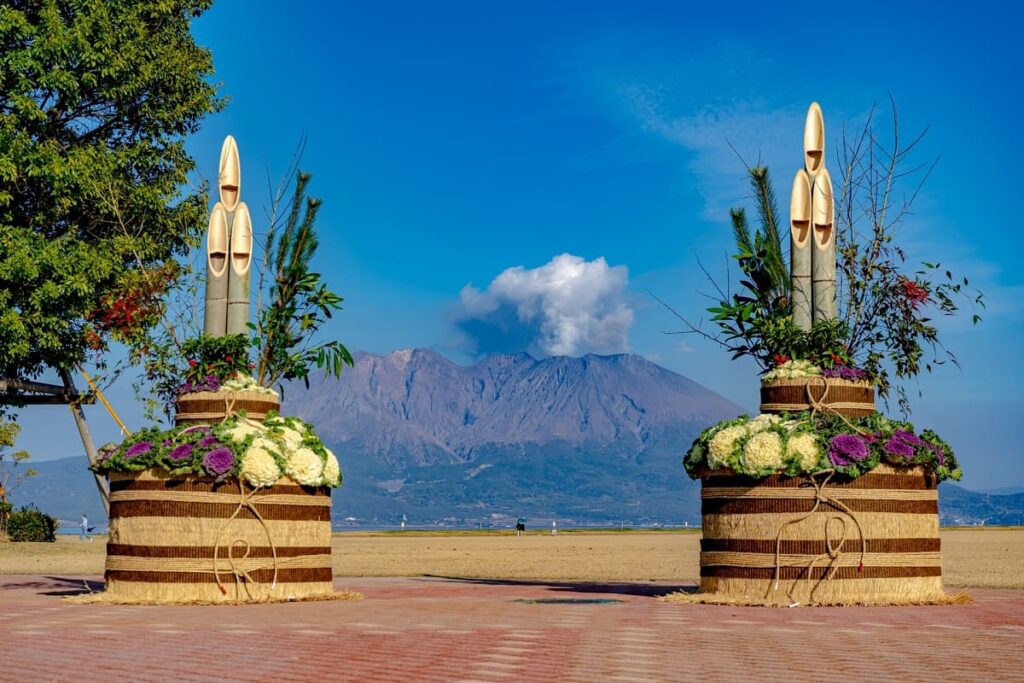
Like the shimenawa, kadomatsu is set up between December 26–28 and removed after “Matsu-no-uchi,” usually January 7 or 15.
Kagami Mochi – The Most Iconic New Year Decoration in Japan
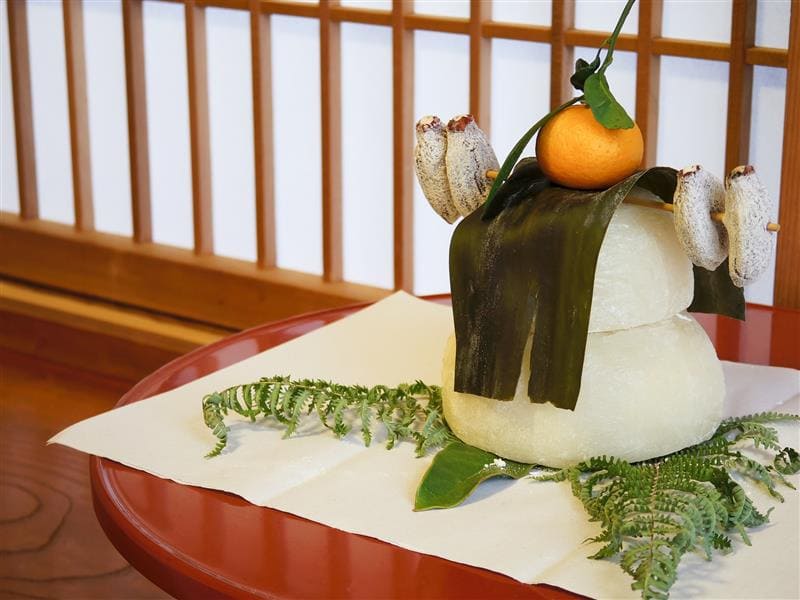
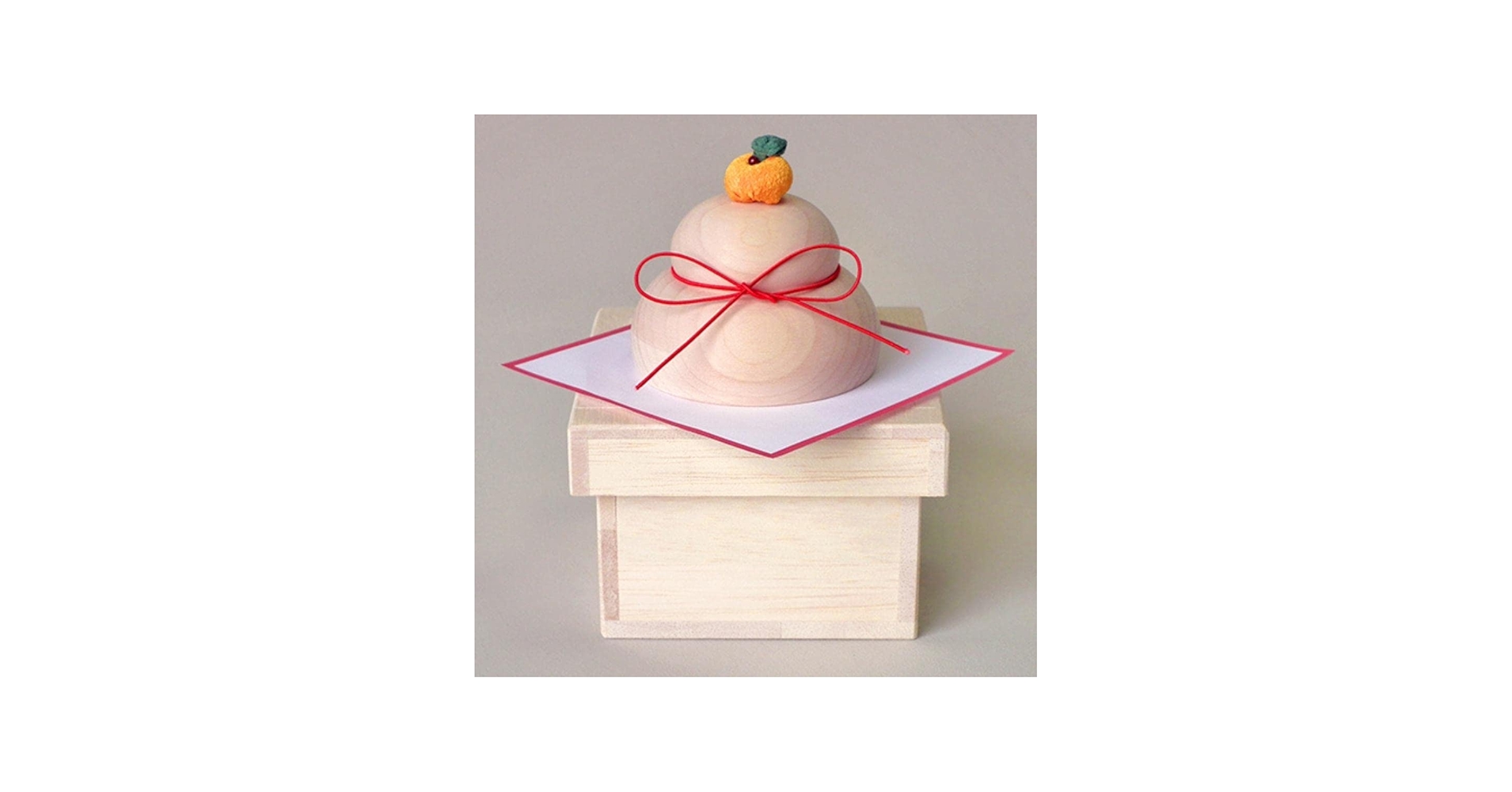
Perhaps the most familiar of all New Year decorations is the kagami mochi—two round rice cakes stacked on top of each other with a citrus fruit called daidai on top.
● Why round mochi?
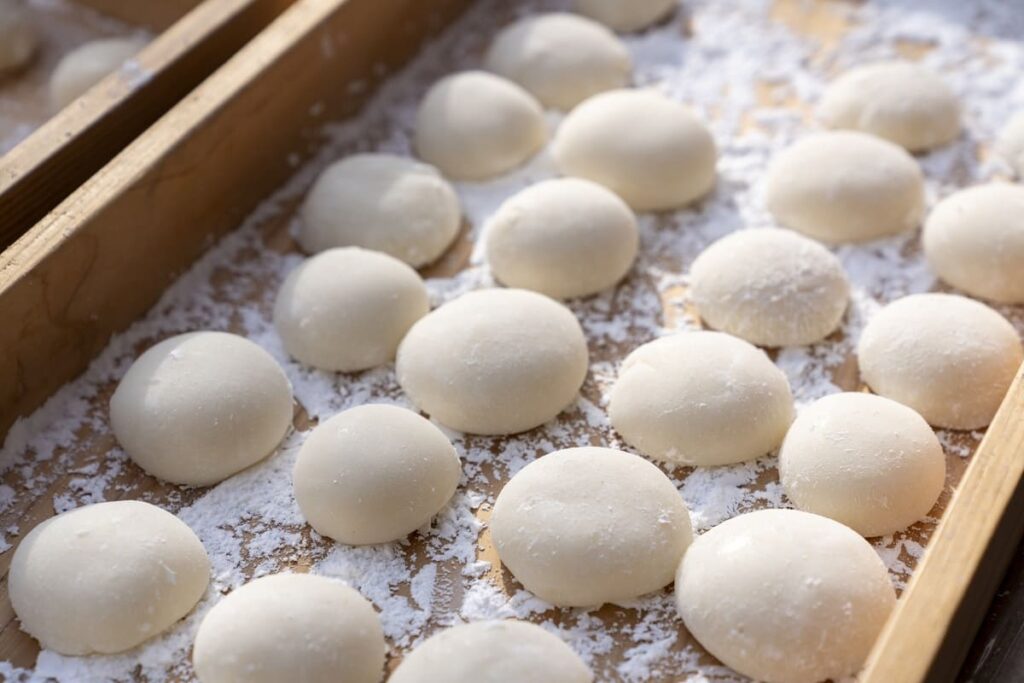
The round shape represents ancient bronze mirrors, which were considered sacred objects where deities could reside.
The two layers symbolize yin and yang or sun and moon, expressing hopes for harmony and balance in the coming year.
● Daidai and its meaning
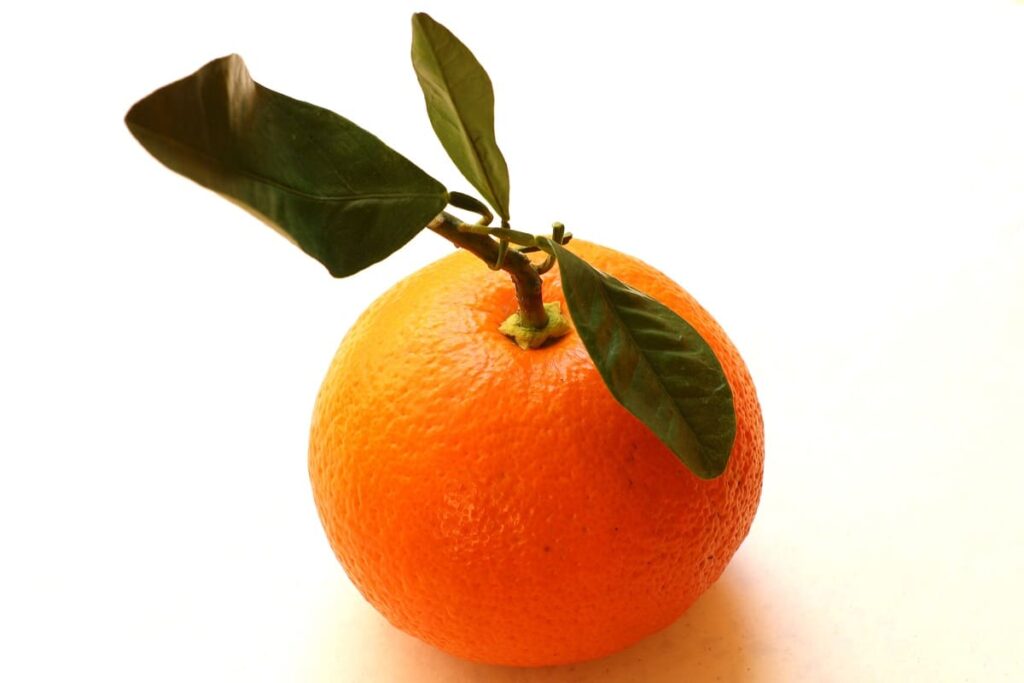
The daidai symbolizes “continuity across generations,” making it a wish for family prosperity and good health.
(Modern store-bought versions may use a mandarin orange instead, but traditionally it’s daidai.)

Daidai citrus fruits are used not only for kagami mochi but also as decorations on shimenawa. At my grandparents’ house, they would use daidai picked right from the tree in their garden.
● Kagami-biraki
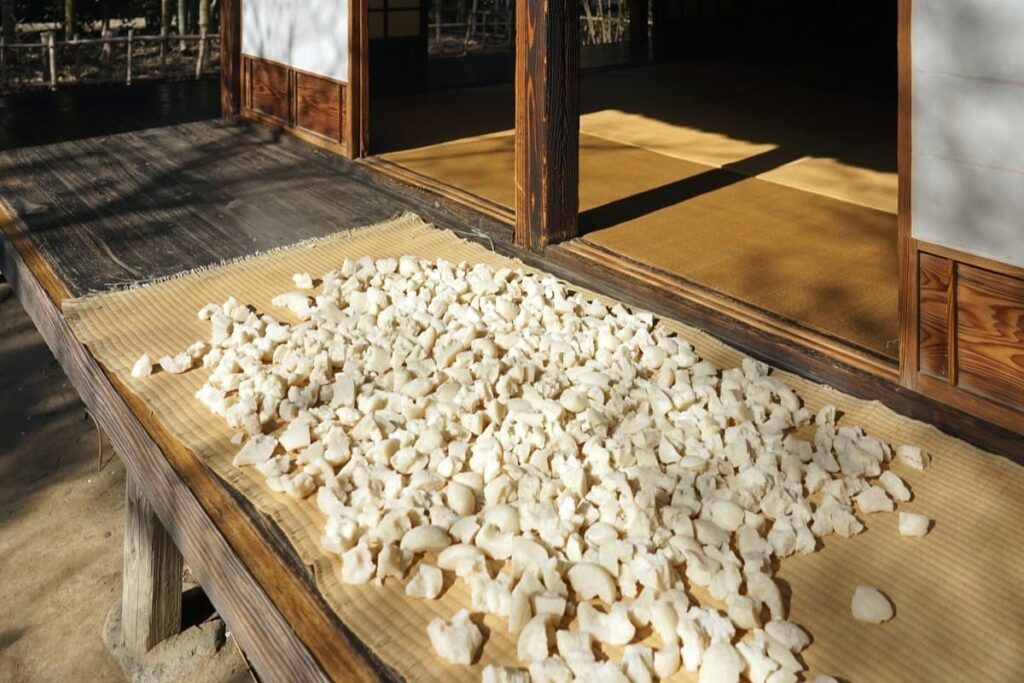
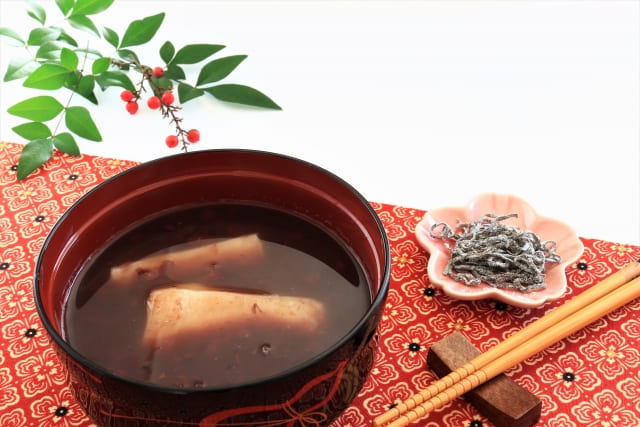
After the New Year celebrations, families hold kagami-biraki, where the mochi is broken and eaten to receive divine blessing.
Because traditional mochi hardens quickly, many families now choose decorated plastic containers filled with individually wrapped mochi.

After kagami-biraki, I always look forward to eating zenzai (sweet red bean soup with mochi).
● Varieties
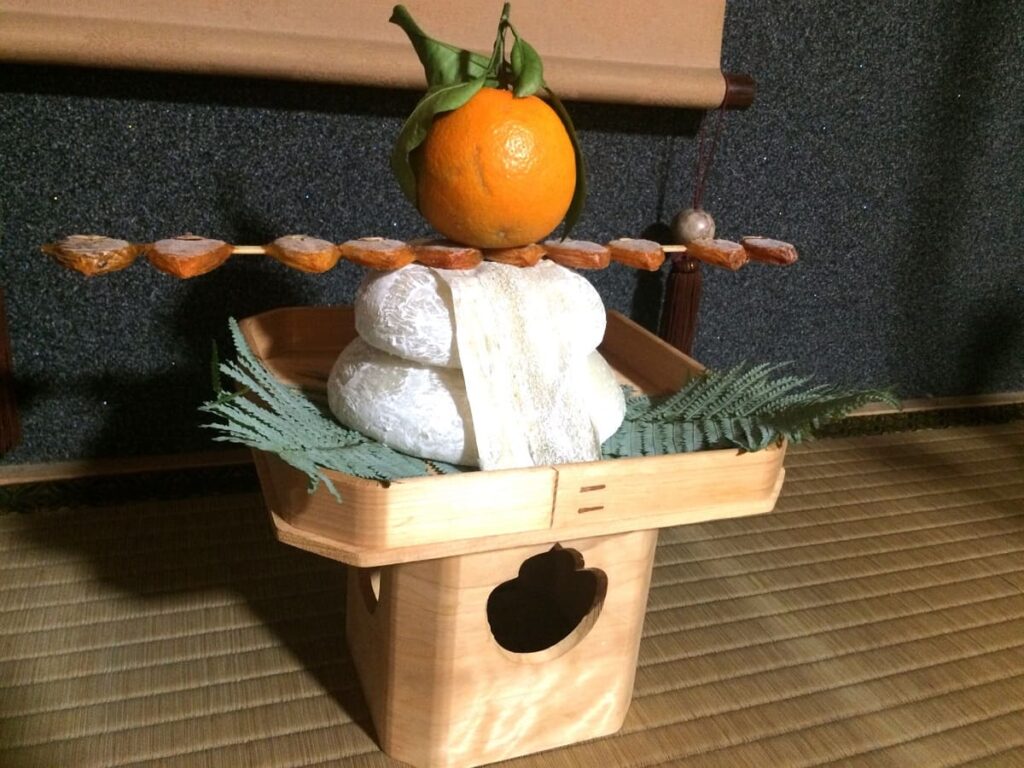
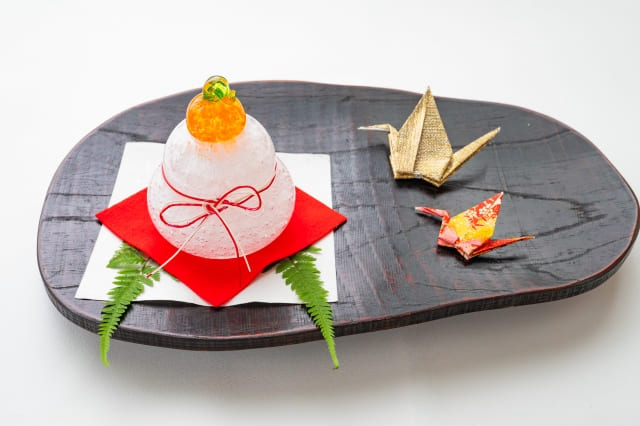
- Large traditional mochi
- Convenient ready-made kagami mochi
- Ceramic or modern interior-style sets

We display two kinds of kagami mochi—one made of real mochi and another decorative one made of plastic.
For more information about Kagami mochi, check the article below.
Shōgatsu Flowers – Elegant Floral Arrangements for the New Year
A popular trend in modern Japanese homes is decorating with Shōgatsu flowers, or New Year floral arrangements. These are displayed in entryways or living rooms to create a fresh and auspicious atmosphere.
● Typical flowers used
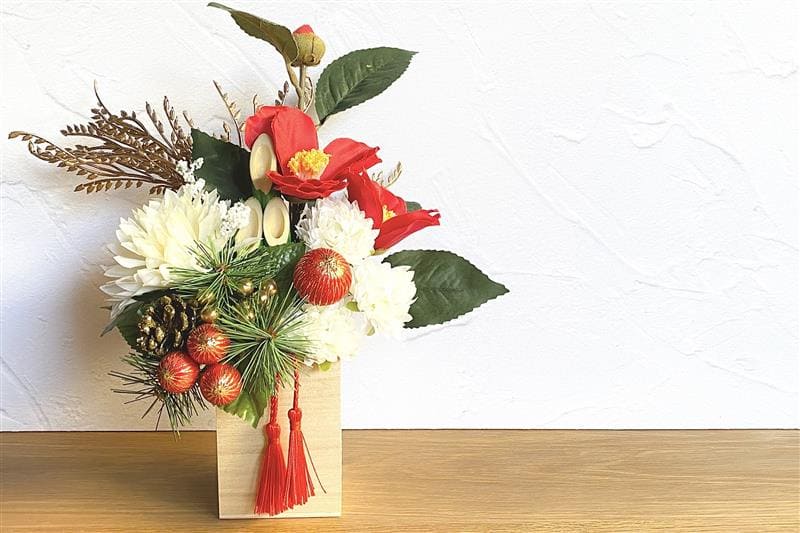
Shōgatsu flower arrangements often include plants that symbolize good fortune, such as:
- Pine – long life
- Bamboo – strength and prosperity
- Plum blossoms – resilience and vitality
- Senryō / Manryō (berries) – wealth and good luck
(Per your instruction, chrysanthemum and orchids have been removed from the list.)
These plants reflect Japan’s deep connection to nature and seasonal beauty.

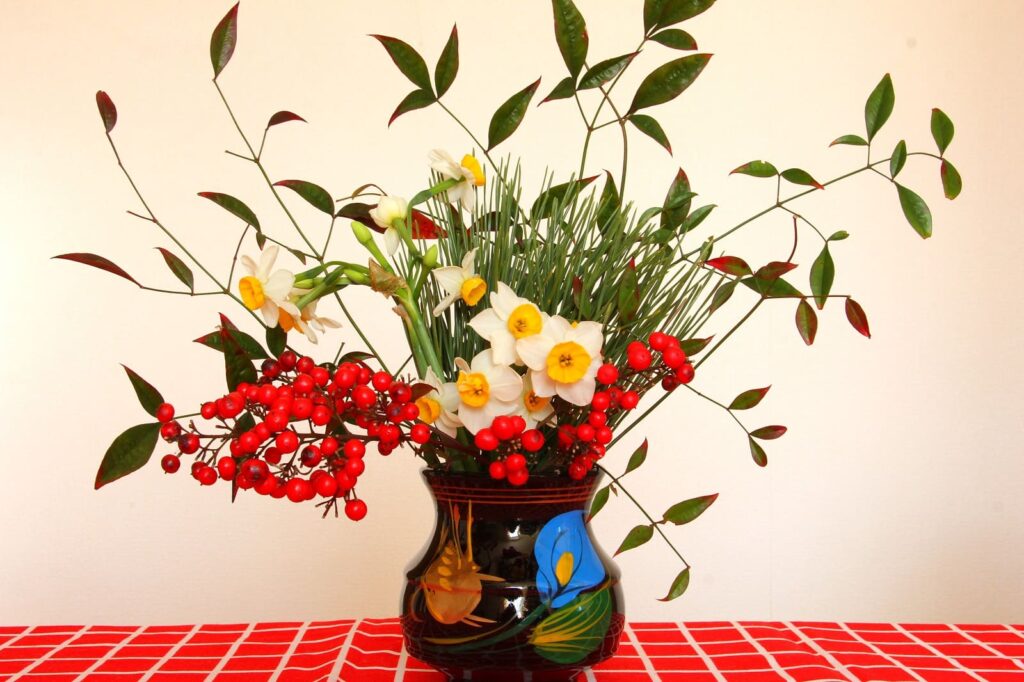
New Year flower arrangements for the home are popular, of course, but so are outdoor planters that brighten up the garden. Cabbage flowers, nandina berries, pine, and daffodils are some of the classic choices.
● Current trends
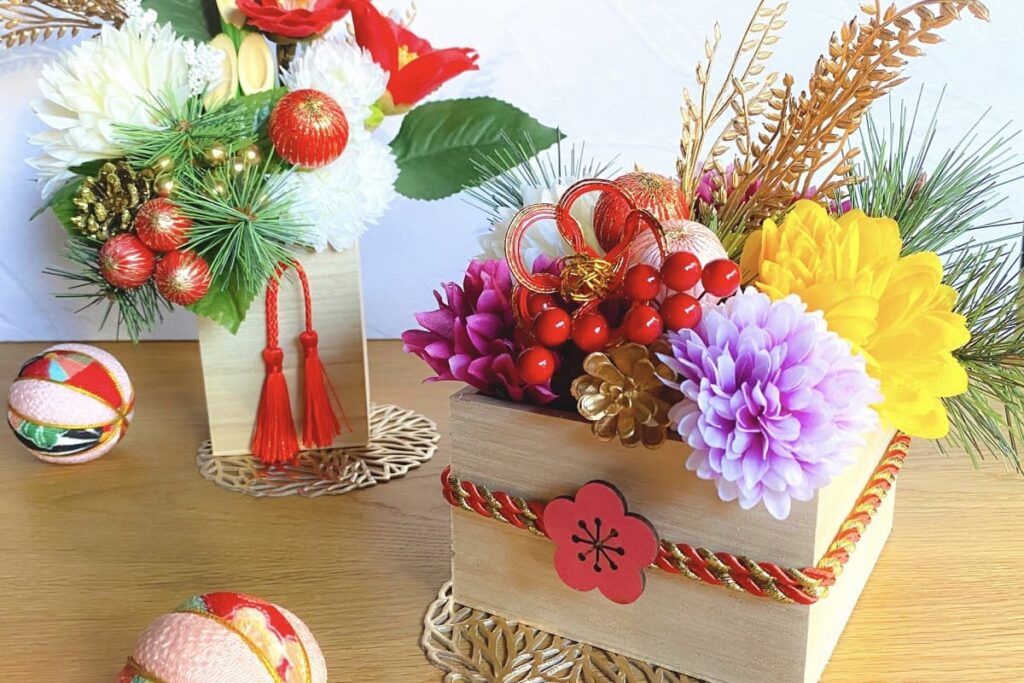
- Minimalist white-and-green modern designs
- Arrangements combined with decorative shimenawa
- Preserved flower arrangements
- Long-lasting artificial flower sets
● How long to display
In many homes, Shōgatsu flowers are kept until January 7 or 15.
However, because they double as interior décor, some people enjoy them even longer.
Mochibana – A Traditional New Year Decoration Resembling Blossoming Flowers
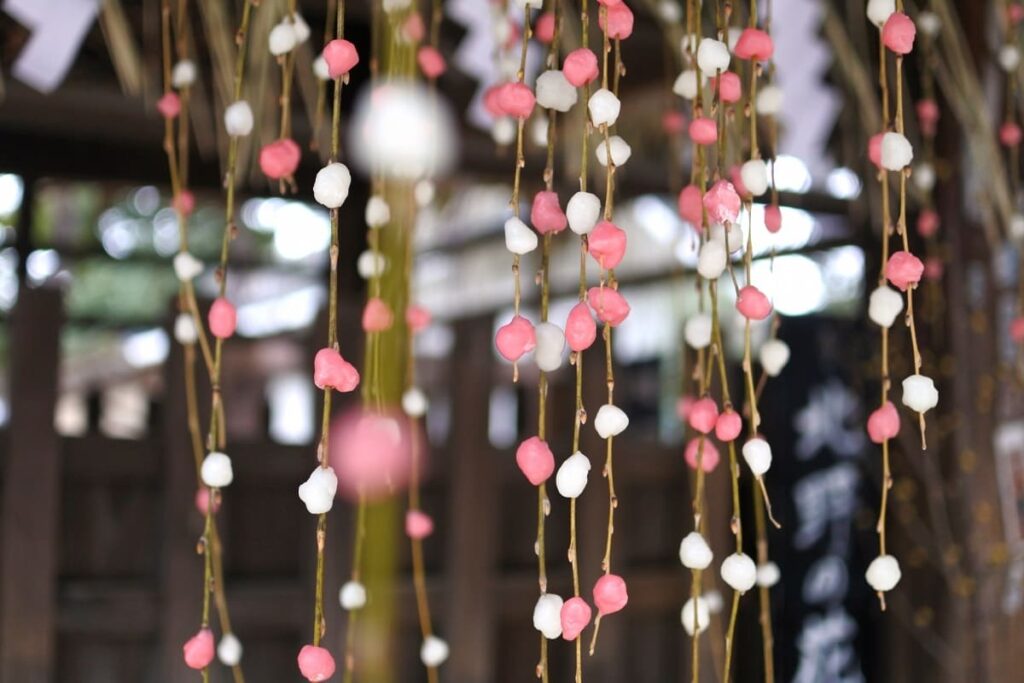
Another charming New Year decoration in Japan is Mochibana, a traditional ornament made by attaching small red and white mochi pieces onto thin tree branches. The result looks like delicate blossoms blooming in mid-winter.
● Symbolism of Mochibana
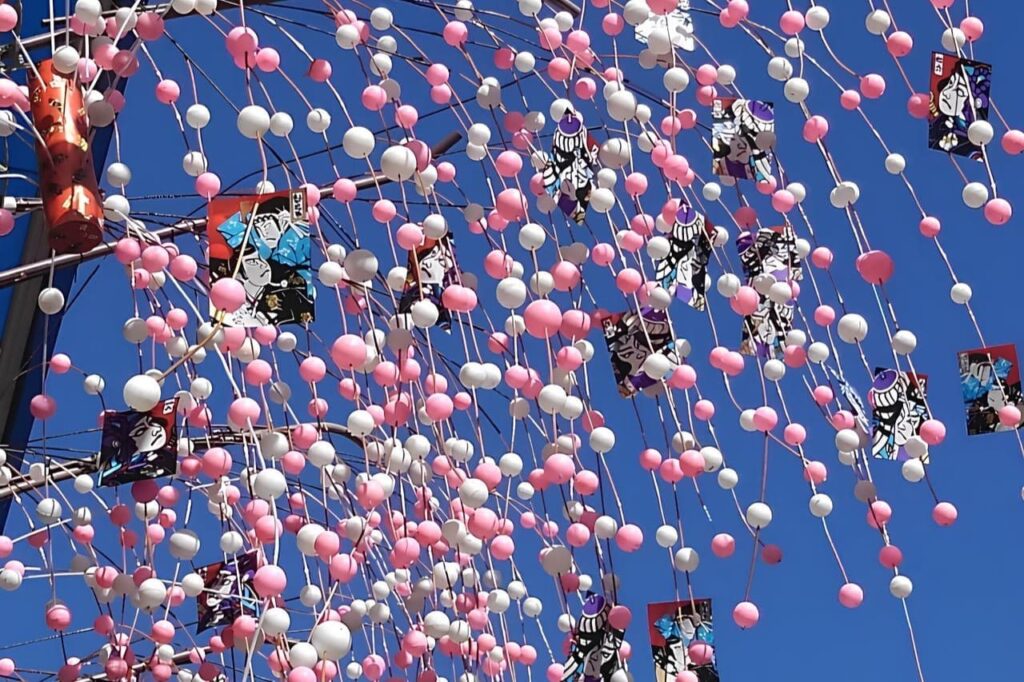
Red and white are considered auspicious colors in Japan, symbolizing joy and celebration.
The round mochi pieces represent good fortune, prosperity, and the hope that the coming year will “blossom” beautifully—just like the branches they decorate.
In snowy regions such as Gifu and Niigata, Mochibana has been used for generations as a symbol of life and abundance during the cold season, offering a bright touch of color when real flowers cannot bloom.
● How Mochibana is made
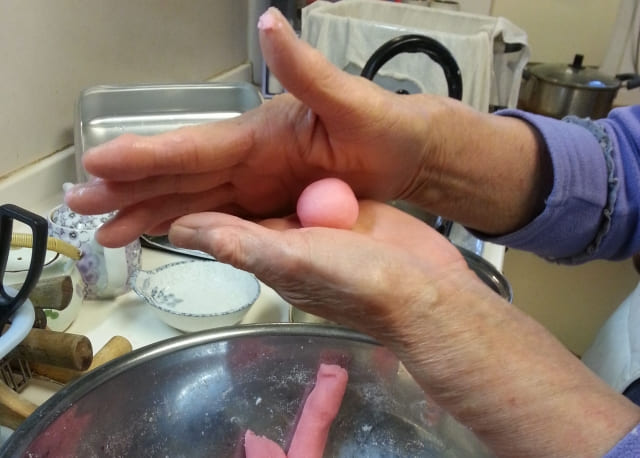
Traditionally, fresh willow branches are used. Small pieces of red and white mochi are warmed and then gently wrapped around the branches.
Modern versions may use:
- Lightweight artificial mochi
- Colored rice paste
- Decorative foam pieces
This makes them easier to maintain and display for longer periods.

My family doesn’t have the tradition of decorating with Mochibana, but I’d love to try it at least once!
● A beautiful blend of tradition and aesthetics
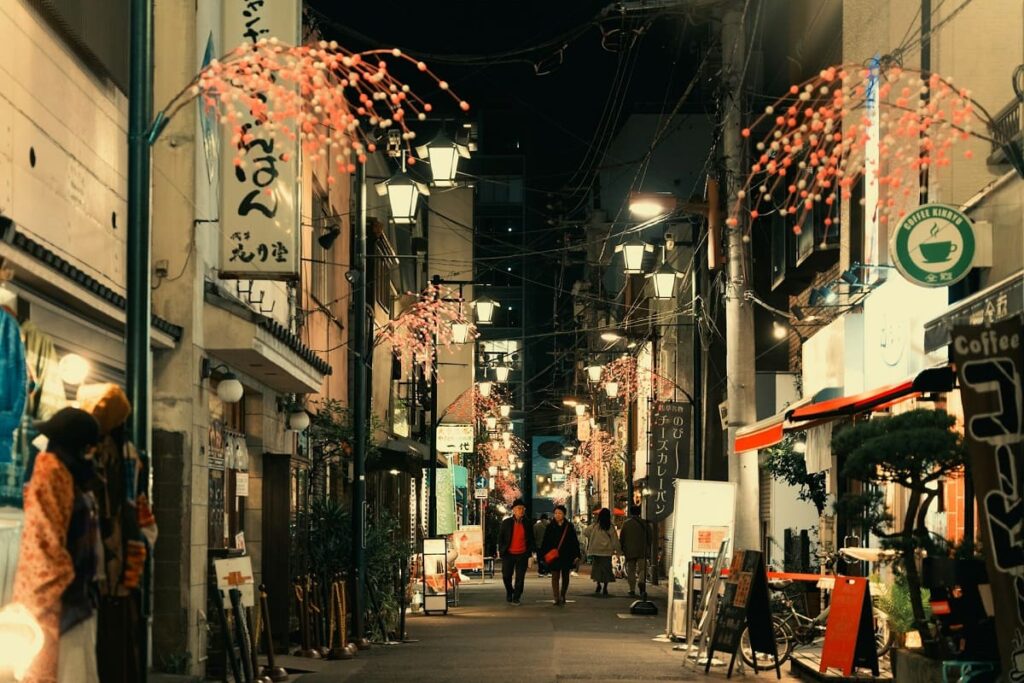
Among Japan’s many New Year decorations, hanamochi stands out for its artistic and handmade feel.
It reflects Japan’s appreciation for seasonal beauty and the wish to welcome good fortune into the household.
Hagoita – A Traditional and Decorative New Year Good-Luck Charm
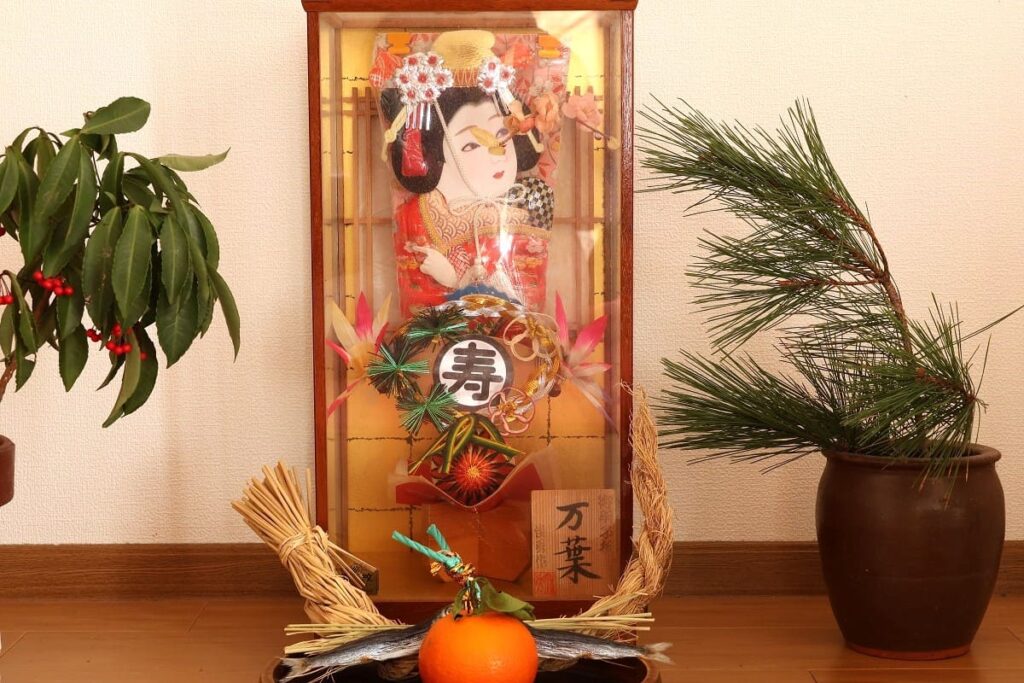
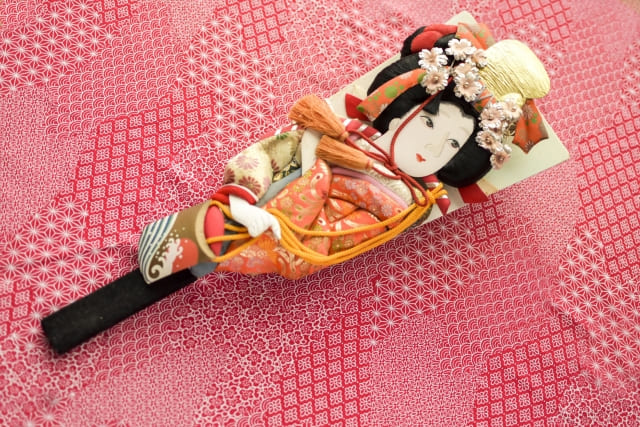
The hagoita may originally have been a paddle used in a traditional New Year game called hanetsuki, but today it is also a well-loved New Year decoration.
● Meaning of the hagoita
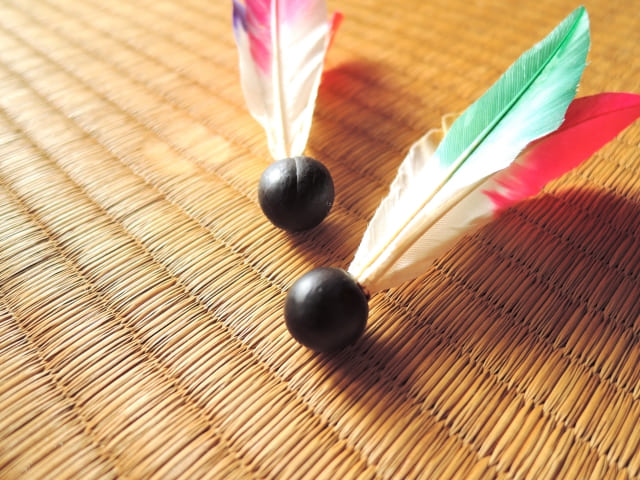
The shuttlecock used in hanetsuki traditionally contained a seed from the mukuji tree, which means “child without illness.”
For this reason, the hagoita became a protector of children and a charm for healthy growth, especially for girls.
● Decorative hagoita
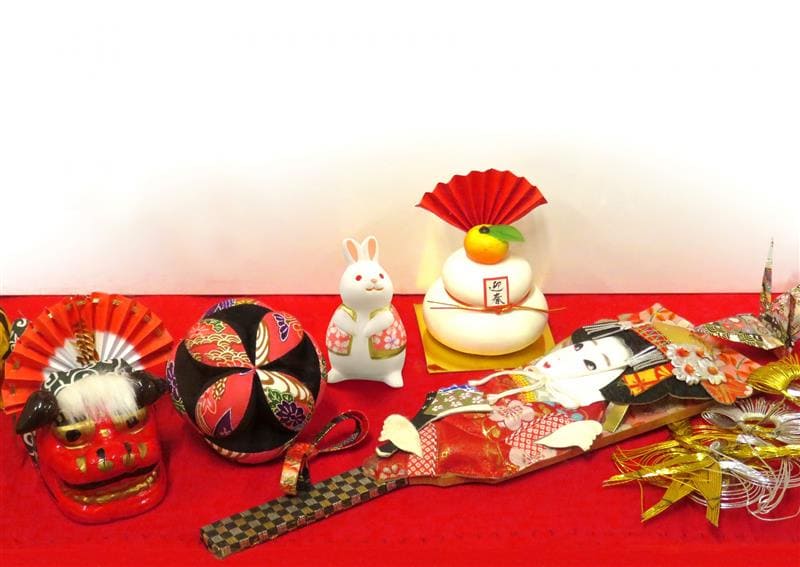
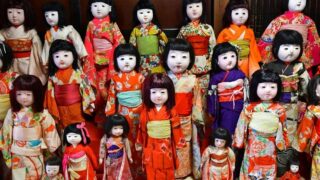
Modern hagoita are beautifully crafted with raised fabric figures called oshie, often depicting elegant women in traditional attire. These have become popular interior decorations because of their beauty and detail.
● Types of hagoita
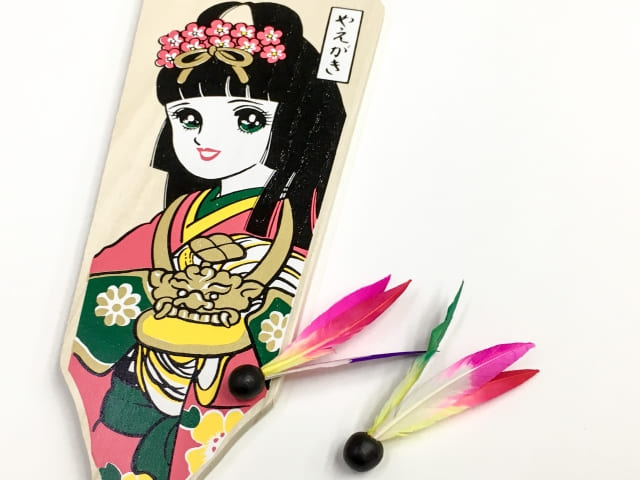
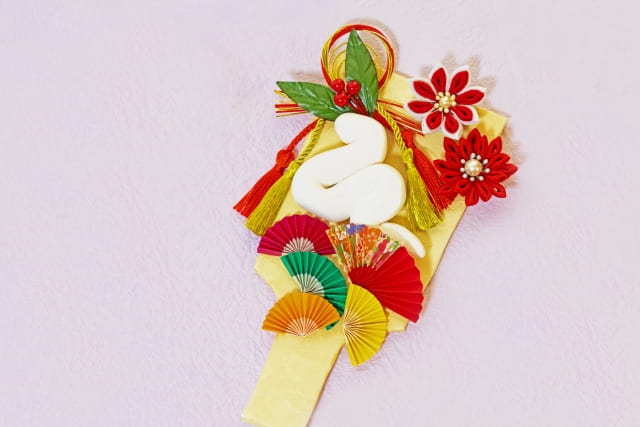
- Mini decorative hagoita
- Glass-case display models
- Modern-pattern hagoita
They make excellent gifts for families celebrating a baby girl’s first New Year.
Can You Buy Japanese New Year Decorations Online?
If you are interested in experiencing Japanese traditions at home, many authentic Japanese New Year decorations are available online. From small apartment-friendly shimenawa to beautifully crafted kadomatsu sets, there are options suitable for different spaces and budgets.
For beginners, ready-made decoration sets are especially convenient, as they include the essential items needed to welcome the New Year in traditional Japanese style.

Are you ready to welcome the New Year the traditional Japanese way?
Shimenawa
If you’d like to welcome good fortune in a traditional Japanese way, authentic shimenawa decorations are available online.

Kadomatsu
Compact Kadomatsu sets are perfect for adding a meaningful New Year touch, even in small spaces.

Kagamimochi
Kagami mochi decorations make a beautiful and symbolic centerpiece for the New Year.

Conclusion – New Year Decorations Bring Good Fortune and Tradition to Life
Japan’s New Year decorations are far more than just ornaments. Each one has a purpose and carries a wish for happiness, protection, or prosperity in the coming year.
- Shimenawa: protects and purifies the entrance
- Kadomatsu: guides the New Year deity
- Kagami mochi: a sacred symbol of harmony
- Shōgatsu flowers: brighten the home with good fortune
- Hagoita: a charm for healthy growth
By understanding their meaning, you can appreciate Japan’s New Year traditions more deeply.
Whether you live in Japan or simply love Japanese culture, decorating for the New Year is a wonderful way to celebrate fresh beginnings.

If you are interested in Japanese culture, you may love these games!
Let’s play!

Yes! Let’s play!

Comments