
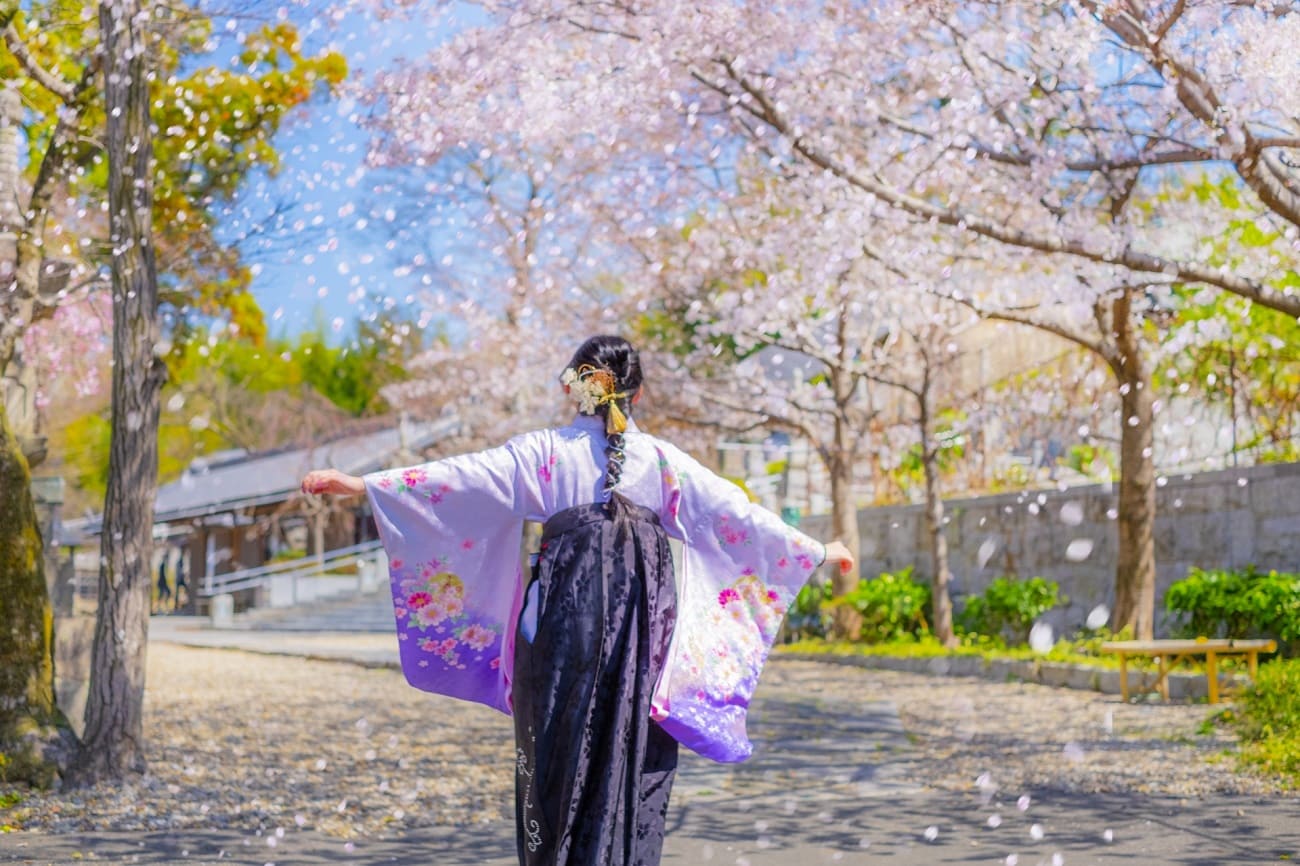


When you think of Japanese graduation ceremonies, you probably picture female students dressed in elegant hakama.
But did you know that the history of hakama goes all the way back to ancient Japan?
In this article, we’ll explore when Japanese women wear hakama today and how this traditional garment developed over the centuries.
If you’re interested in Japanese culture or considering wearing hakama for your own graduation, this guide will walk you through everything you need to know!

Today’s theme is “hakama.” I still remember how happy I was when I wore one for my graduation ceremony.
- What Is a Hakama?
- The Ancient Origins of Hakama
- When Did Women Start Wearing Hakama?
- Modern Hakama for Women Began in the Meiji Period
- Hakama Became Popular Thanks to a Manga?!
- When Do Japanese Women Wear Hakama Today?
- Renting Hakama for Graduation: When to Reserve?
- Can You Purchase a Hakama Instead of Renting One?
- Final Thoughts about Hakama
What Is a Hakama?
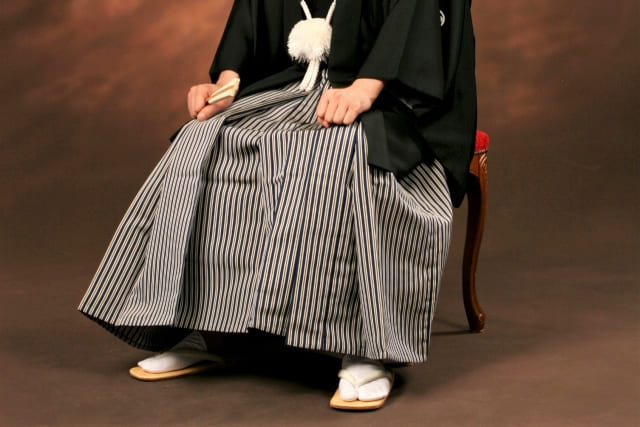
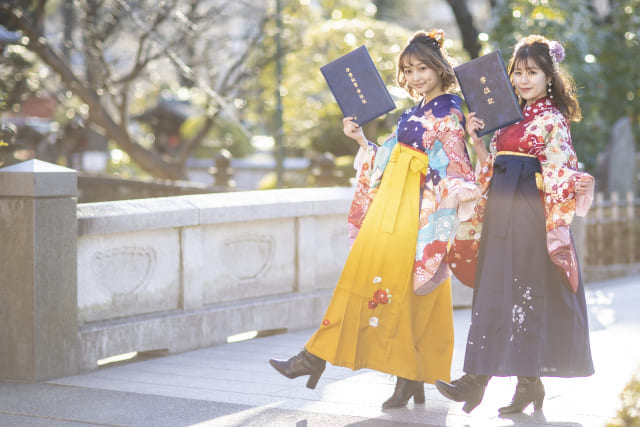
Before diving into its history, let’s clarify what a hakama actually is.
A hakama is a traditional Japanese lower garment worn over a kimono. It resembles a long, pleated skirt, but depending on the type, it may be divided like trousers or left undivided like a skirt. Hakama are tied at the waist and fall to the ankles, giving the wearer a graceful, dignified silhouette. While hakama were historically worn by both men and women, modern styles for women feature vibrant colors and elegant designs—making them especially popular for graduation ceremonies and traditional arts.
The Ancient Origins of Hakama
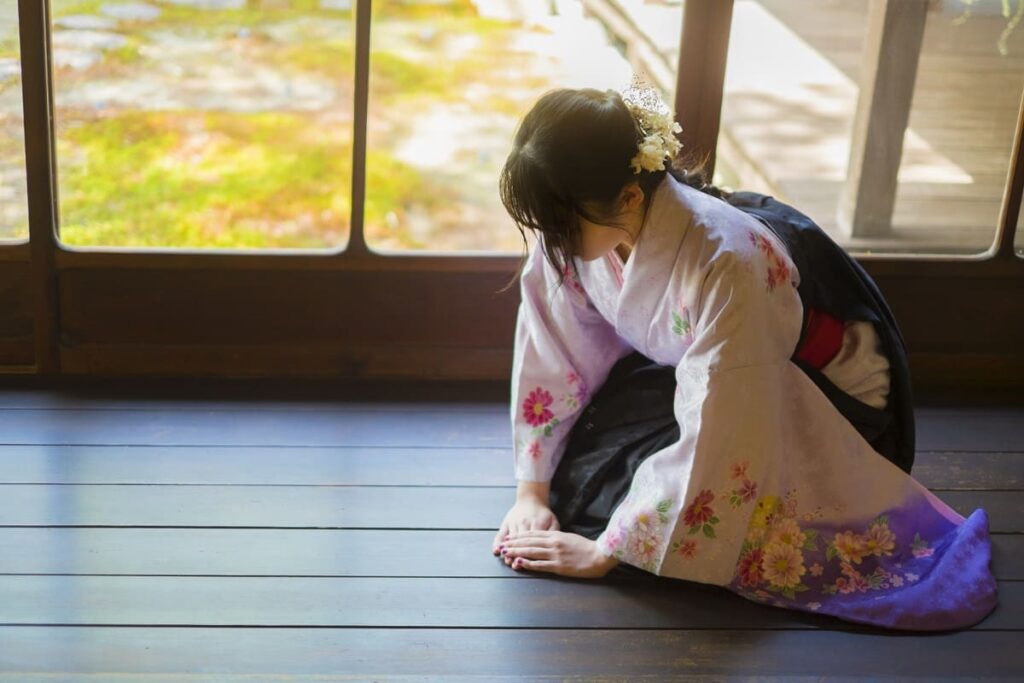
Many people associate hakama with the Meiji era or modern graduation ceremonies, but its origins can be traced back much further—all the way to ancient Japan.
● Mentioned in the Kojiki and Nihon Shoki
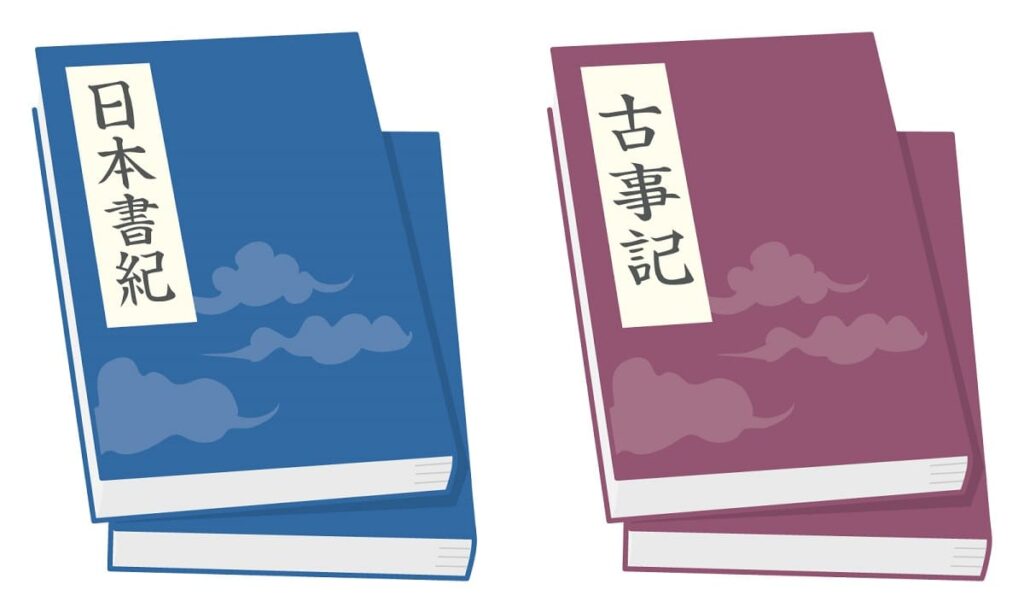
The term “hakama” appears in Japan’s oldest historical texts, Kojiki and Nihon Shoki.
This shows that hakama was already an important type of clothing in ancient times.
● Derived from “wide pants” seen in Kofun–period haniwa
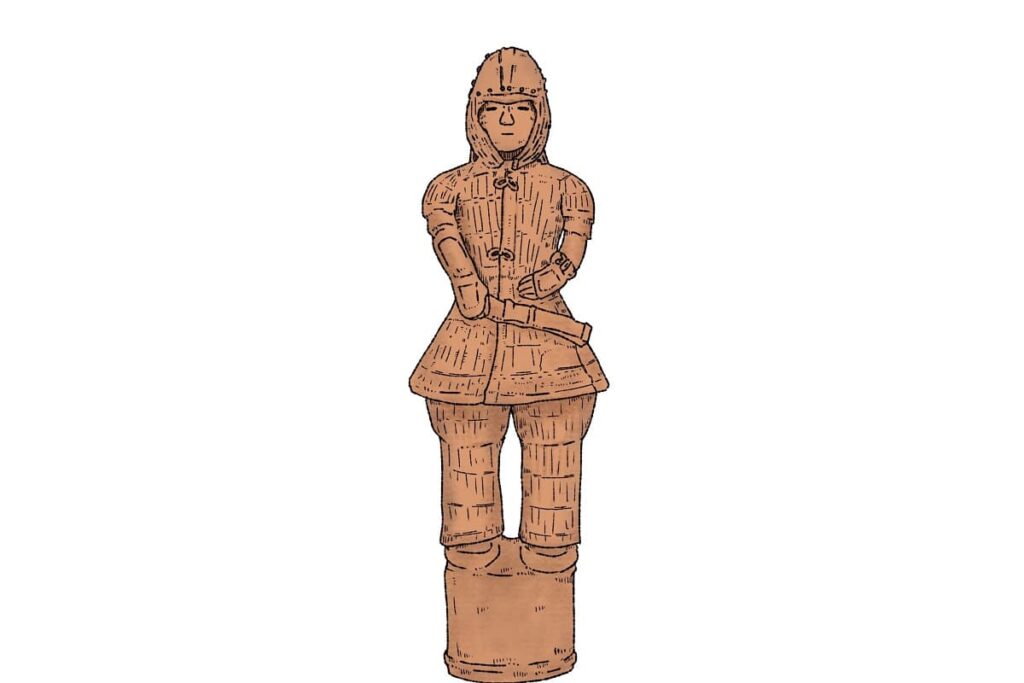
If you look at haniwa figures from the Kofun period, you’ll notice that many are wearing wide, pant-like garments.
Researchers believe these were the original form of hakama.
While they differ from the modern style, both share the concept of a functional, easy-to-move-in lower garment.

I didn’t know there was a theory that the clothing seen on haniwa figures was the origin of hakama! But now that you mention it, they really do look similar.
When Did Women Start Wearing Hakama?
Although hakama are often associated with men’s clothing, women have also worn them for well over a thousand years.
● Asuka–Nara Period: Worn by noblewomen as undergarments
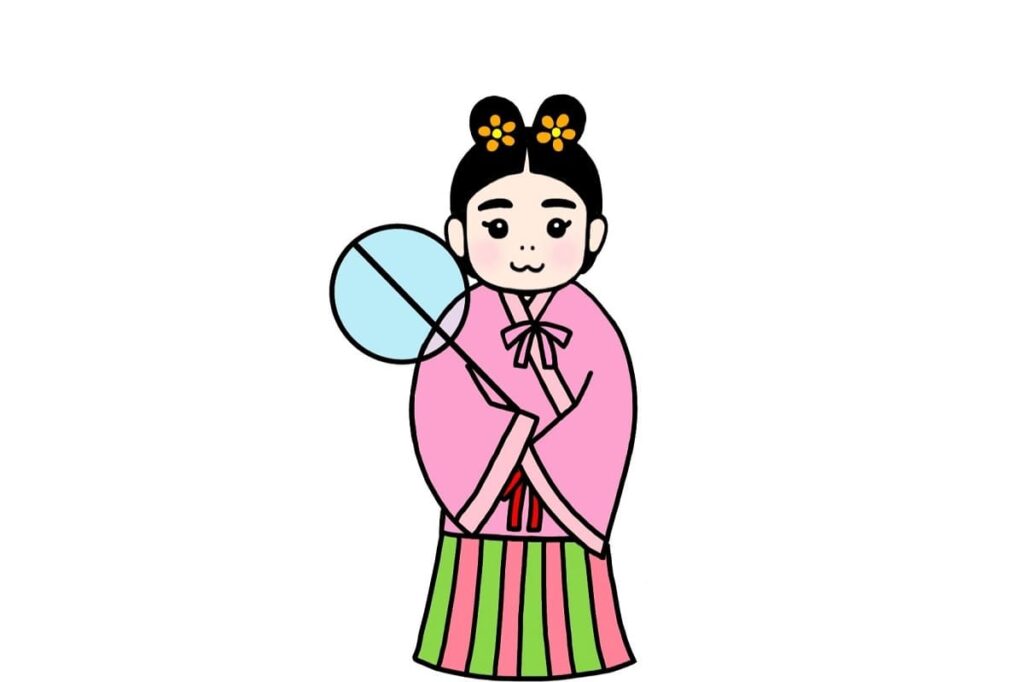
Women began wearing hakama during the Asuka and Nara periods.
At the time, hakama served as undergarments for noblewomen, somewhat similar to a petticoat.
Later, women started wearing hakama not only underneath their clothing but also over them on formal occasions.
● Heian Period: Part of court ladies’ official attire
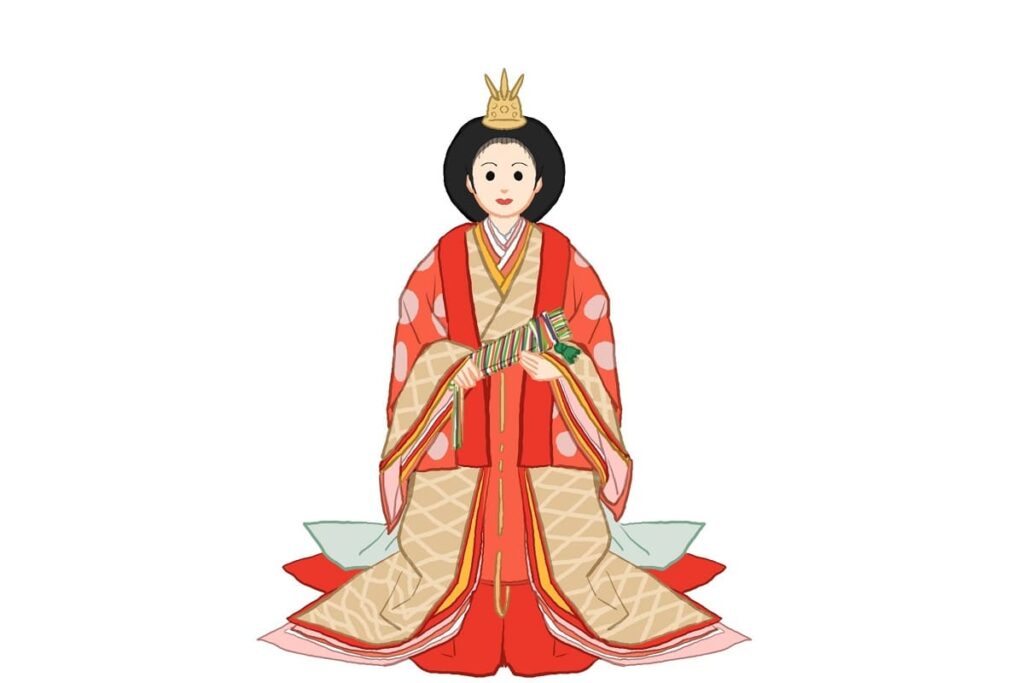
During the Heian period, women who served in the Imperial Court wore hakama as part of the junihitoe, the multi-layered formal court dress.
Because hakama were practical and allowed greater mobility, they were ideal for the daily duties of court ladies.
By this time, hakama had already become well-established as formal attire for women of high social status.
Modern Hakama for Women Began in the Meiji Period
The hakama style most associated with today’s female students developed during the Meiji era.
● Western influence and the rise of women’s education
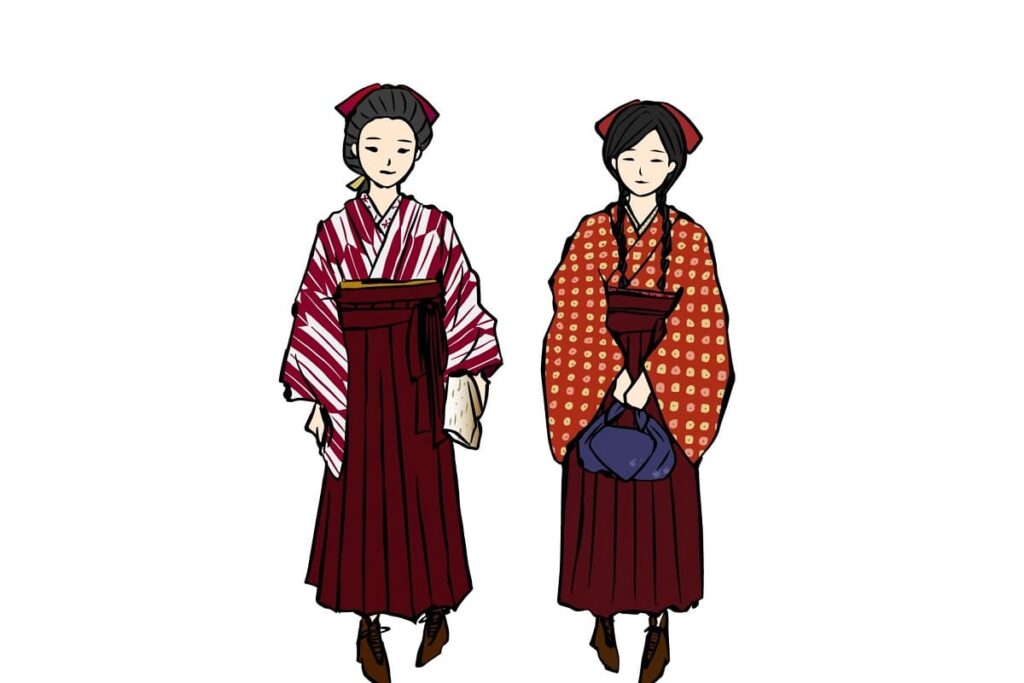
As women increasingly attended school, Western cultural influences began to reshape daily life.
To move more easily, some female students began wearing men’s hakama.
However, wearing male hakama was eventually prohibited.
This led to the creation of a new style specifically for women: the onnabakama.
This design laid the foundation for the modern women’s hakama still worn today.

Hakama always reminds me of female students from the Meiji and Taisho eras. When Western culture came to Japan, the style of pairing hakama with boots was born.

The hakama × lace-up boots combo is still a common look at modern graduation ceremonies.
Hakama Became Popular Thanks to a Manga?!
Interestingly, female students wearing hakama at graduation ceremonies only became common around 1980.
One of the biggest influences was the popular manga “Haikara-san ga Tōru.”
The stylish combination of a red yagasuri kimono with a purple hakama captured the imagination of young women, sparking a nationwide hakama boom.
This trend solidified the image of hakama as “the outfit to wear for graduation.”

Haikara-san ga Tōru is a famous series. The video above is from the 2017 movie adaptation.
When Do Japanese Women Wear Hakama Today?
So in modern Japan, when do women actually wear hakama?
Since hakama are no longer everyday clothing, they are reserved for specific occasions.
● 1. Graduation ceremonies (universities, colleges, vocational schools)
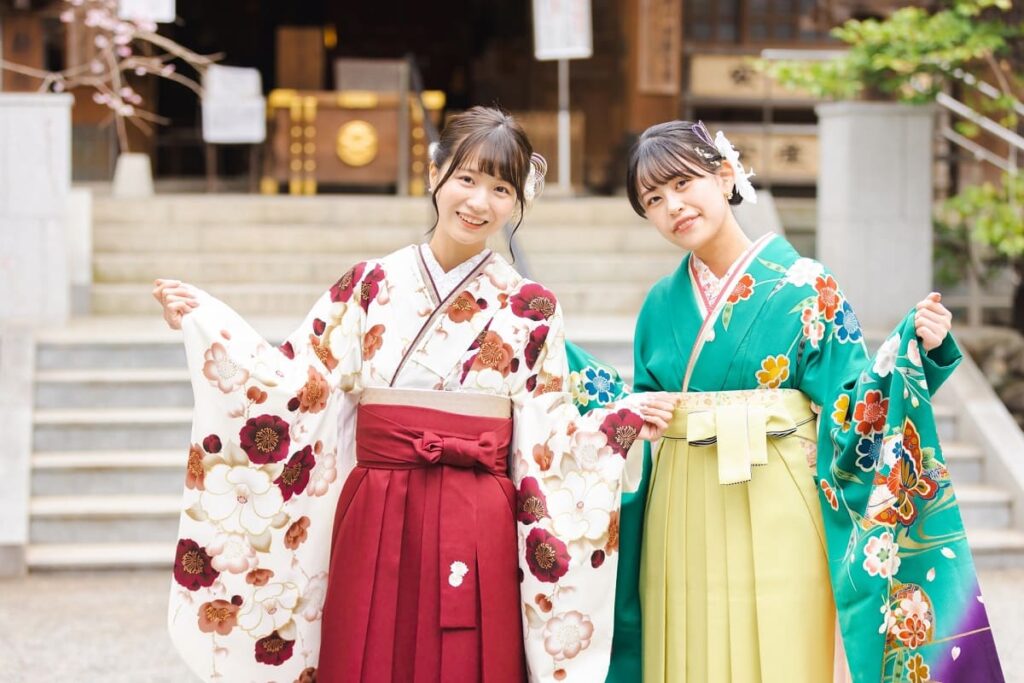
The most common occasion is graduation ceremonies.
Nearly 90% of female graduates now choose hakama for the event.
It’s become so standard that seeing hakama at graduations feels completely natural.

When it comes to university and junior college graduation fashion, this is the go-to style! Most girls attend in hakama. Recently, more and more elementary school students have started wearing hakama for their graduation ceremonies too.
● 2. Teachers at school ceremonies
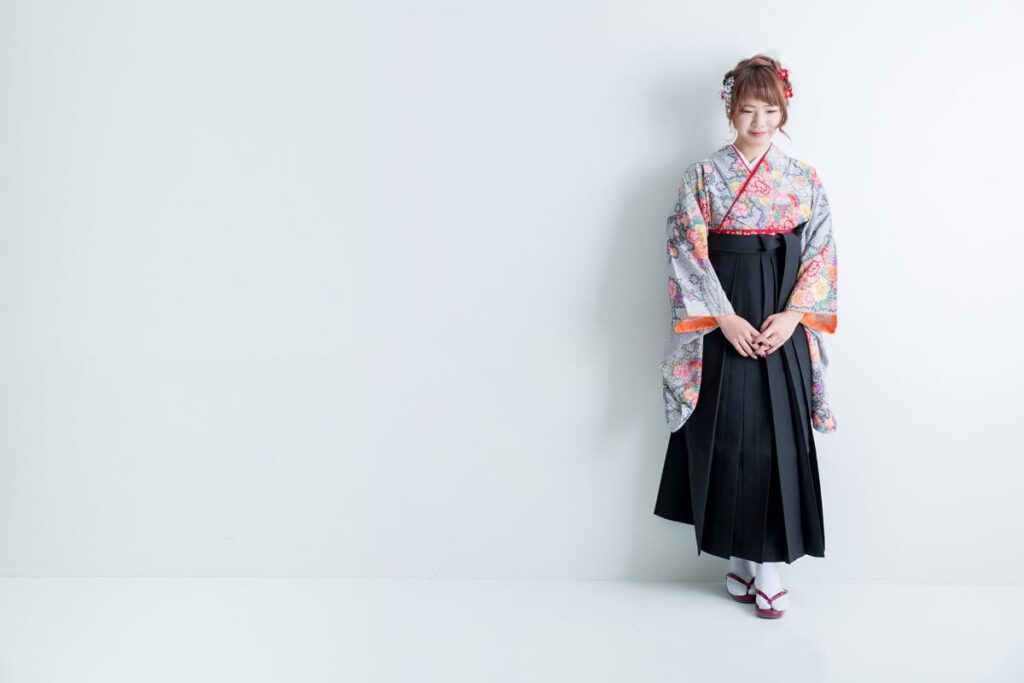
Hakama are also considered formal attire, so female teachers—especially kindergarten and preschool teachers—sometimes wear them for graduation or entrance ceremonies to add elegance to the occasion.

Speaking of which, my homeroom teacher in elementary school also wore hakama. She looked amazing.
● 3. Traditional arts and Shinto rituals
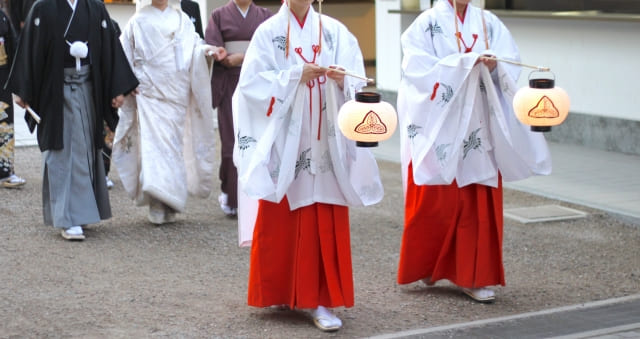
Hakama are still worn in:
- Hyakunin isshu
- Kyudo, Kendo
- Shinto shrine rituals (e.g., miko / shrine maidens)
Because hakama allow easy movement and carry a sense of dignity, they remain a key garment in Japan’s traditional arts.

If you like anime, you’ve probably seen characters wearing hakama in Chihayafuru, the series about the Hyakunin Isshu card game.
Renting Hakama for Graduation: When to Reserve?
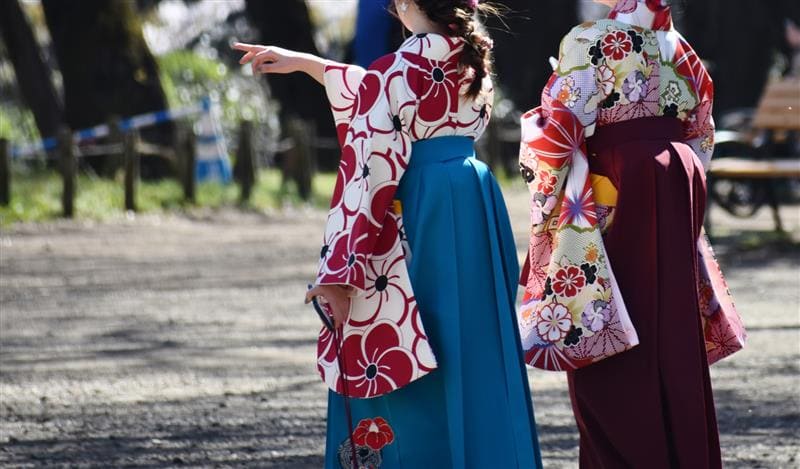
Most women rent their graduation hakama rather than buy one.
Since most graduation ceremonies are held in March, students typically make reservations between April and July of the previous year.
Popular patterns and brand-new designs tend to get booked quickly, so securing your outfit early is recommended.
These days, many rental services also include hair styling and dressing assistance, making the entire process much easier.

I made my hakama reservation in April. I went to try outfits on twice with my friends. It was so much fun!!

What color did you choose?

I wore a dark pink kimono with a purple hakama.
A classic combination!
Can You Purchase a Hakama Instead of Renting One?
Yes—hakama can be purchased as well!
If you prefer owning your own hakama, one of the most reliable online stores is Kyoto Kimonomachi, a popular shop that carries a wide variety of kimono and hakama styles.
This store is frequently used by international customers and also offers worldwide shipping.

If you type “Hakama” or “袴” into the search bar on Kyoto Kimonomachi’s website, tons of hakama options will come up! Definitely check it out.
They even provide a Global Shipping Guide, so overseas buyers can shop with confidence. This makes it easy to purchase a hakama even if you’re not in Japan.

Final Thoughts about Hakama
Hakama is a traditional Japanese garment with a history reaching back to the Kofun period.
Women began wearing hakama as early as the Asuka and Nara periods, and court ladies used them as formal attire during the Heian period.
In the Meiji era, “female student hakama” were developed, and the style became widely popular—thanks in part to manga culture.
Today, hakama have become the standard outfit for graduation ceremonies and continue to hold an important place in Japanese culture.
Elegant, functional, and full of history, hakama will undoubtedly remain a cherished garment for generations to come.

If you are interested in Japanese culture, you may love these games!
Let’s play!

Yes! Let’s play!


Comments