
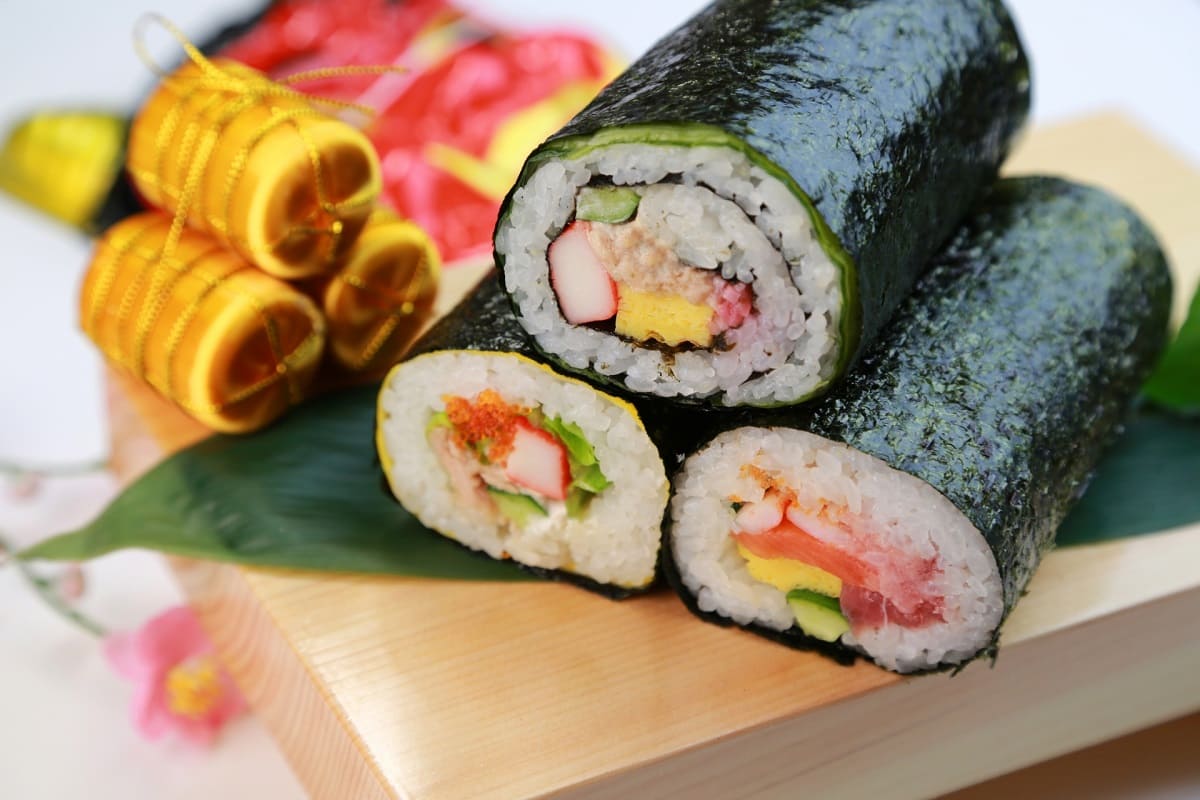

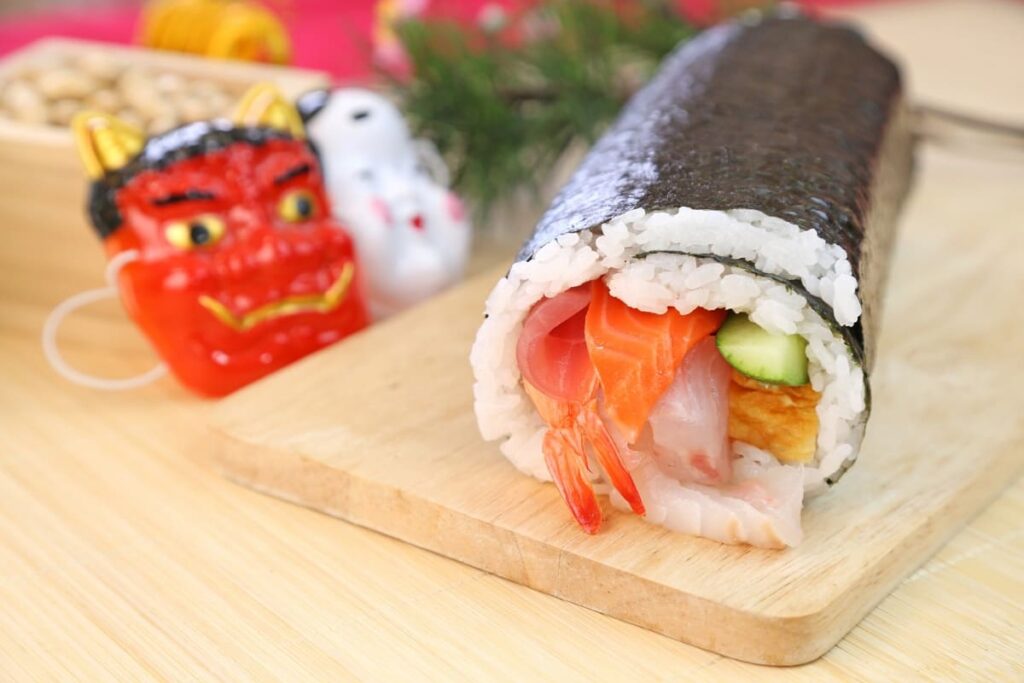
When early February arrives in Japan, supermarkets and convenience stores fill with long sushi rolls called Ehomaki.
For many Japanese people, eating Ehomaki is an essential part of Setsubun, a seasonal event that marks the transition from winter to spring.
Ever since I was a kid, Ehomaki has always been our go-to dish on Setsubun. I usually end up eating about two rolls!
But what exactly is Ehomaki?
Why do people eat it silently?
And why does the direction matter?
In this article, we’ll explain everything you need to know about Ehomaki, including its meaning, rules, origins, lucky directions, and even modern dessert-style variations.
This guide is perfect for anyone interested in Japanese culture and seasonal traditions.
What Is Ehomaki?
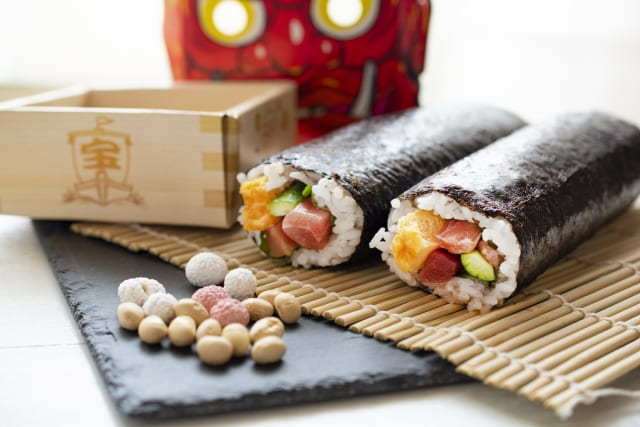
Ehomaki is a type of sushi roll eaten on Setsubun, usually celebrated on February 3rd or 4th.

Setsubun in 2026 falls on February 3rd!
If you want to know about Setsubun, check the article below.
People eat it to pray for good health, happiness, and prosperity for the coming year.
A traditional Ehomaki contains seven ingredients, symbolizing the Seven Lucky Gods (Shichifukujin) of Japanese folklore.
Each ingredient has a special meaning related to good fortune.
Common ingredients and their meanings include:
| Kanpyo (dried gourd strips) | long life |
| Sakura denbu (sweet pink fish flakes made from sea bream) | represents celebration and good fortune, as tai (sea bream) is considered an auspicious fish in Japan |
| Shiitake mushrooms | growth and prosperity |
| Shrimp | longevity |
| Cucumber | good luck (a wordplay meaning “nine benefits”) |
| Eel or conger eel | rising fortune |
| Egg | fertility and family prosperity |
The idea is to roll good fortune into one sushi roll and eat it whole.
It’s said that Ehomaki traditionally includes seven ingredients, but when people make it at home, many don’t worry too much about the number or types of fillings.

Seafood rolls with tuna or yellowtail are popular, as are sushi rolls filled with avocado and salmon sashimi.
What Is “Eho” (Lucky Direction)?
The word “Eho” means the most auspicious direction of the year, believed to be where the Toshigami, the Shinto deity of the year, resides.
If you are interested in Toshigami, please check the article below.
According to Japanese tradition, facing this direction while performing important actions—such as eating Ehomaki—brings good luck and success.
Lucky Direction for 2026
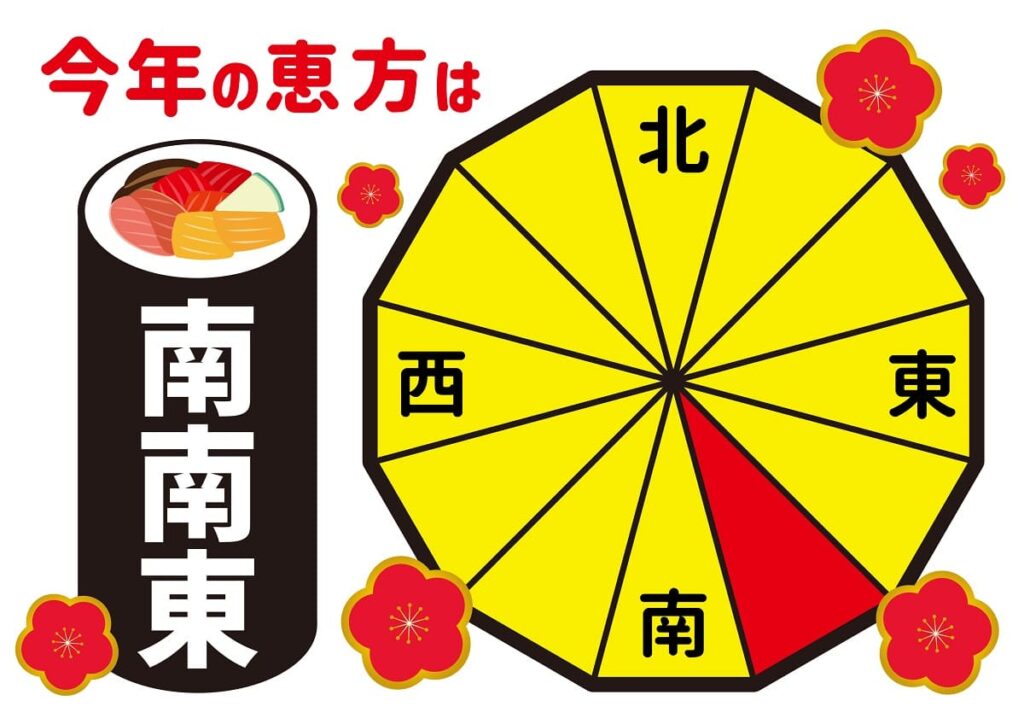
The lucky direction changes every year based on the traditional calendar.
➡ The lucky direction for 2026 is South-Southeast.
On Setsubun, people face this direction while eating Ehomaki to invite good fortune into their lives.
Traditional Rules for Eating Ehomaki
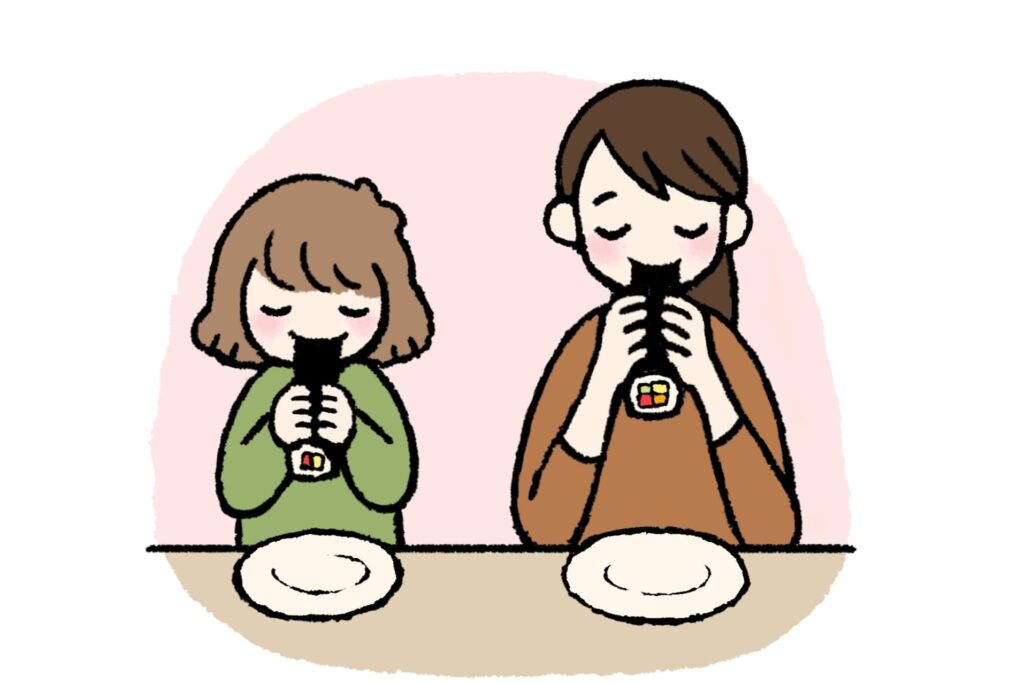
Ehomaki comes with a few well-known rules. While they are not strictly required today, many people still enjoy following them for fun and tradition.
Here’re basic Ehomaki rules.
- Face the year’s lucky direction (Eho)
- Eat silently, without speaking
- Eat one whole roll
- Do not cut the sushi
The reason for eating in silence is that speaking is believed to let good fortune escape.
Eating the roll without cutting symbolizes not breaking luck or relationships.
Staying completely silent until you finish the whole roll is surprisingly hard. You can’t help wanting to say, “It’s so good!”
Nowadays, many stores sell pre-cut Ehomaki for convenience, so feel free to enjoy it in a way that feels comfortable.
The Origins of Ehomaki: Several Theories
The exact origin of Ehomaki is unclear, but it is believed to date back to the Edo to Meiji periods (17th–19th centuries). There are several popular theories.
Theory 1: Osaka Merchant Tradition
One theory says that Ehomaki originated in Osaka’s Semba district, where merchants ate sushi rolls on Setsubun to pray for business success, health, and family harmony.
Another version suggests it spread from young women wishing to marry the person they loved.
Theory 2: Entertainment Culture in Osaka
Another theory claims that wealthy merchants in Semba had courtesans eat sushi rolls whole as part of playful entertainment during Setsubun.
This reflects the lively urban culture of Osaka at the time.
I didn’t know there was a theory that Ehomaki originated from the playful entertainment of wealthy merchants in Semba!
Theory 3: A Samurai Victory Ritual
A third theory traces Ehomaki back to the Sengoku period, involving the warlord Horio Yoshiharu.
It is said he ate a sushi roll whole on Setsubun before battle—and won. After that, the practice was seen as a good-luck ritual.
How Ehomaki Became Popular Across Japan
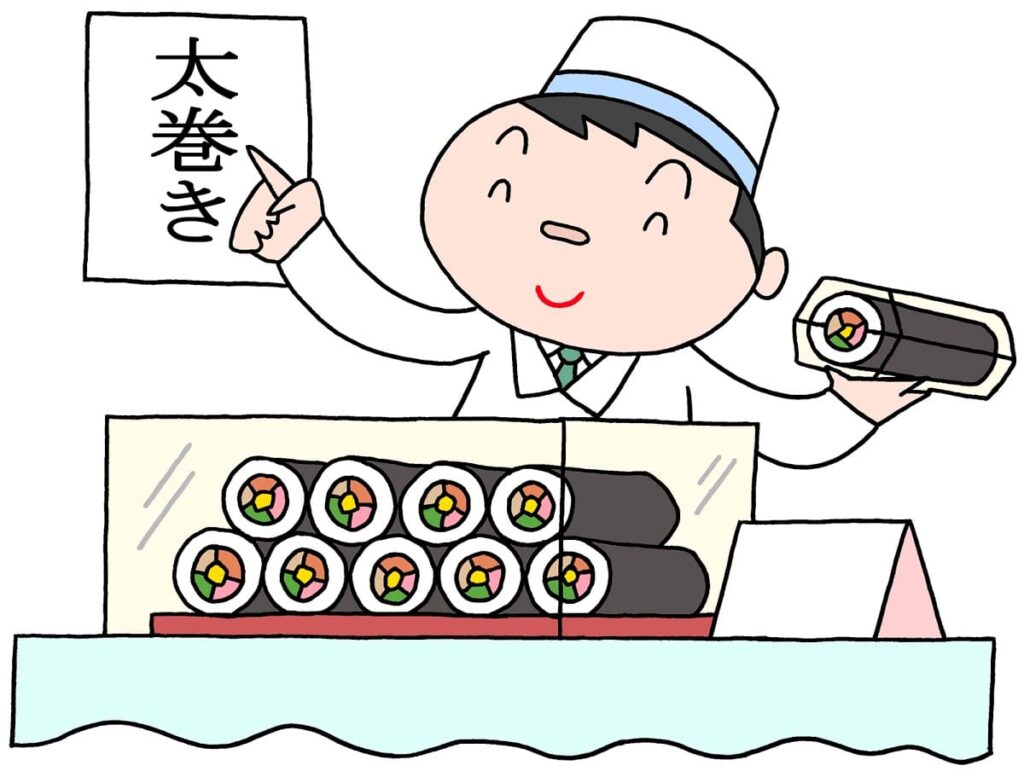
Modern Ehomaki became widely known in the 20th century.
Promotion by Sushi Associations
In 1932, the Osaka Sushi Association distributed flyers encouraging people to
“eat sushi rolls while facing the lucky direction.”
This helped formalize the custom.
Nationwide Spread in the 1970s
In the 1970s, Japan’s seaweed industry actively promoted Ehomaki as a Setsubun tradition.
Thanks to supermarkets and convenience stores, the custom gradually spread throughout Japan.
Today, Ehomaki is a familiar seasonal food across the country.
Ehomaki is said to have spread nationwide around 1998 and became especially popular throughout Japan in the 2000s.
A Modern Twist: Eho Roll (Setsubun Desserts)
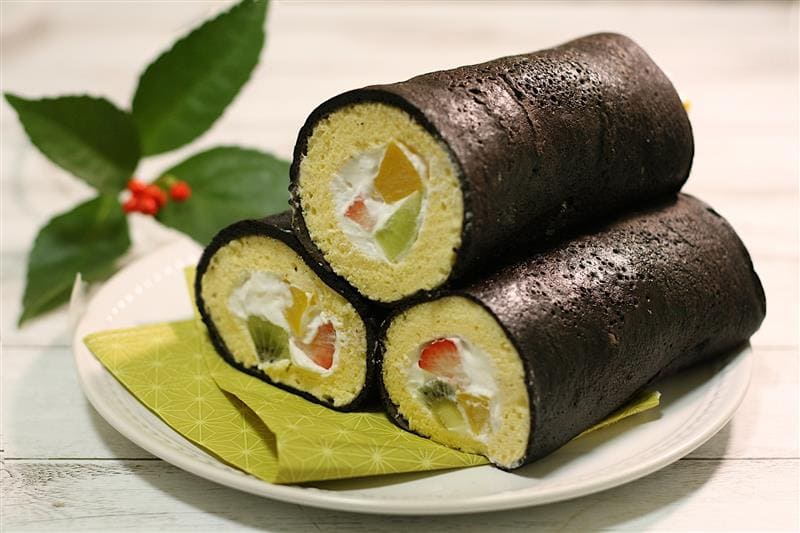
In recent years, a sweet alternative called “Eho Roll” has become popular.
An Eho Roll is a roll cake designed to look like Ehomaki, filled with cream and fruit instead of sushi ingredients.
It’s especially popular among:
- People who don’t eat raw fish
- Children and families
- Dessert lovers
Eating an Eho Roll while facing the lucky direction has become a modern, fun way to celebrate Setsubun.
In recent years, you see Eho Rolls everywhere. They’re packed with cream and look absolutely delicious.
Conclusion: Enjoy Setsubun with Ehomaki
Ehomaki is more than just sushi—it’s a symbol of welcoming good fortune, health, and happiness for the year ahead.
Whether you follow all the traditional rules or simply enjoy the food with friends and family, the spirit of Ehomaki lies in celebrating the season and looking forward to a positive future.
If you ever experience Setsubun in Japan, don’t forget to face South-Southeast in 2026 and enjoy your Ehomaki—or even an Eho Roll!

If you are interested in Japanese culture, you may love these games!
Let’s play!
Yes! Let’s play!
Comments