





Have you ever looked at an old object and wondered what kind of stories it might tell if it could speak?
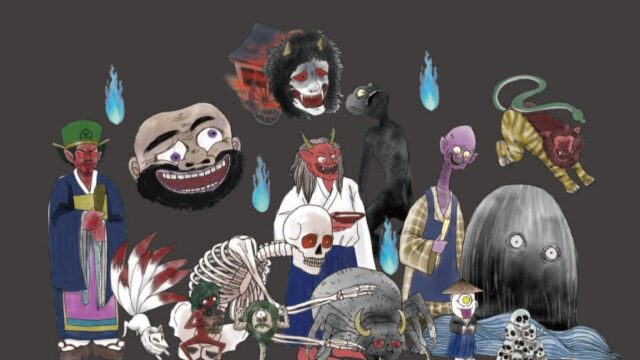
In Japanese folklore, there is a fascinating idea that old objects can eventually take on a life of their own and become supernatural beings known as Tsukumogami.
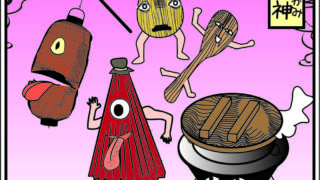
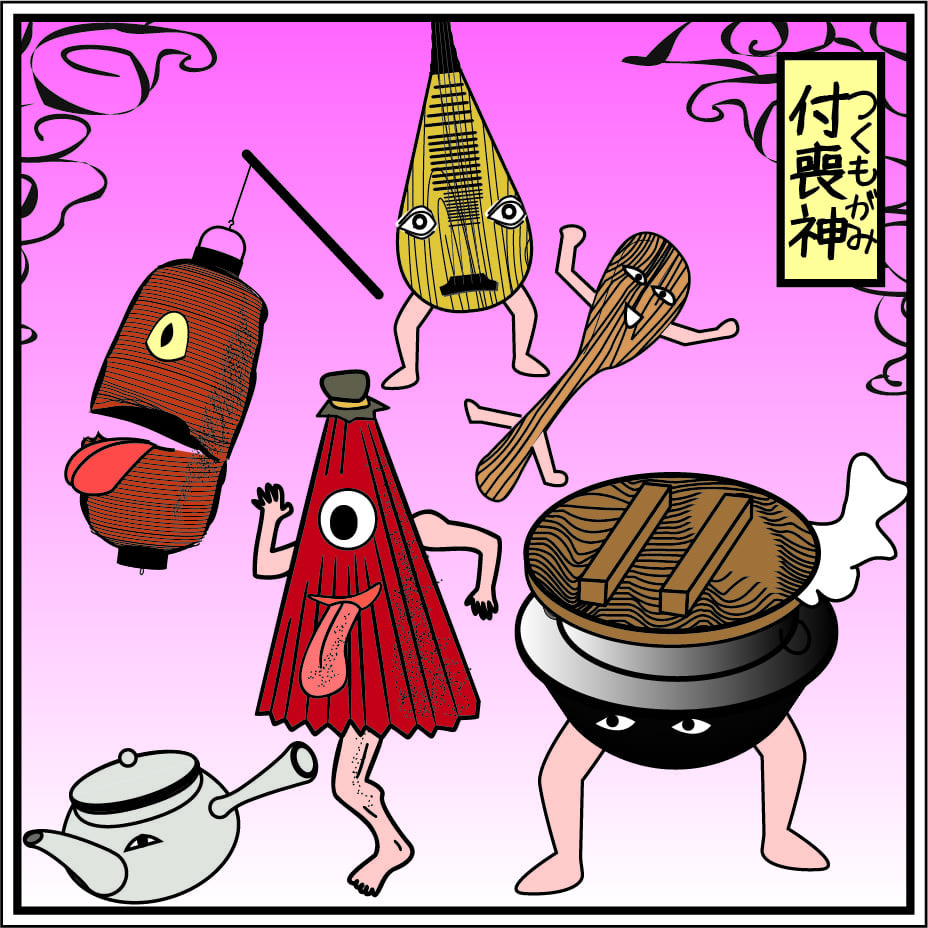
From household items and tools to umbrellas and traditional objects, things that once seemed completely ordinary can appear in folklore as strange, humorous, or even frightening yokai.
But what exactly is a Tsukumogami? Do objects really have to be 100 years old to become one? And why did people imagine that everyday belongings could become supernatural beings in the first place?
In this article, we’ll explore the folklore and history behind Tsukumogami, look at how they have been portrayed in traditional artwork, and even take a look at some Tsukumogami-related yokai in Nioh 2.
And perhaps, by the end of the article, you may never look at an old object in quite the same way again.

Today’s topic is Tsukumogami, supernatural creatures that often appear in Japanese manga and video games!
- What Is a Tsukumogami?
- Does an Object Really Need 100 Years?
- Why Do Japanese People Feel That Objects Have a Spirit?
- Are Tsukumogami Evil?
- The Tsukumogami Emaki: A Story of Objects Seeking Revenge
- What Kind of Objects Become Tsukumogami?
- Could Your Old Belongings Become Tsukumogami?
- Tsukumogami in Nioh 2: From Folklore to the Game
- Tsukumogami Q&A
- Final Thoughts about Tsukumogami
What Is a Tsukumogami?
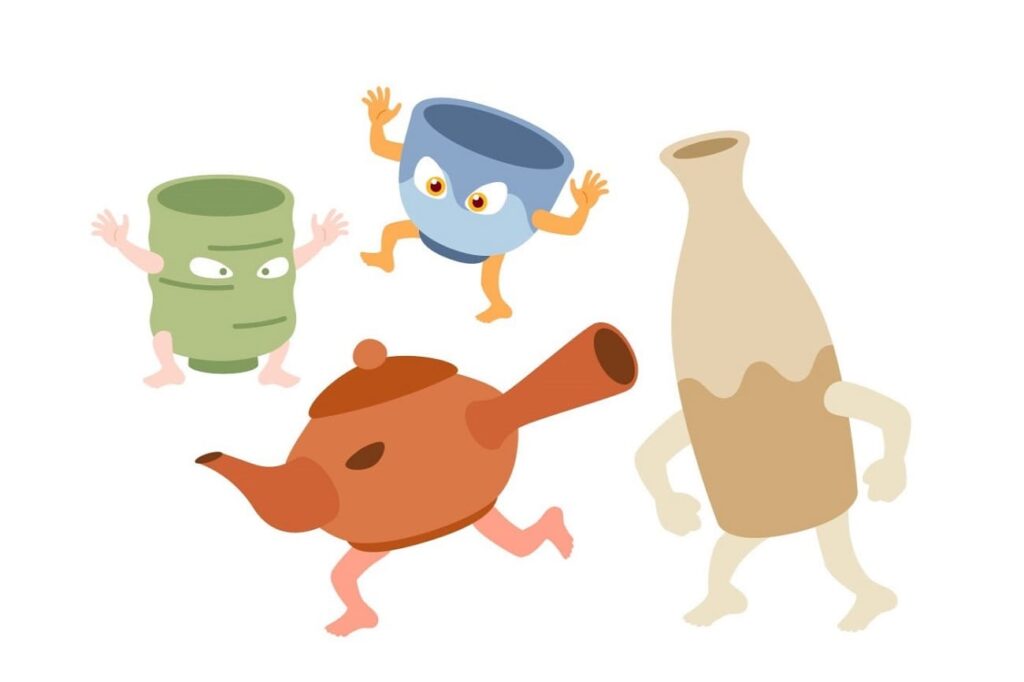
Have you ever looked at an old object and wondered about the people who used it before you?
I have.
I own a few old objects that once belonged to my great-grandfather, including a hibachi and several vases. They have been passed down through my family, and I still enjoy looking at them from time to time.
Sometimes, I find myself thinking:
“I wonder if a Tsukumogami is living inside this.”
Of course, I don’t actually expect one of my old vases to suddenly grow arms and legs and start walking around!
But there is something special about owning an object that was used by someone from a much older generation. It has been part of my family’s history long before it came into my hands.
This feeling makes me think of Tsukumogami (付喪神).
In Japanese folklore, Tsukumogami are supernatural beings associated with old objects. Traditional stories describe objects that have existed for a very long time transforming into yokai or acquiring a supernatural presence.
In other words, an ordinary object can become a yokai.
A household item that seems completely ordinary during the day might become something very different in the world of Japanese folklore.
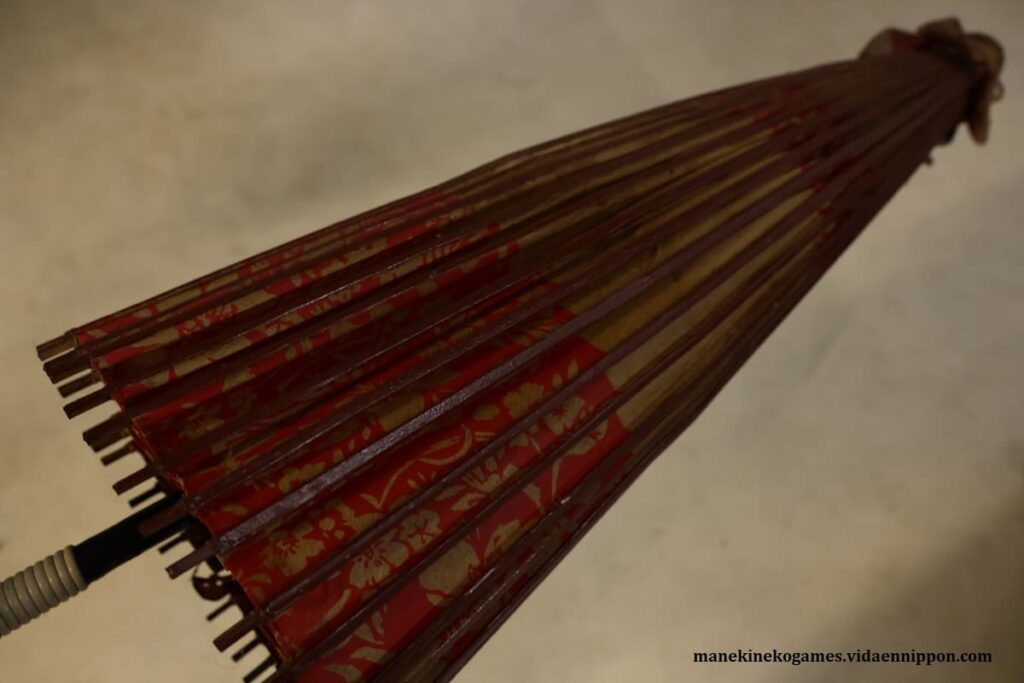
An old umbrella could grow legs.
A worn-out household item could suddenly come alive.
A forgotten object could even decide that it has had enough of being treated badly.
That last idea is especially important in some Tsukumogami stories.
Rather than being simply “monsters hiding inside old objects,” Tsukumogami can reflect the relationship between people and the things they use, cherish, discard, and pass down.
And that is what makes Tsukumogami so fascinating to me.
They turn something as ordinary as an old household object into a creature with a story of its own.
Does an Object Really Need 100 Years?
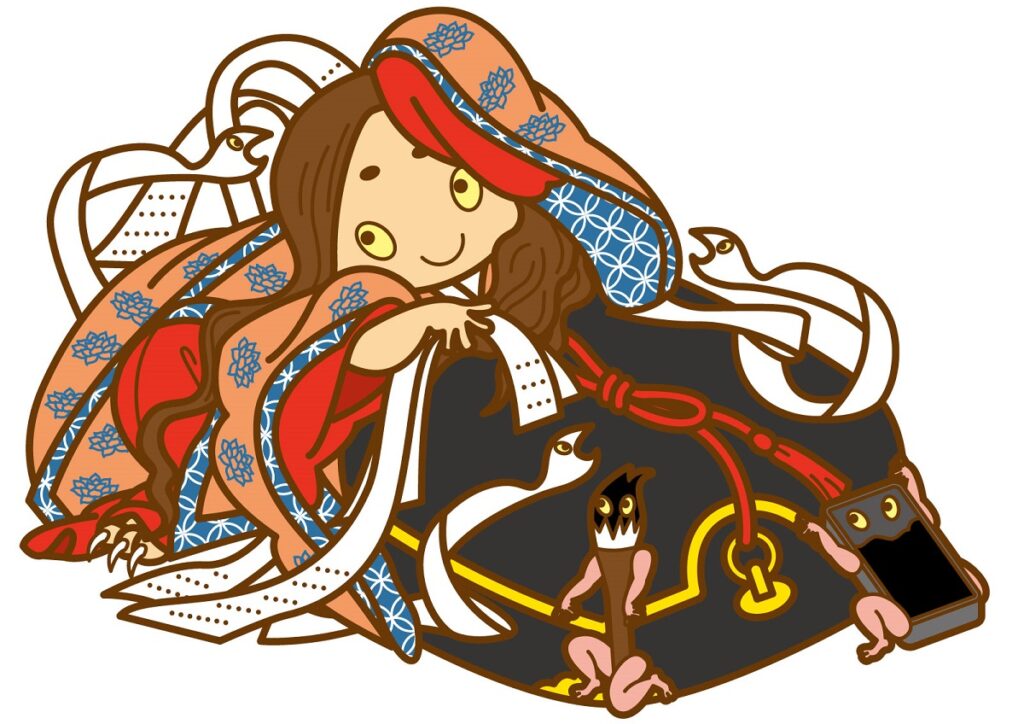
You may have heard that an object needs to be 100 years old before it can become a Tsukumogami.
So, is 100 years really the magic number?
Well, it’s a little more complicated than that.
The idea of an object becoming a Tsukumogami after 100 years does appear in traditional accounts of Japanese folklore. In some accounts, an object that has existed for a century gains a spirit and transforms into a supernatural being.
However, it is better to think of 100 years as part of the traditional lore surrounding Tsukumogami, rather than as a strict rule that every Tsukumogami must follow.
The important idea is the passage of a very long time.
Imagine an old object that has been around for generations.
Perhaps someone used it every day.
Perhaps it was repaired when it broke.
Perhaps it was passed down from a parent to a child.
Over the years, the object would become more than just a useful possession. It would become part of someone’s life—and perhaps part of a family’s history.
In the world of Tsukumogami, that long history can eventually take on a supernatural meaning.
And this is one reason I find the concept so charming.
A well-used object isn’t simply old. It may have a story.
So, does an object really need 100 years to become a Tsukumogami?
Perhaps the more interesting question is this: how long does it take before an ordinary object starts to feel like it has a life of its own?
Why Do Japanese People Feel That Objects Have a Spirit?
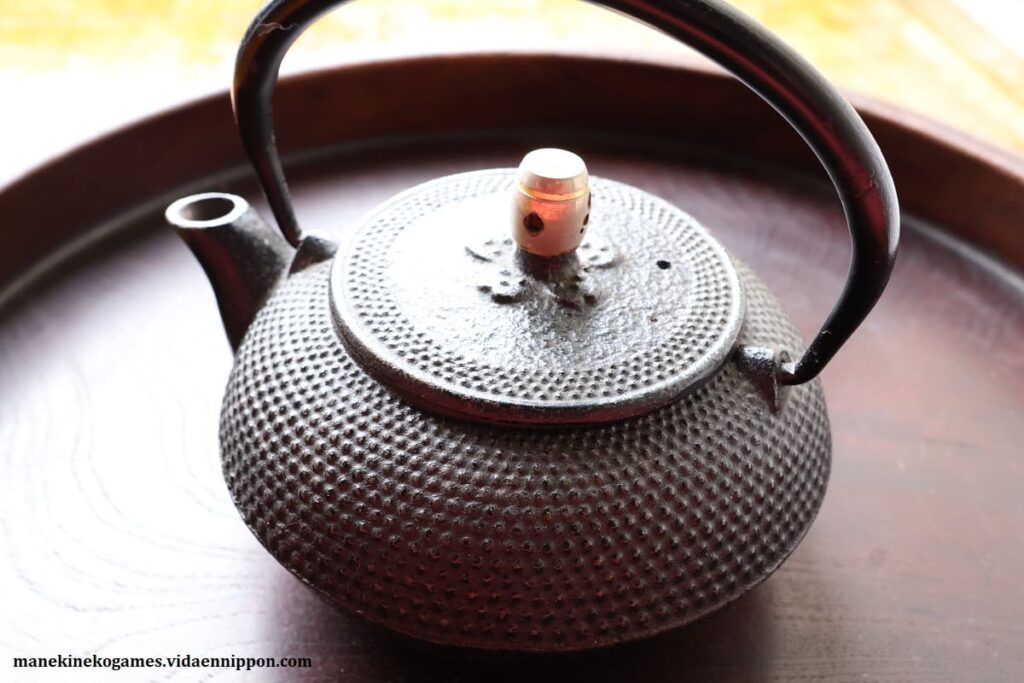
In Japan, you may sometimes hear the idea that “everything has a spirit.”
This is a little too simple as an explanation of Japanese beliefs, but it does point toward something important when we think about Tsukumogami.
Japanese folklore contains many stories in which the boundary between the ordinary and the supernatural is surprisingly thin. Objects, animals, places, and natural phenomena can appear in stories as beings with supernatural qualities.
Tsukumogami take this idea in a particularly fascinating direction.
An object doesn’t have to remain an object forever.
In traditional Tsukumogami lore, an old household item can eventually acquire a spirit and transform into a supernatural being. A tool or utensil that once served its human owner can become a yokai with its own personality and intentions.
This makes Tsukumogami different from many monsters that are simply born as supernatural creatures.
They have a history.
A broom may have swept someone’s floor for years.
A kettle may have been used to prepare countless meals.
A sandal may have carried someone through the streets.
An old object can therefore be imagined as having witnessed part of a person’s life.
And perhaps this is one reason the idea of Tsukumogami feels so intriguing.
The object itself may be ordinary, but the story we imagine around it is not.
I think this is also why I feel differently about the old vases I inherited from my great-grandfather.
I don’t know everything about their past, but I know that he used them, and I like to imagine that he may have filled them with flowers from the trees he cared for in his garden.
Now they are no longer used, but they have remained in my family.
When I look at them, I sometimes wonder how many moments of my great-grandfather’s life they quietly witnessed.

Perhaps that is the magic of Tsukumogami: they remind us that even an ordinary object can have a story.
Are Tsukumogami Evil?
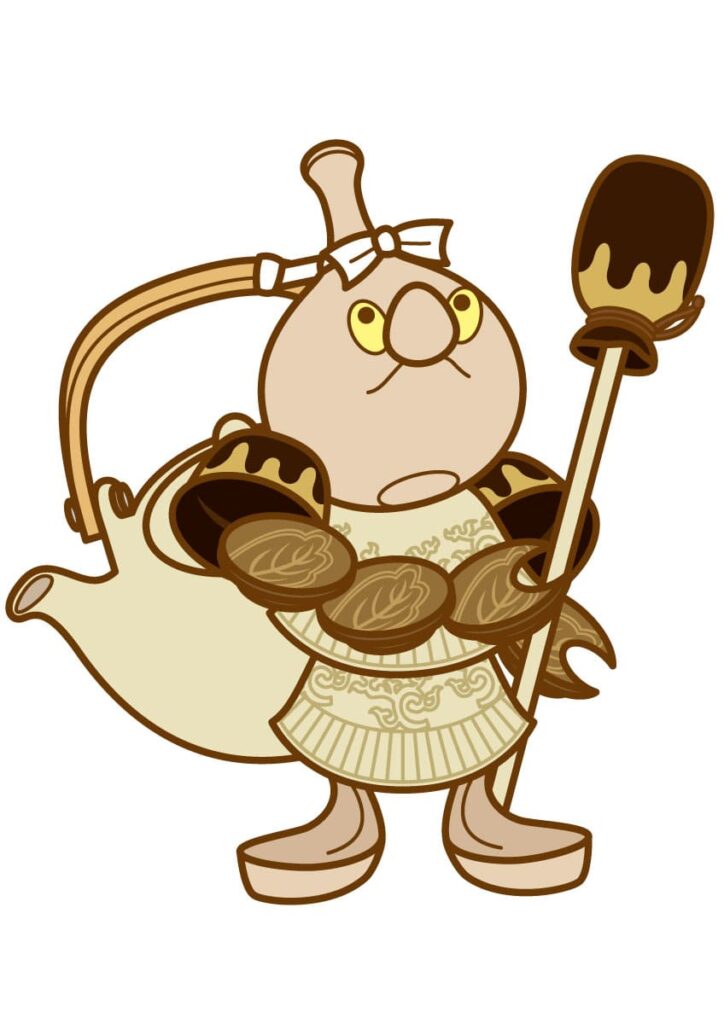
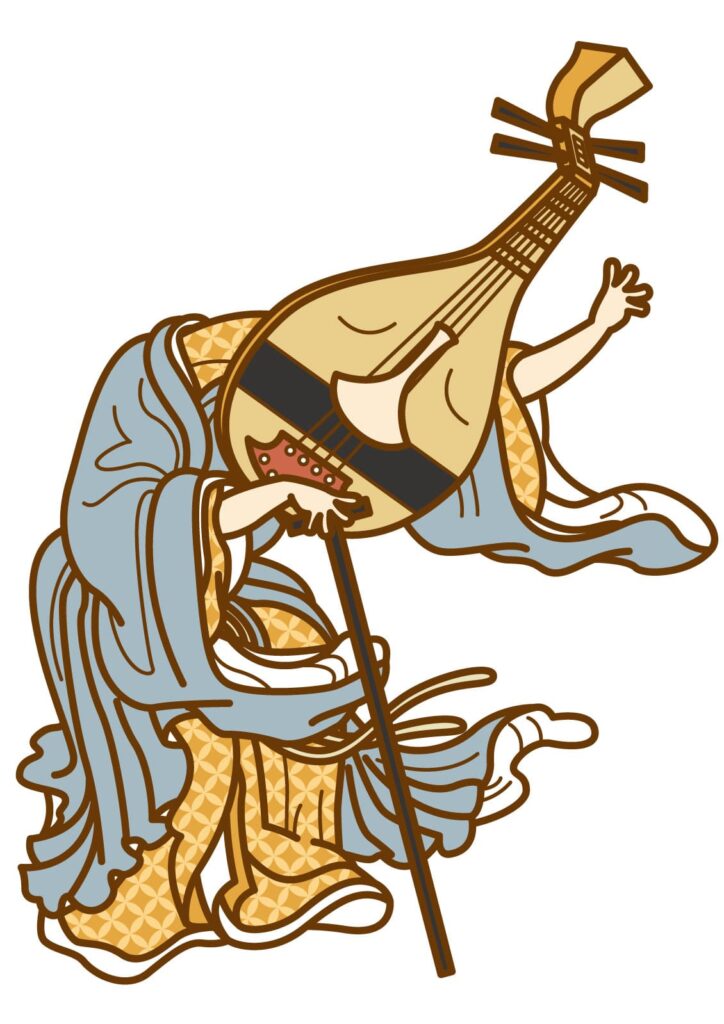
Are Tsukumogami evil?
Not necessarily.
Some Tsukumogami stories certainly portray them as frightening or dangerous beings. But their behavior can be understood in the context of how they came into existence.
One famous story tells of old household objects that were discarded during susuharai, the traditional end-of-year cleaning of a home.

If you want to read about “Susuharai”,
please check the article below as well.

After being thrown away, the abandoned objects become angry with the humans who discarded them. They transform into Tsukumogami and begin plotting their revenge.
In other words, these aren’t simply monsters that appeared out of nowhere.
They were once useful objects.
They had belonged to the human world.
They had been used, handled, and perhaps depended upon for years.
And then, one day, they were thrown away.
From the objects’ point of view, perhaps they had every reason to be angry.
Imagine spending years helping someone prepare meals, sweep their home, or carry their belongings—only to be tossed aside when you become old.
If you were a Tsukumogami, wouldn’t you be a little annoyed, too?
This is one of the things I find so fascinating about Tsukumogami.
Their stories can make us look at old objects from a completely different perspective.
Instead of seeing an old tool as something useless that should simply be thrown away, we can imagine that it has a history, a personality, and perhaps even feelings of its own.
Interestingly, the story does not simply end with the Tsukumogami taking revenge. In versions of the tale, the supernatural beings are eventually defeated and turn toward Buddhism and enlightenment.
So, are Tsukumogami evil?
Some can certainly be dangerous. But perhaps “evil” is not the best way to understand them.
Sometimes, they are simply old objects with a very long memory.
The Tsukumogami Emaki: A Story of Objects Seeking Revenge
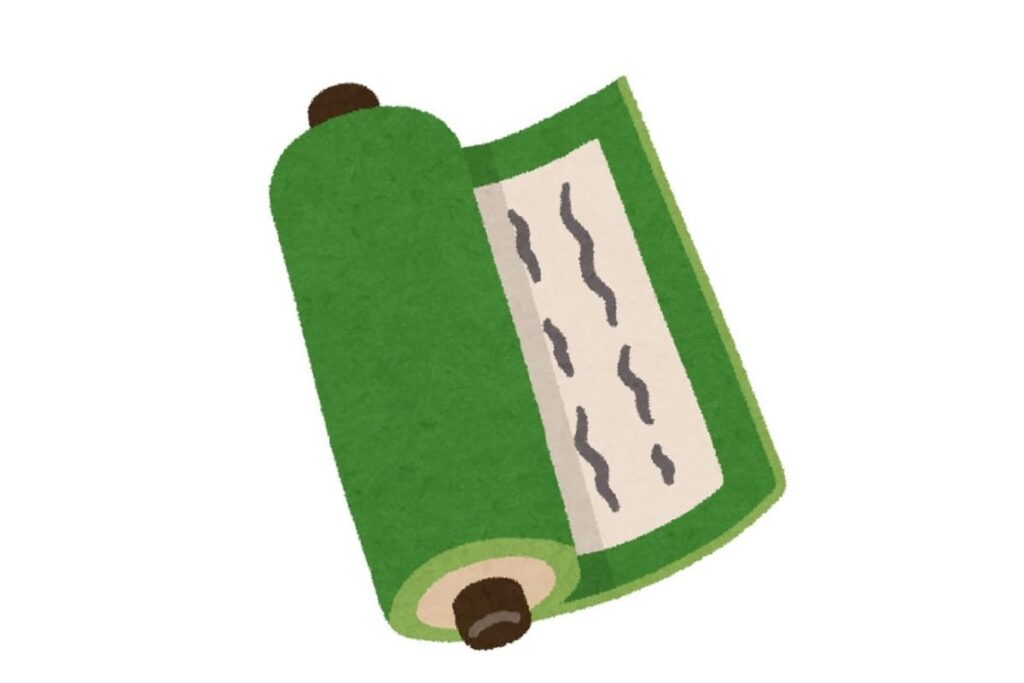
One of the most fascinating stories about Tsukumogami can be found in the Tsukumogami Emaki (付喪神絵巻), a picture scroll about supernatural objects.
The story begins with something surprisingly ordinary: a major household cleanup.
In traditional Japan, people carried out susuharai, a year-end cleaning in which dust and dirt were removed from the home. In the story, old household objects are discarded during this cleaning.
But the objects are not happy about being thrown away.
They gather together, angry and resentful toward the humans who abandoned them.
And then something extraordinary happens.
The old objects transform into Tsukumogami.
They are no longer simply worn-out household items. They have become supernatural beings—and they decide to take revenge on the humans who threw them away.
The resulting story is wonderfully strange.
Objects that once belonged in an ordinary household now appear as bizarre creatures. They form a group, march through the streets, and cause trouble for human beings.
In other words, the objects have gone from:
“Please don’t throw me away!”
to:
“You threw me away? Fine. Now it’s your turn to be afraid.”
I have to admit, I find this idea both creepy and a little funny.
After all, these creatures weren’t always monsters.
They were once everyday objects that people used and eventually discarded.
The story gives those forgotten objects a voice—and a reason to be angry.

Hmmmm… You know, if I were an old household object, I think I might become a Tsukumogami too if I had worked for years and then got thrown away during the year-end cleaning.
But the tale doesn’t simply end with their revenge. The Tsukumogami are eventually defeated, and the story moves toward a Buddhist resolution involving enlightenment and salvation.
This makes the Tsukumogami Emaki more than just a story about scary supernatural creatures.
It is also a story about old things, abandonment, resentment, and what happens when the objects we no longer value are given a life of their own.
What Kind of Objects Become Tsukumogami?
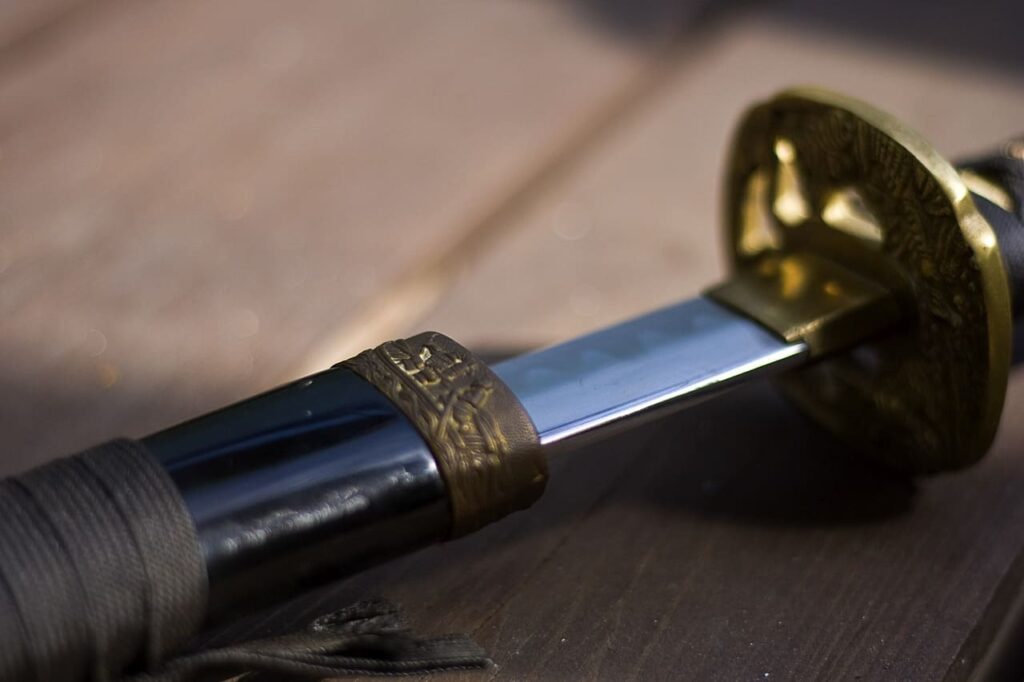
One of the most interesting things about Tsukumogami is that almost any old household object can potentially become a supernatural being in folklore.
They aren’t limited to mysterious or unusual objects.
Some of them were things people used in their everyday lives: umbrellas, sandals, cooking utensils, teapots, bowls, and other household items. Old objects that might have seemed completely ordinary to the people who used them could be transformed into strange and sometimes frightening yokai in stories and artwork.
This makes Tsukumogami especially fun to imagine.
A broken umbrella sitting forgotten in the corner?
It might have a story.
An old bowl that has been passed down through a family?
Perhaps it has been watching everyone for generations.
A worn-out pair of sandals that has traveled countless roads?
Who knows where they’ve been—and what they might have seen?
Of course, these are playful ways of imagining Tsukumogami rather than rules of Japanese folklore.
But that is part of their charm.
The more ordinary the object, the more surprising its transformation can feel.
And perhaps that’s why Tsukumogami remain so memorable.
They take things that we normally overlook and make us wonder:
What if that old object had a life of its own?
Could Your Old Belongings Become Tsukumogami?
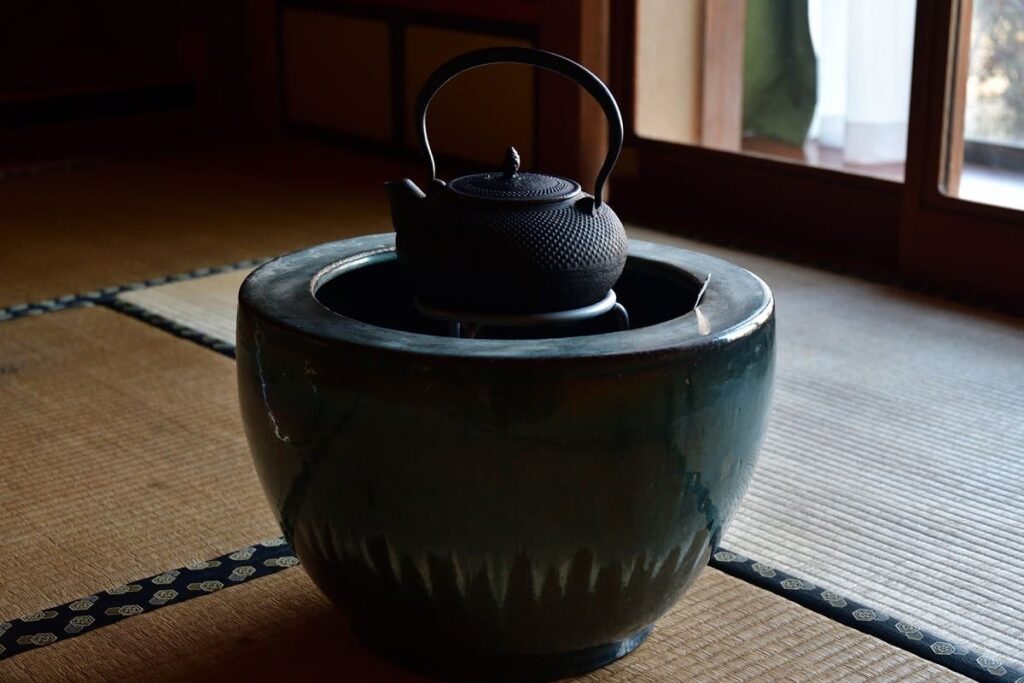
After learning about Tsukumogami, you might start looking at the old objects in your own home a little differently.
What about that old vase sitting in a cupboard?
What about the umbrella you’ve kept for years, even though you hardly ever use it?
Or perhaps there is an old piece of furniture that has been passed down through your family.
Could any of these objects become a Tsukumogami?
According to traditional folklore, we cannot say that simply keeping an old object for a certain number of years will automatically turn it into a yokai.
But imagining it is part of the fun.
I actually have a few very old objects that were passed down to me from my great-grandfather, including a hibachi brazier and several vases.
My great-grandfather passed away many years ago, so I cannot ask him about their history anymore. However, I believe the hibachi was probably used by him and his family, and I imagine that he used the vases to enjoy flowers from the trees he carefully tended in his garden.
The objects were apparently no longer used after he passed away, but they remained in my family.
Sometimes, when I look at them, I find myself wondering:
“What if a Tsukumogami is quietly living in there?”
Maybe that sounds a little silly.
But when you hold an old object that has been used by someone who lived generations before you, it can feel as though you are holding a tiny piece of their life.
You can wonder who touched it, what they used it for, and how many ordinary moments it quietly witnessed.
And perhaps that is where the idea of Tsukumogami becomes especially fascinating.
It encourages us to imagine that even the objects we no longer use—or even notice—might have a story of their own.
My great-grandfather’s hibachi brazier and vases hadn’t been used for a long time, but I’m glad we didn’t throw them away.
Tsukumogami in Nioh 2: From Folklore to the Game


The idea of Tsukumogami may have begun with old objects and stories about spirits, but these strange beings have continued to appear in modern Japanese entertainment.
Nioh 2 is a great example.
This action role-playing game features several yokai inspired by objects and traditional Japanese folklore. Some of them may look familiar if you’ve learned about Tsukumogami, while others show how a game can reinterpret old folklore in its own way.
Here are three Tsukumogami-related yokai you can encounter in Nioh 2.
Koroka: The Spirit of an Old Stone Lantern
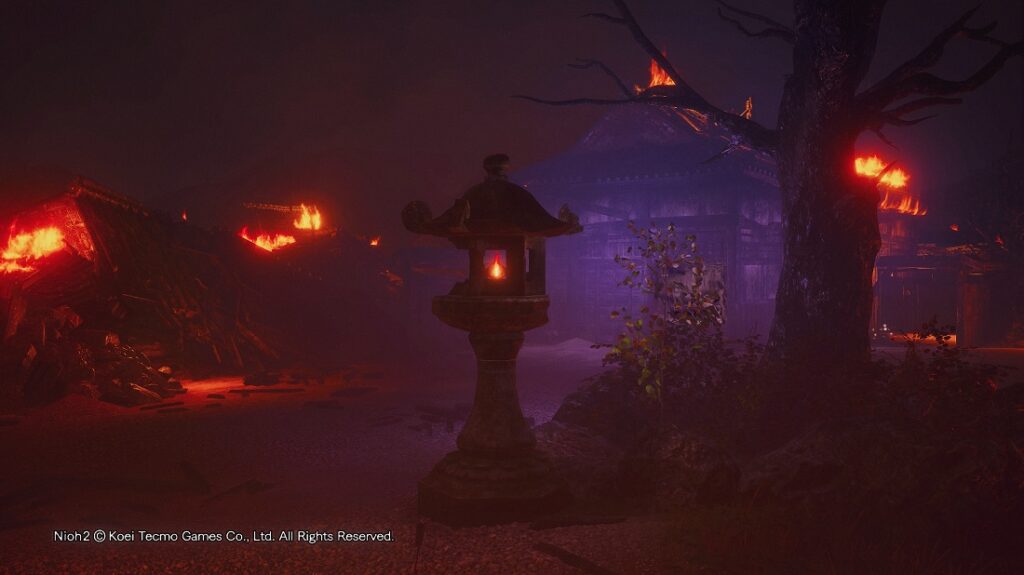

Koroka is one of the clearest examples of a Tsukumogami in Nioh 2.
According to the game’s yokai lore, Koroka was once an old stone lantern that had remained unused for a long time. When a lantern that has been left in disuse suddenly lights up by itself, it is said to be the work of a Koroka—or a warning that one may be nearby.
In the game, Koroka attacks with fire and can breathe flames and launch fireballs. It also wields a spear and carries a smoking pipe, giving this otherwise quiet-looking stone lantern a surprisingly distinctive personality.
I especially like the idea behind Koroka because it connects so neatly with the traditional image of Tsukumogami.
An ordinary object is left forgotten.
Then, one day—
the object lights itself.
That small change transforms something familiar into something unsettling.
Karakasa Umbrella: The One-Eyed Umbrella
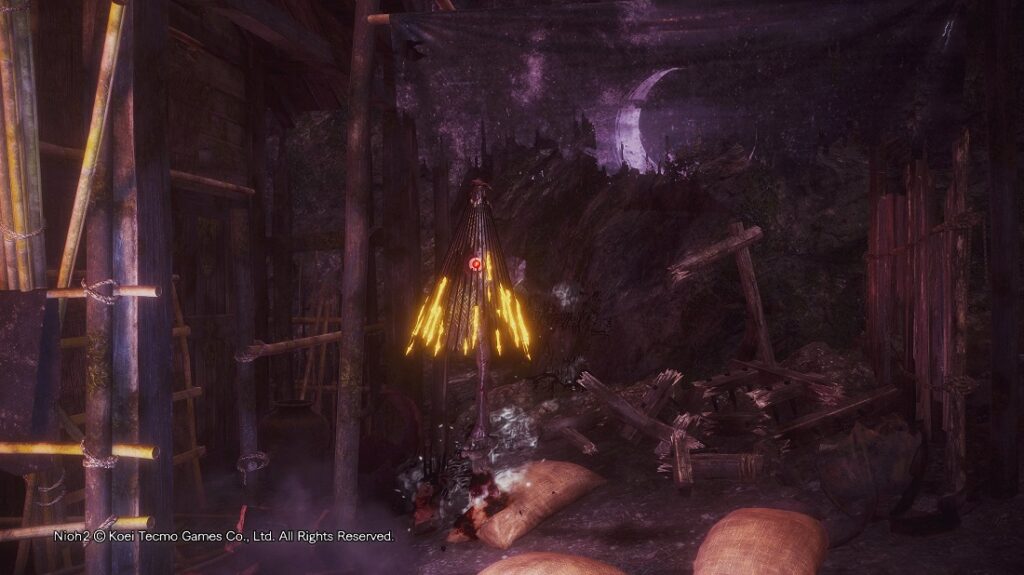
If you have ever seen a picture of a Japanese yokai with one eye, one leg, and a long tongue, you may already be familiar with the Karakasa Obake.
The Karakasa Umbrella is a yokai in the shape of a traditional Japanese umbrella. In Nioh 2, it has the classic one-eyed, one-legged appearance and moves by hopping around. It can also attack with paralyzing needles and unleash a powerful charge attack.
The connection to Tsukumogami is particularly easy to see here.
A humble household item becomes a living yokai.
And somehow, a simple umbrella suddenly becomes a one-eyed creature that hops toward you in the dark.
Honestly, if an umbrella started doing that in my house, I think I would stop worrying about whether it had been around for 100 years and simply run away.

Oboroguruma: The Haunted Ox Cart

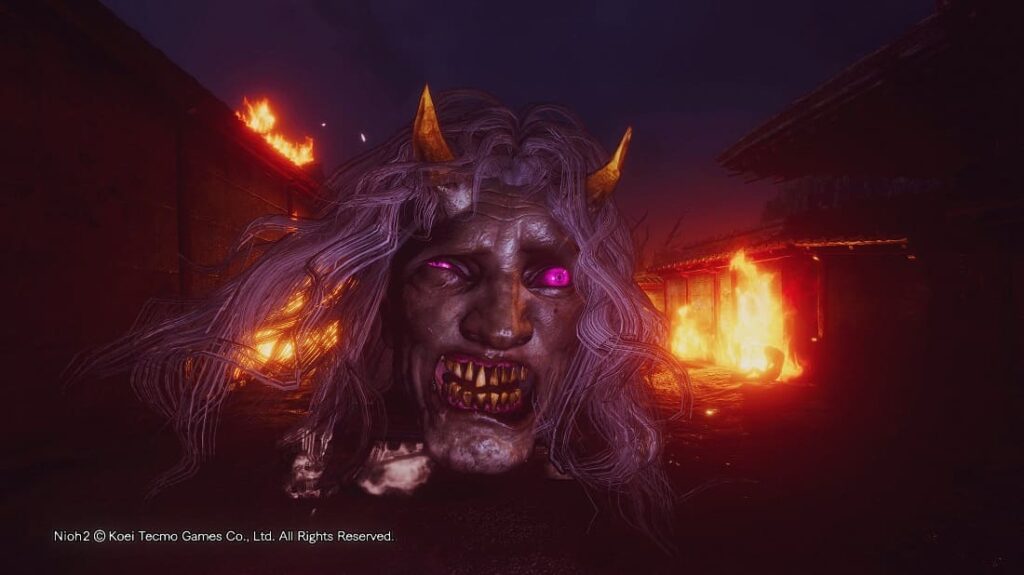
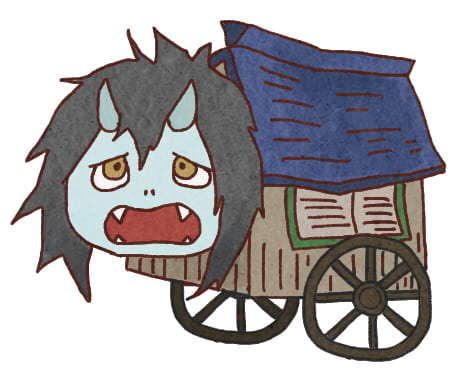
Oboroguruma is a yokai in the form of an ox cart, and its story takes a slightly different path from the other Tsukumogami-related creatures in Nioh 2.
In the game’s lore, ox carts were once a symbol of wealth and status among the nobles of the Heian period. People could even quarrel over the best places to park their carriages at festivals and other events.
Over time, feelings such as pride, jealousy, and resentment were said to linger within the carriages themselves, eventually transforming them into yokai.
This makes Oboroguruma especially fascinating.
The cart is not simply an old object that has come to life.
It has absorbed human emotions.
And those emotions can affect how the yokai behaves in battle. In Nioh 2, Oboroguruma changes between different forms, each associated with a different face and attack pattern. Players need to watch its expression and react accordingly.
So while Koroka and Karakasa Umbrella strongly evoke the idea of an object becoming a supernatural being, Oboroguruma adds another fascinating possibility:
What if it isn’t only the object that remains behind—but the emotions surrounding it, too?

Biwa Boku-Boku: The Yokai Within the Biwa
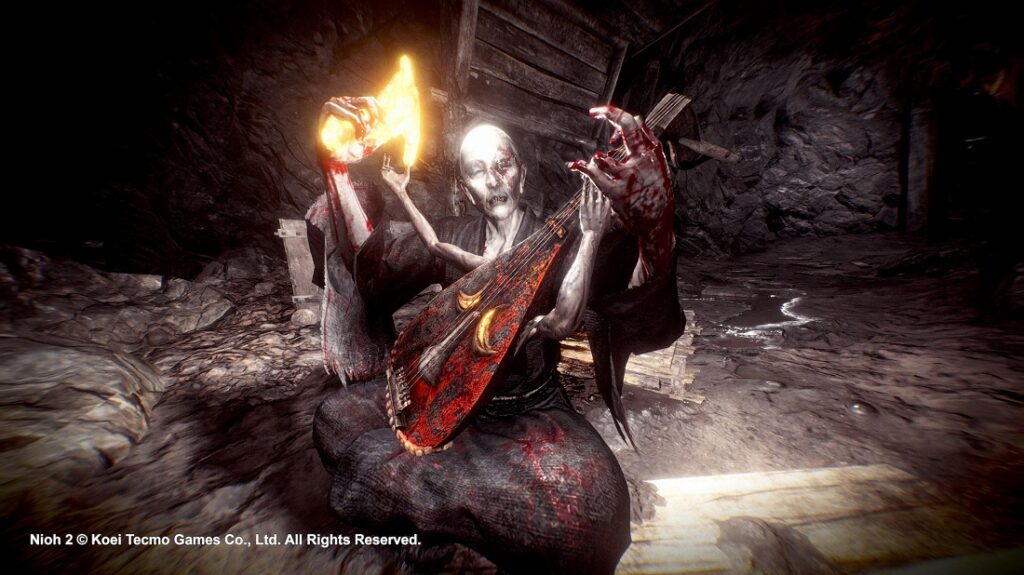

Biwa Boku-Boku is one of the most intriguing object-related yokai in Nioh 2.
At first glance, you may think you are looking at a monk playing a biwa, a traditional Japanese lute. But according to the game’s lore, the biwa itself is the yokai. The human figure is merely a reflection of Hoichi, the legendary biwa player associated with The Tale of the Heike.
This idea has roots in older Japanese yokai imagery. Biwa Boku-Boku was illustrated by Toriyama Sekien in Hyakki Tsurezure Bukuro, where it appears as a supernatural being associated with an old biwa.
In Nioh 2, the creature uses its eerie music to summon other supernatural beings and Revenants, while the biwa itself is its weak point.
What I find especially fascinating is that the game preserves the basic idea of the instrument itself being the supernatural being.
It is not a monk who happens to possess a magical biwa.
The biwa is the yokai.

Tsukumogami Q&A
- QAre all Tsukumogami evil?
- A
Not necessarily. Some Tsukumogami stories portray objects as frightening or vengeful, especially after they have been discarded. However, it is too simplistic to describe all Tsukumogami as evil. Some stories also connect them with ideas of transformation, salvation, and enlightenment.
- QDo objects really have to be 100 years old to become Tsukumogami?
- A
The idea that an object becomes a Tsukumogami after 100 years is part of traditional lore, but it is better understood as a folkloric motif than as a strict rule. Japanese folklore does not provide a simple countdown that automatically turns every old object into a yokai.
- QWhich Tsukumogami-related yokai appear in Nioh 2?
- A
Nioh 2 features several yokai associated with objects, including Koroka, a stone lantern spirit; Karakasa Umbrella, a one-eyed umbrella yokai; and Oboroguruma, a supernatural ox cart. Their origins and characteristics are not identical, which makes comparing them with traditional Tsukumogami lore especially interesting.
Final Thoughts about Tsukumogami
Tsukumogami are more than strange creatures created from old objects.
Their stories invite us to look at ordinary things differently—to imagine the memories they may carry, the people who once used them, and the emotions that may have surrounded them.
From traditional picture scrolls to modern games like Nioh 2, the idea of Tsukumogami continues to inspire new stories.
And perhaps that is what makes them so fascinating.
The next time you see an old vase, umbrella, bowl, or other forgotten object, take a closer look.
You probably don’t need to worry about it suddenly becoming a yokai.
But you might wonder what kind of story it could tell if it had a voice of its own.

Oh By the way! If you are interested in Yokai or in Japanese Culture and you are a gamer, you may love these games!
Let’s play!

Yes! I can’t wait to play these games!
Let’s Play!
Comments