







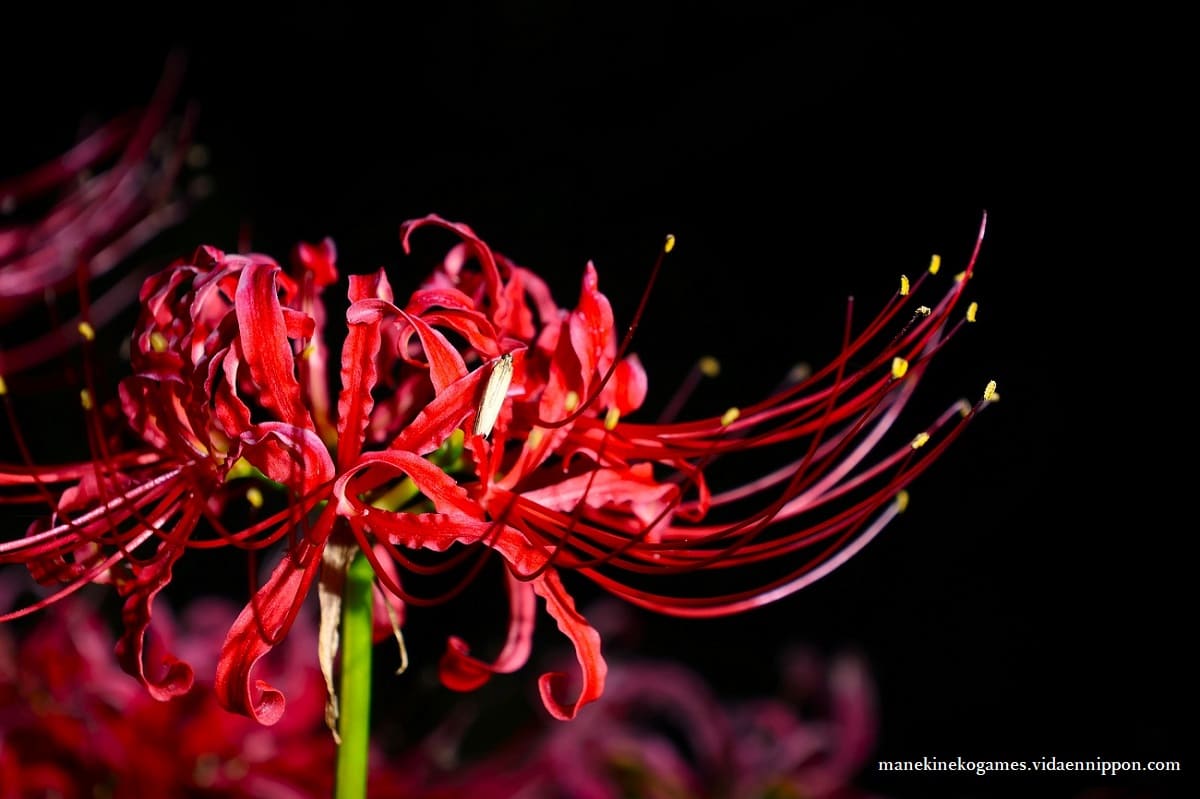
Red Spider Lily (Higanbana) is a striking flower that blooms in late September and early October, known for its bright red petals and unique shape. While it’s admired for its beauty, the Red Spider Lily has a darker side in Japanese culture, often associated with death and misfortune. This duality makes it one of the most fascinating flowers in Japan.
Red Spider Lily also makes an appearance in the video game Nioh2, where its connection to the supernatural world is further explored. In this article, we’ll delve into the characteristics of the Red Spider Lily, why it’s considered unlucky, and how it’s utilized in Nioh2.

Today, I’ll introduce the red spider lily, a flower that looks poisonous and mysterious, yet somehow captivates people with its beauty!
What Is Red Spider Lily (Higanbana)?
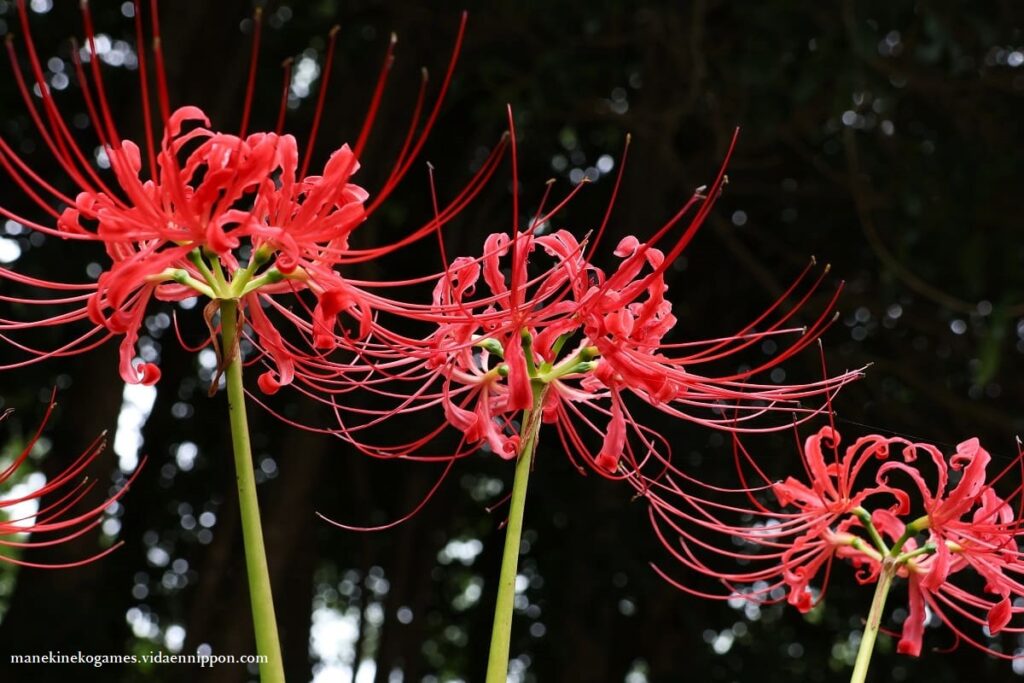
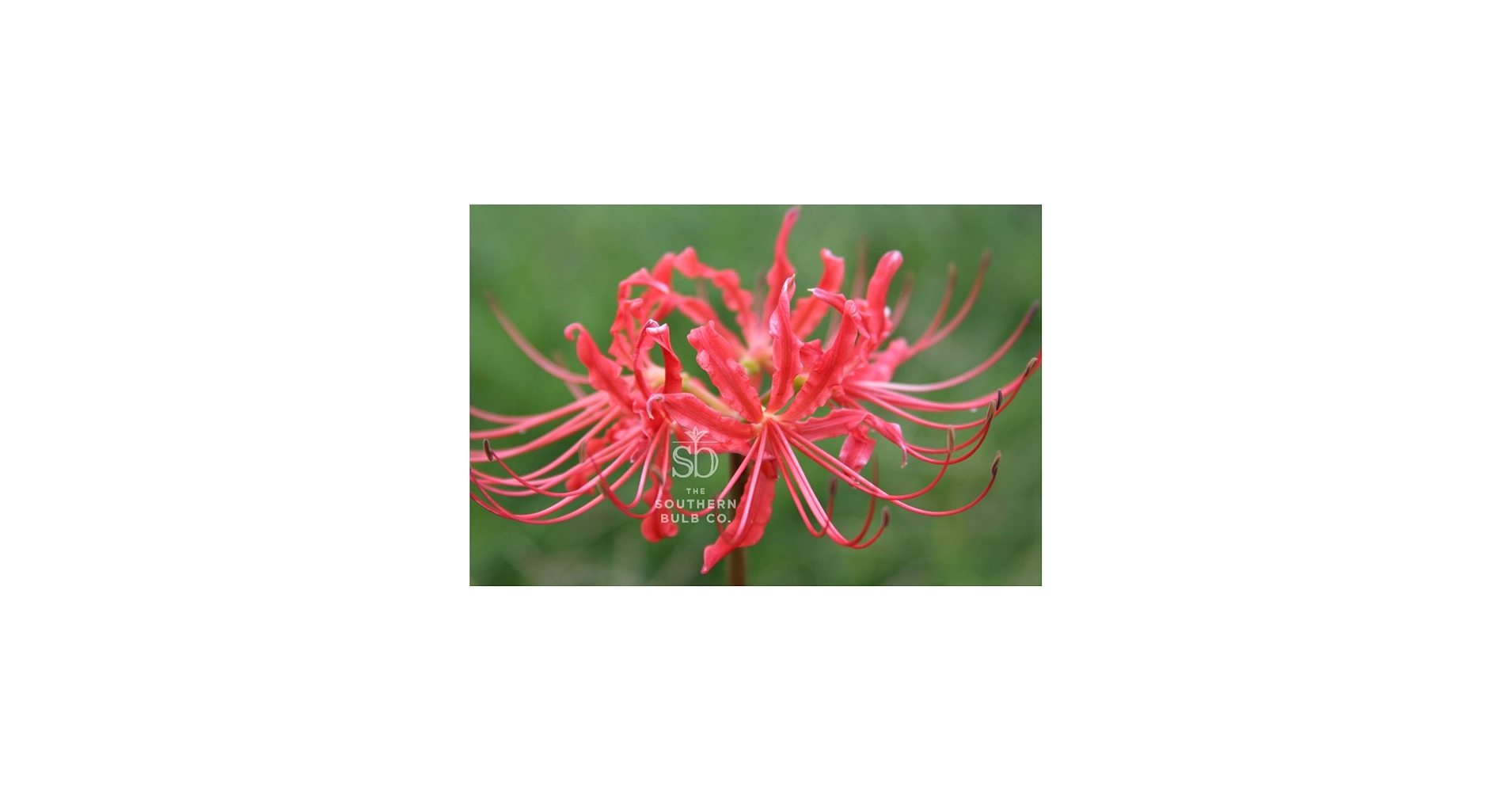
Higanbana, or the Red Spider Lily (Lycoris radiata), is known for its vivid red flowers that grow on tall, leafless stems. The flowers typically bloom in clusters, creating a sea of red that stands out in the landscape. The Japanese name “Higanbana” literally means “flower of the other shore,” which refers to the Buddhist concept of the afterlife.
This flower is commonly seen near cemeteries, riverbanks, and rice paddies, and its timing coincides with the Japanese holiday of Higan, a period for paying respects to ancestors.
The Symbolism of Higanbana (Red Spider Lily)
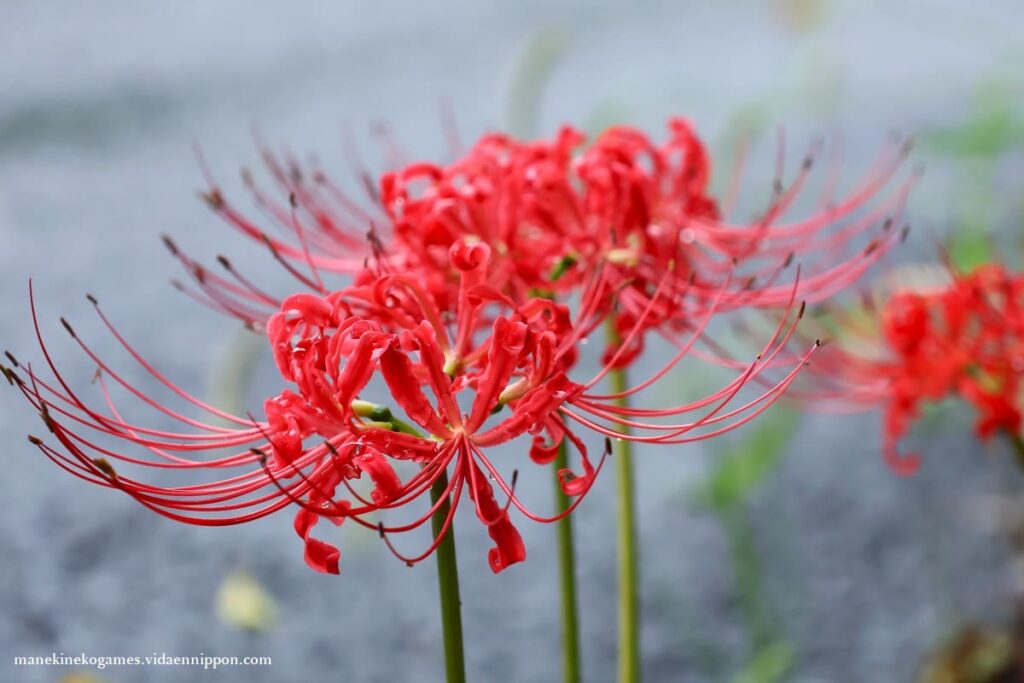
The Red Spider Lily’s association with death stems from its role in Japanese Buddhist traditions. Since it blooms around the time of the autumn equinox, when the boundary between the living and the dead is believed to be thin, it is often planted near graves to guide spirits on their journey to the afterlife.
In addition to its spiritual symbolism, Red Spider Lily is also known for its toxicity. All parts of the plant, especially the bulb, contain toxic compounds that can be harmful if ingested. This adds to its reputation as a flower that brings misfortune.

I’d love to grow red spider lilies myself someday, but the fact that they’re poisonous still makes me a little nervous.
Why Red Spider Lily Is Considered Unlucky
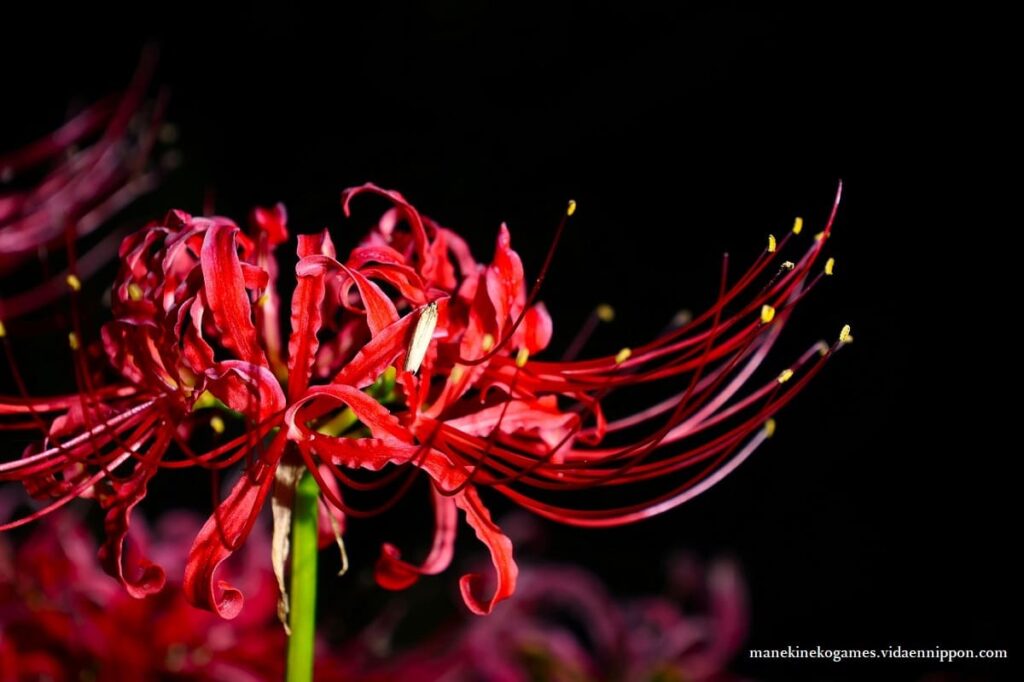
Red Spider Lily is often seen as a bad omen due to its strong association with death and funerals. It’s believed that planting Red Spider Lily near homes could invite death or misfortune. In rural areas, it was traditionally planted around rice paddies and homes to deter pests and rodents because of its toxicity, but this also contributed to the superstition that it wards off both physical and spiritual threats.
The flower’s appearance without leaves and its sudden, short-lived bloom only add to its eerie reputation. Many consider it a flower that should not be given as a gift due to its dark associations.

Just as its striking appearance suggests, the red spider lily is actually poisonous. Even so, it’s so beautiful that it’s hard to look away.
The Higan Festival and Red Spider Lily
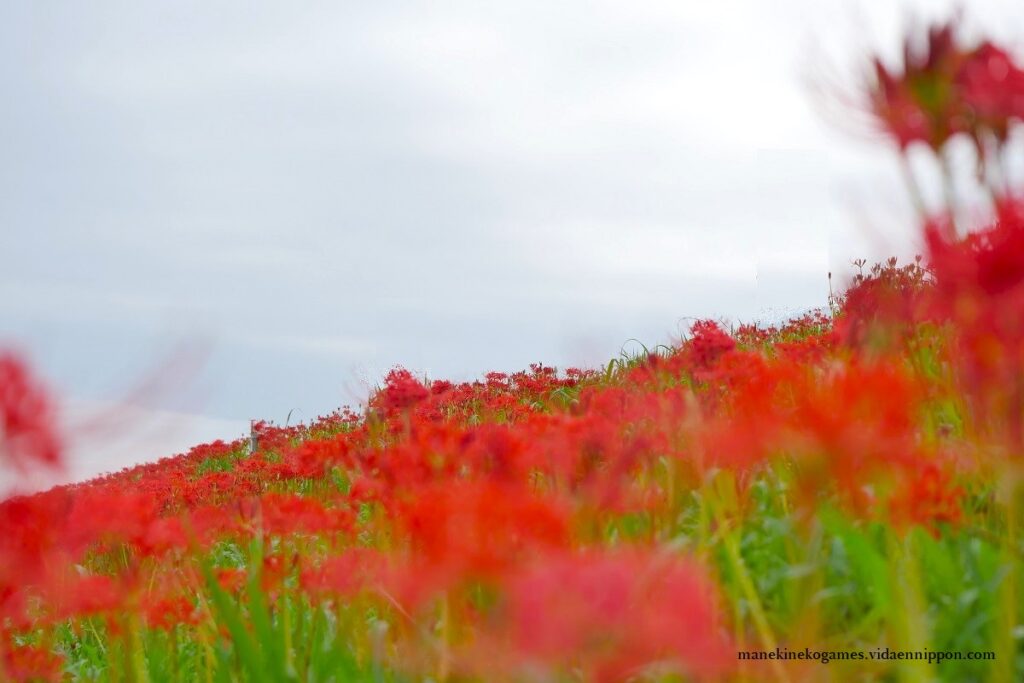
The Higan Festival, observed during the spring and autumn equinoxes, is a time when families visit gravesites to honor their ancestors. During this period, Red Spider Lily can be seen blooming around cemeteries, reinforcing its connection to death and the afterlife. The flower is thought to guide the spirits of the dead safely to the afterlife, acting as a bridge between the living and the departed.
While the flower itself carries an air of foreboding, it also serves as a reminder of the impermanence of life, a key theme in Buddhist teachings.
Why Were Red Spider Lilies Planted Near Rice Fields?

Red spider lilies are often found along rice fields, riverbanks, and rural paths throughout Japan. While many people associate them with cemeteries and temples, there is also a practical reason why they became so common in agricultural areas.
The bulbs of red spider lilies contain toxic substances that can be harmful to animals. In the past, farmers planted them along the edges of rice fields to help protect crops from pests such as moles, mice, and other animals that might damage the harvest.
The flowers were also useful for marking the boundaries between fields. Because they bloom so vividly in autumn, they made property lines easy to recognize.
As a result, red spider lilies became a familiar part of the Japanese countryside. What may seem like a mysterious flower today once played an important role in protecting valuable rice crops and supporting rural life.
This practical use is one reason why red spider lilies are still strongly associated with traditional Japanese landscapes today.
Why Japanese People Love Red Spider Lily Despite Its Dark Reputation

Despite its association with death and farewells, many Japanese people have positive feelings toward red spider lilies.
One reason is that the flowers bloom during the autumn equinox, a time when many families visit the graves of their ancestors. For many people, red spider lilies are not simply symbols of death. They are also flowers that remind us of family, memories, and respect for those who came before us.
The flowers are also deeply connected to the Japanese countryside. Bright red clusters often appear along rice fields, riverbanks, and shrine paths, creating unforgettable autumn landscapes. Their sudden appearance after the summer heat has faded is one of the signs that autumn has arrived.
Many Japanese people have childhood memories of seeing red spider lilies during walks with family members or on the way to school. Although the flower has a mysterious and sometimes eerie image, it is also a familiar part of everyday life.
For this reason, red spider lilies are often seen as flowers that represent both beauty and nostalgia. Their brief blooming season makes them even more special, encouraging people to appreciate them while they last.
Personally, I always look forward to seeing red spider lilies bloom each autumn. Near my parents’ home, they cover shrine paths and riverbanks in brilliant red. Unfortunately, local weed-cutting sometimes takes place right during the blooming season, so I always try to visit before the flowers disappear!

It’s heartbreaking when red spider lilies get cut down just as they’re reaching their peak bloom!

The Role of Red Spider Lily in ‘Nioh2’
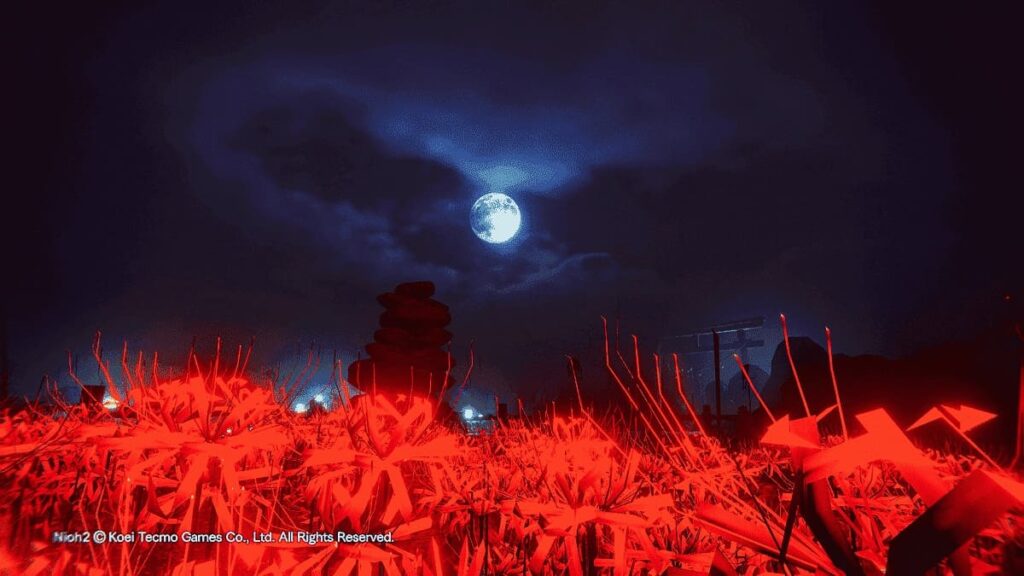
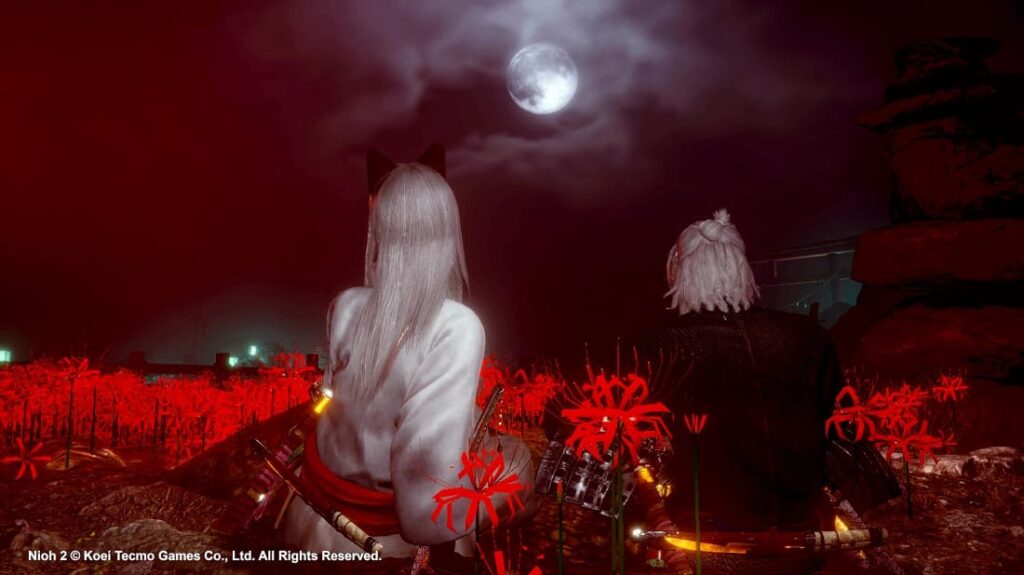
In Nioh2, Red Spider Lily makes an appearance as a key item and symbol in the game’s storyline, which revolves heavily around Japanese folklore and mythology. In the game, the flower is used to represent death and the cycle of life, much like its real-world significance.
How Red Spider Lily Is Used in the Game
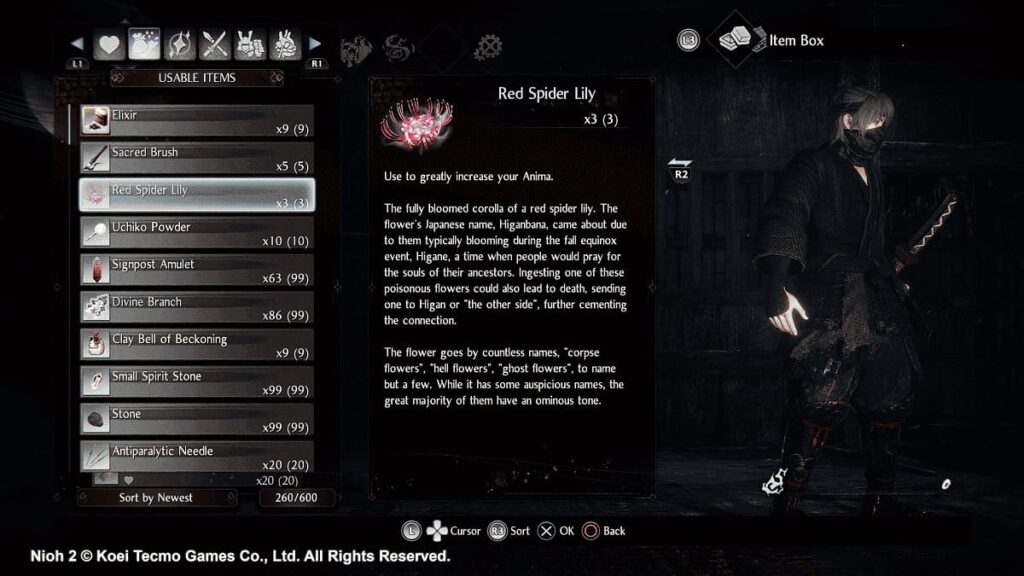
In Nioh2, Red Spider Lily is used as a Yokai Ability Item, linked to supernatural powers in the game. Players can use this item to enhance their Yokai abilities, which are essential for defeating powerful enemies in the game. The item’s use reflects its real-world associations with death and the spiritual world, fitting seamlessly into the dark, otherworldly atmosphere of Nioh2.
Red Spider Lily and Yokai Lore
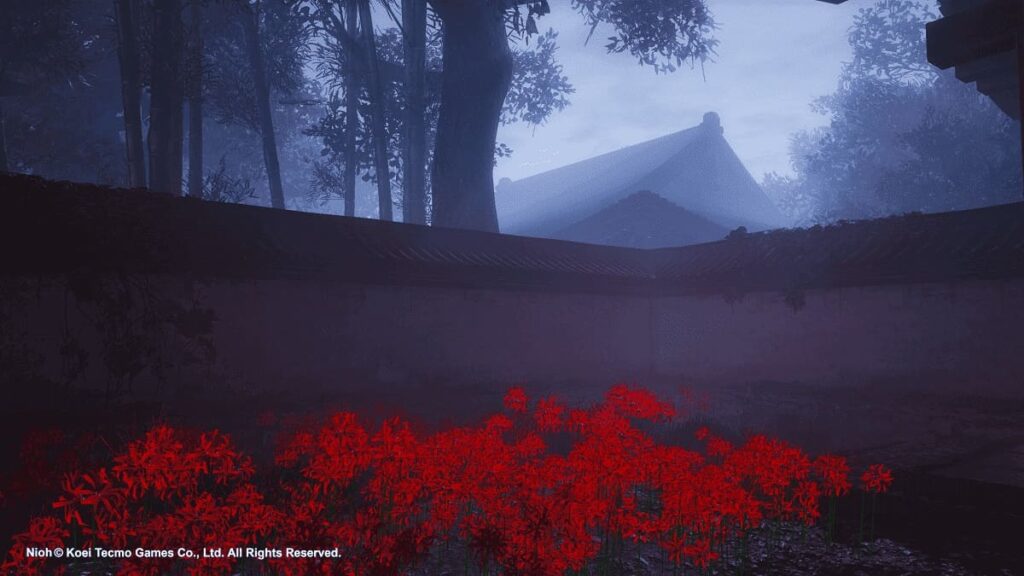
The appearance of Red Spider Lily in Nioh2 draws from its roots in Japanese mythology. Yokai, or spirits and demons, often inhabit places where the boundary between life and death is blurred. The Red Spider Lily, with its association to the afterlife, plays a key role in representing this liminal space where Yokai dwell.
By incorporating Higanbana into the game’s mechanics, Nioh2 deepens its connection to traditional Japanese beliefs about life, death, and the supernatural. The flower’s role as a Yokai Ability Item symbolizes the player’s link to the spiritual world.
Red Spider Lily’s Importance in Gameplay
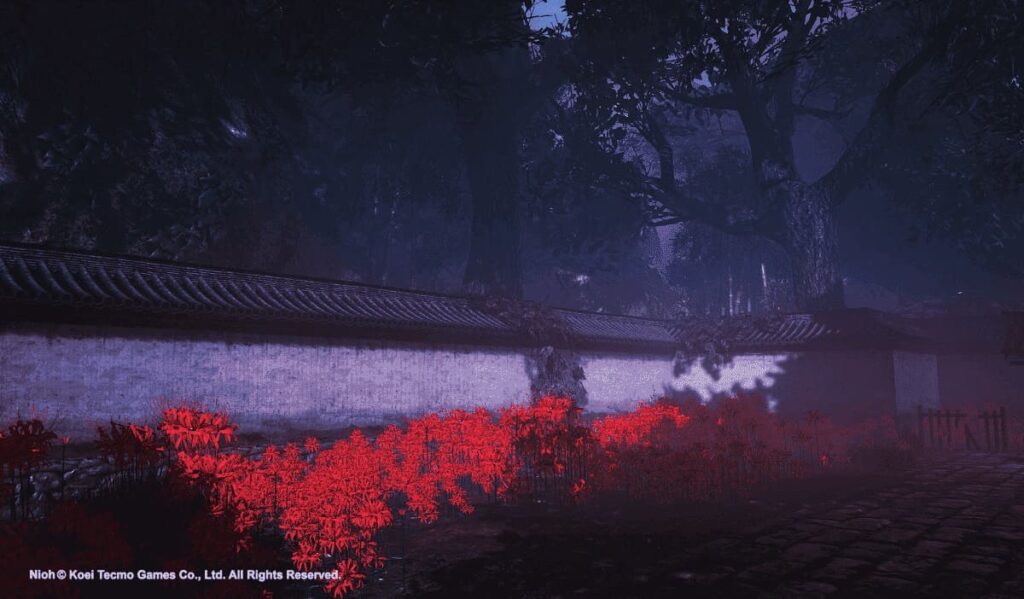
For players, using the Higanbana item in Nioh2 becomes an essential part of their strategy. Its ability to enhance Yokai powers can make a significant difference during challenging battles, particularly when facing bosses or other tough enemies. Mastering when and how to use the Red Spider Lily is key to success in the game, adding another layer of depth to the combat system.
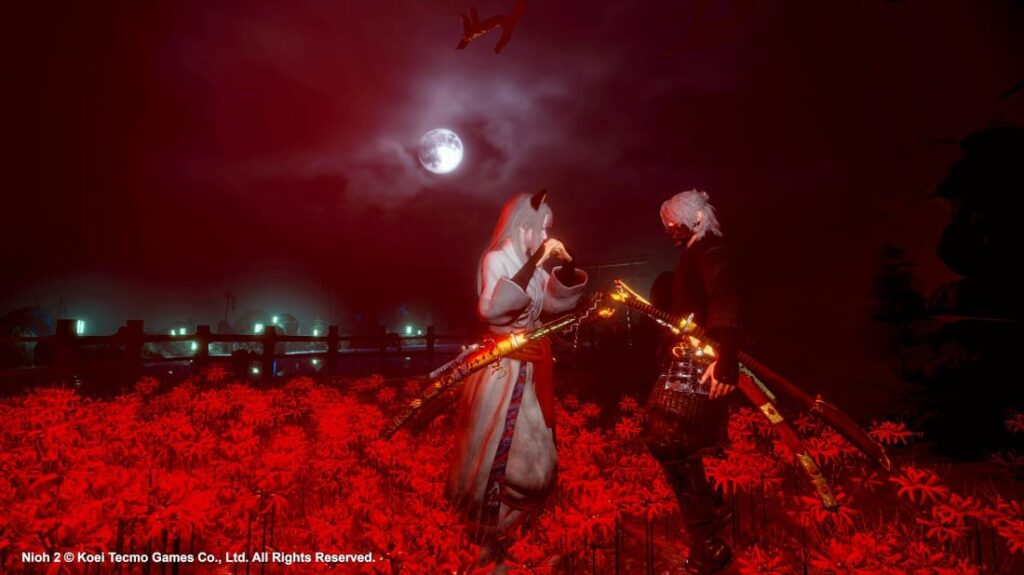
The inclusion of Higanbana as a game mechanic not only adds to the strategic elements of Nioh2, but also gives players a chance to engage with a piece of traditional Japanese culture in an interactive way.

Red spider lilies fit the dark and mysterious atmosphere of Nioh perfectly.
Red Spider Lily Q&A
- QCan Red Spider Lily be safely handled?
- A
Yes, but be cautious. While Red Spider Lily is beautiful, it is also toxic. The bulbs, in particular, should not be ingested, and it’s best to avoid prolonged skin contact.
- QWhy is Red Spider Lily planted near graves?
- A
Red Spider Lily is often planted near graves as it is believed to guide the spirits of the dead to the afterlife. Its association with the Buddhist concept of the “other shore” reinforces this belief.
- QIs Red Spider Lily always considered unlucky?
- A
Red Spider Lily’s association with death and misfortune makes it a flower often avoided in daily life, but in the context of honoring ancestors and spiritual rituals, it plays a vital, respected role.
Final thoughts about Red Spider Lily (Higanbana)
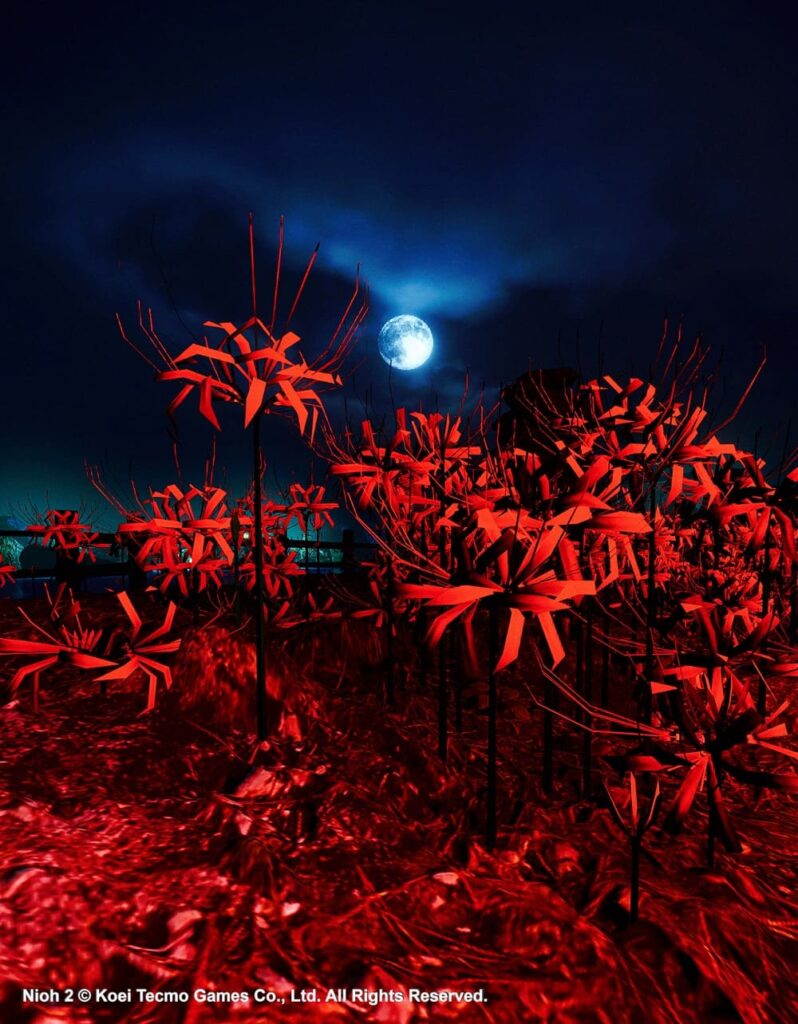
The Red Spider Lily is a flower steeped in symbolism, from its association with death and the afterlife to its role in guiding spirits during the Higan Festival. Its eerie beauty and toxicity have contributed to its reputation as a plant that brings misfortune, yet its cultural significance as a symbol of life’s impermanence cannot be ignored.
In Nioh2, the Red Spider Lily plays a crucial role as a Yokai Ability Item, tying the game’s supernatural elements to traditional Japanese beliefs. By using the flower to enhance Yokai powers, players can experience a piece of Japan’s cultural heritage while engaging in strategic gameplay.
The Red Spider Lily’s dual nature—both feared and revered—continues to captivate those who encounter it, whether in real life or through the virtual world of Nioh2.

Oh By the way! If you are interested in Yokai or in Japanese Culture and you are a gamer, you may love these games!
Let’s play!
Yes! I can’t wait to play these games!
Let’s Play!
Comments