






Imagine walking through Japan and seeing a cute, round-bellied tanuki statue standing outside a restaurant or shop.
You might think it is simply a charming decoration.
But in Japanese folklore, tanuki are much more than cute animals.
For centuries, people have told stories about tanuki that could transform into humans, objects, and other creatures, trick people, play mischievous pranks—and sometimes even help those in need.
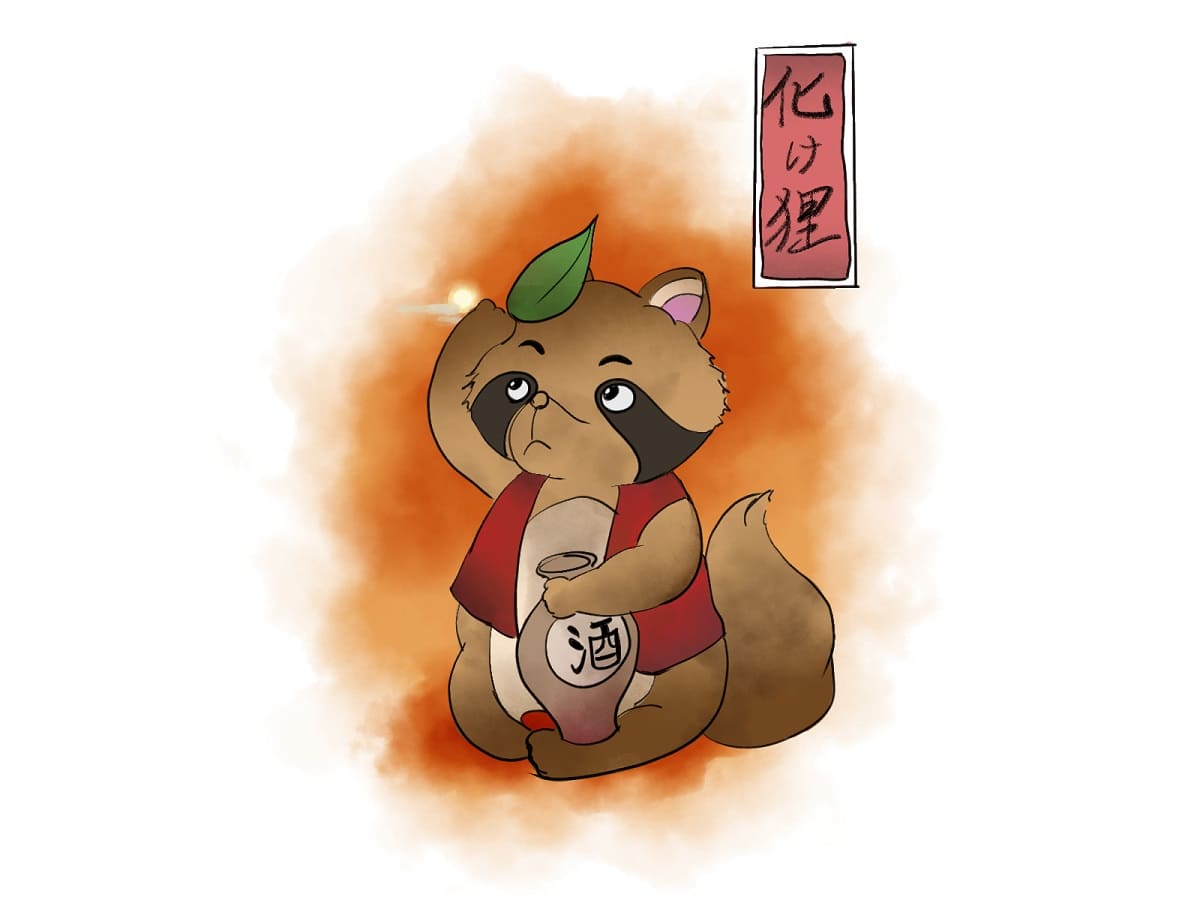
These supernatural tanuki are known as bake-danuki (化け狸), and they are some of the most entertaining creatures in Japanese folklore.
But what exactly is a bake-danuki?
Why did people believe tanuki could transform? And are these creatures really as mischievous as the stories make them seem?
In this article, let’s take a closer look at the real animal behind the legends, the strange and sometimes hilarious abilities of bake-danuki, famous tanuki legends from Japan, and the reason tanuki remain such a familiar part of Japanese culture today.

Today’s topic is bake-danuki! I’ll also introduce some anime and movies featuring bake-danuki, so be sure to read to the end!
What Is a Tanuki?
Before we talk about bake-danuki, let’s start with the animal itself.
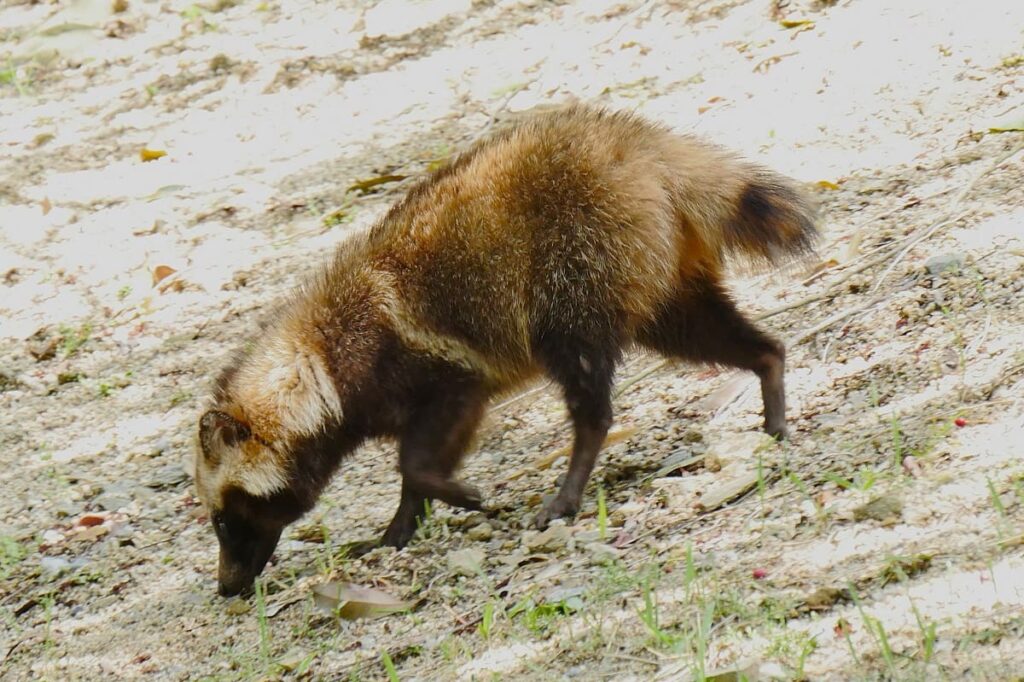
A tanuki (狸) is the Japanese name for the raccoon dog, a wild animal native to East Asia. Despite its name in English, a raccoon dog is not a raccoon. It belongs to the dog family and is more closely related to foxes and other canids.
Tanuki are known for their stocky bodies, short legs, pointed snouts, and distinctive facial markings. They are generally active at night and are adaptable animals that can live in a variety of environments, including forests, mountains, farmland, and areas close to human settlements.

There’s a family of tanuki living near my home, and they’re so cute with their slow, lumbering movements.
In Japan, tanuki have lived alongside people for a very long time. This close relationship between humans and tanuki helped shape the many stories and beliefs surrounding them.
And this is where things get interesting.
In Japanese folklore, tanuki are not always portrayed simply as wild animals. They can become mysterious supernatural beings capable of transforming themselves, deceiving people, playing tricks, and sometimes even helping humans.
These legendary tanuki are known as bake-danuki.
So, while a tanuki is a real animal, a bake-danuki is a supernatural figure from Japanese folklore. The two are closely connected—but they are not quite the same thing.

To learn more about the real animal behind these legends, see my guide to tanuki in Japan.

Why Did Tanuki Become Shapeshifters?

Why did people in Japan imagine tanuki as creatures that could transform into humans, animals, or even everyday objects?
The answer is not as simple as one old legend or a single belief. Stories about animal transformation developed over many centuries, and they varied from region to region. In older Japanese texts, the words used for animals such as tanuki and mujina were not always used in the same way they are today, so it is sometimes difficult to identify exactly which animal a particular story describes.
One of the earliest surviving examples appears in the Nihon Shoki, a historical chronicle compiled in the eighth century. An entry concerning Mutsu Province describes a mujina that changed into a human and sang. Although we cannot say with certainty that this animal was a modern-day tanuki, the story shows that the idea of a wild animal transforming into a person is very old in Japanese literature.
Another important idea appears in later tales: old animals could possess extraordinary powers. In one story from the Konjaku Monogatari-shu, an apparently supernatural creature is eventually revealed to be an old tanuki. Tales like this helped connect age, mystery, and supernatural abilities in the folklore surrounding animals.
Over time, tanuki became firmly established as shapeshifting tricksters in Japanese folklore. They might appear as people, animals, Buddhist priests, or even ordinary objects. Their transformations could frighten, confuse, or simply amuse the humans they encountered. An Edo-period artwork at The Metropolitan Museum of Art, for example, depicts a tanuki disguised as a priest beneath a lotus leaf.
So, why did tanuki become shapeshifters?
There probably isn’t one definitive answer. Instead, their supernatural image seems to have developed through a long accumulation of stories, beliefs, and local traditions. The tanuki’s habit of living near human settlements may also have made it a particularly familiar—and therefore imaginative—character in folklore.
And perhaps that is part of the fun.
A real animal that quietly moves through the countryside at night became, in stories, a creature that could cross the boundary between the familiar world of humans and the mysterious world of the supernatural.

I loved picture books when I was a child, and I remember quite a few stories featuring bake-danuki.

Tanuki and foxes in Japanese folktales seem to shapeshift whenever they get the chance!
What Can a Bake-Danuki Do?

So, what can a bake-danuki actually do?
In Japanese folklore, a bake-danuki is best known for its ability to transform its appearance. It might take the form of a human, another animal, or even an ordinary object. Some stories describe tanuki disguising themselves as Buddhist priests, travelers, merchants, or other people they encounter.
But transformation is not always used simply to scare someone.
A bake-danuki may use its powers to trick, confuse, entertain, or even help people. In some folktales, a tanuki repays someone who has helped it by transforming into something useful. Traditional rakugo stories, for example, include tales in which a tanuki transforms into things such as money, a kettle, or other objects to repay a person’s kindness.
Their tricks can also be wonderfully ridiculous.
In one famous Edo-period artwork, a tanuki disguises itself as a Buddhist priest by wrapping a lotus leaf around its body. The work, Tanuki in a Lotus Leaf, is an 18th-century netsuke by Matsuda Sukenaga and is now part of the collection of The Metropolitan Museum of Art.
And transformation is only part of the fun.
Tanuki folklore also includes drumming on their bellies, playing tricks on travelers, and using leaves or other objects as part of their transformations. Their legendary abilities often have a humorous or playful quality rather than being purely frightening.
This is one reason bake-danuki are such fascinating figures in Japanese folklore. They can be troublesome, mysterious, funny, and sometimes kind—all depending on the story.
The Strange—and Surprisingly Funny—Side of Tanuki
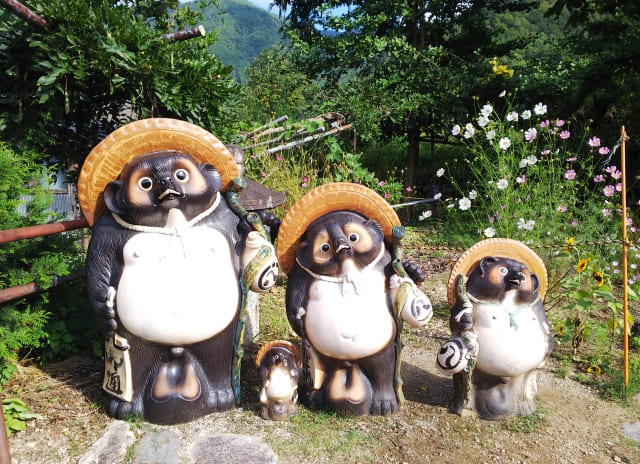

Now, we’re getting to a topic I’m sure many of you have been curious about: the physical features of bake-danuki.
If you’ve ever seen a traditional Japanese tanuki statue, you may have noticed something rather unusual.
Tanuki are often depicted with an exaggerated scrotum, sometimes so large that it looks almost comical. If you’re seeing this for the first time, you might understandably wonder, “Why on earth is it like that?”
As a Japanese person, I had never given this particular feature much thought. But a foreign friend once pointed it out to me, and I became curious about where this unusual image came from.
It turns out that the exaggerated feature has a surprisingly long history in Japanese folklore and popular culture.
Stories about tanuki with remarkably large scrotums can be traced back to the Edo period. A 1697 work known as Honchō Shokkan describes a tanuki spreading its scrotum and using it to cover people.
Similar stories were later recorded in different parts of Japan. In some versions, a tanuki uses its enormous “cover” to confuse people or plunge them into darkness.
Yes, you read that correctly: in some folktales, a tanuki could supposedly spread its scrotum wide enough to cover a person.
What Does “Hachijō-shiki” Mean?
One famous example is the so-called “eight-tatami-mat” tale.
In some regional folktales, a tanuki is said to spread its enormous scrotum like a sheet and cover a person with it. In one version, the victim suddenly finds himself in complete darkness.
Yes, this really is part of Japanese folklore.
The exact origin of the expression is uncertain, but one explanation connects it to the traditional use of tanuki skin in beating gold into thin sheets. According to this explanation, a small piece of gold could be beaten out over a surprisingly large area, leading to the image of something being spread as wide as eight tatami mats.


Are Bake-Danuki Good or Evil?

So, are bake-danuki good or evil?
The answer isn’t quite that simple.
Unlike some yokai that are mainly portrayed as dangerous or frightening, bake-danuki can take on many different roles in Japanese folklore. Some stories portray them as mischievous tricksters who deceive travelers, play pranks, or cause trouble. Others show them helping humans or repaying kindness after someone has helped them.
In other words, bake-danuki don’t fit neatly into the categories of “good” or “evil.”
Their behavior often depends on the story. A tanuki might cause trouble in one tale and show kindness in another. This unpredictable, sometimes playful nature is part of what makes bake-danuki so fascinating.
Perhaps it is better to think of them not as purely evil monsters, but as unpredictable supernatural tricksters who can be troublesome, funny, mysterious, or even kind.
That ambiguity is one of the most appealing things about bake-danuki. They are not simply creatures to be feared. They can also make us laugh, surprise us, and occasionally remind us that even a mischievous creature may have a softer side.
Famous Bake-Danuki in Japanese Folklore
Tanuki legends can be found throughout Japan, and different regions have their own famous tanuki characters. Three of the best-known are Danzaburou-danuki of Sado Island, Shibaemon-danuki of Awaji Island, and Tasaburou-danuki of Yashima. Together, they are known as Japan’s “Three Famous Tanuki.”
Danzaburou-danuki — Sado Island
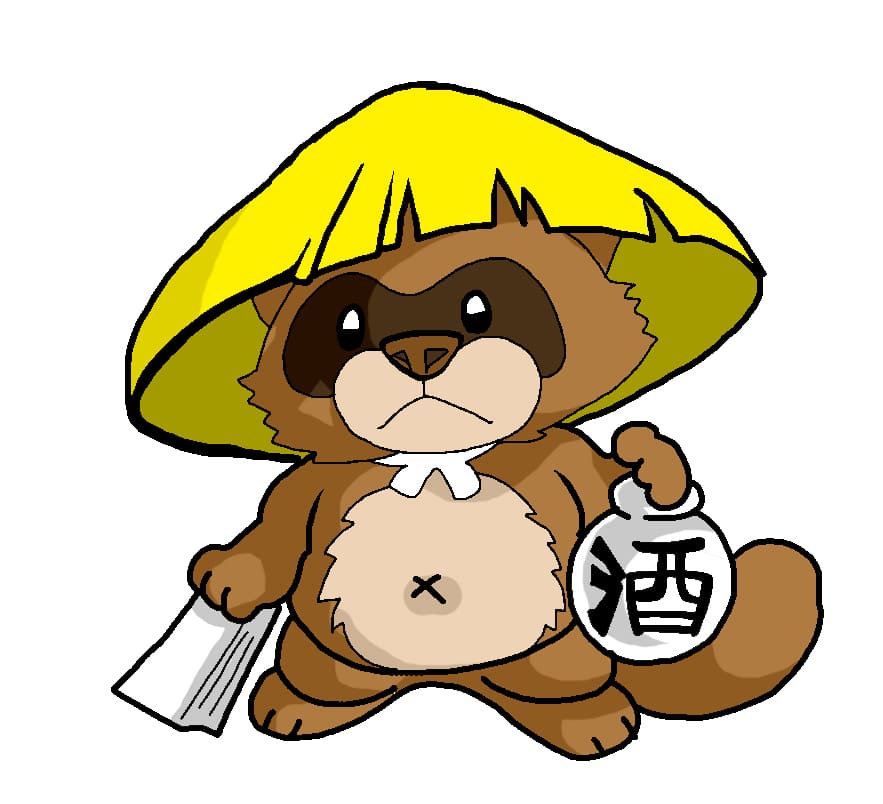
Danzaburou-danuki is one of the most famous tanuki legends associated with Sado Island in Niigata Prefecture. He is traditionally described as the leader of the tanuki on the island and is closely associated with Aikawa, where he is enshrined at Futatsu-iwa Daimyōjin.
Like many bake-danuki in Japanese folklore, Danzaburou is known as a clever trickster. Local stories describe him using illusions and other tricks to deceive people. In some tales, he was even said to make ordinary objects appear more valuable than they really were.
Although his tricks could certainly cause trouble, Danzaburou is not simply portrayed as an evil creature. His stories reflect the clever, mischievous, and sometimes unpredictable nature often associated with bake-danuki.
Shibaemon-danuki — Awaji Island
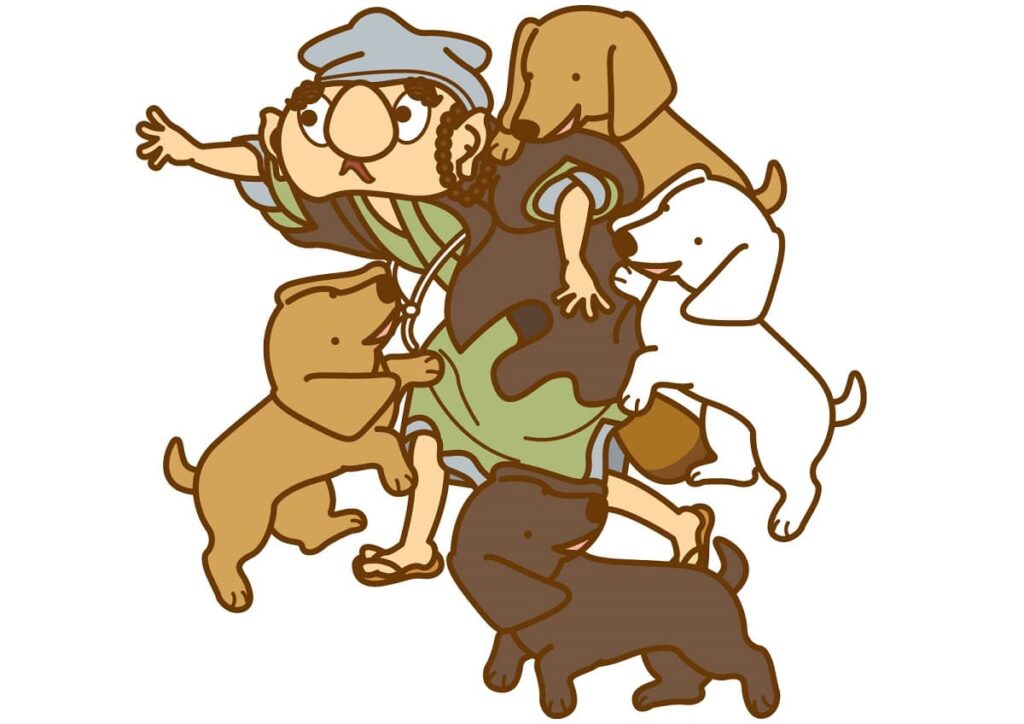
Shibaemon-danuki is a famous bake-danuki associated with Mikuma-yama in Sumoto, on Awaji Island. He is traditionally portrayed as a friendly and mischievous tanuki who loved transforming himself and playing tricks on people.
One legend tells of a transformation contest between Shibaemon and another tanuki. Shibaemon decided to disguise himself as a daimyo’s procession, complete with samurai and attendants. His transformation was so convincing that another tanuki mistook a real daimyo’s procession for Shibaemon in disguise—and unfortunately, the tanuki was killed by the samurai.
The story took a tragic turn, but it also shows just how seriously the old tales took the tanuki’s ability to transform. Shibaemon’s adventures did not end there, however.
He was also said to be a great lover of theater. According to another local tale, Shibaemon would travel all the way to Osaka to watch performances, paying for his tickets with leaves transformed into money. The theater owners eventually became suspicious when they realized that his “money” was not quite what it seemed.
A tanuki who loved theater enough to travel to Osaka and pay with magically transformed leaves? Shibaemon certainly had his priorities!


When we visited Sumoto Castle, we found a small shrine dedicated to Shibaemon-danuki. We even took a commemorative photo in front of it. It was such a nice memory!
Tasaburou-danuki — Yashima
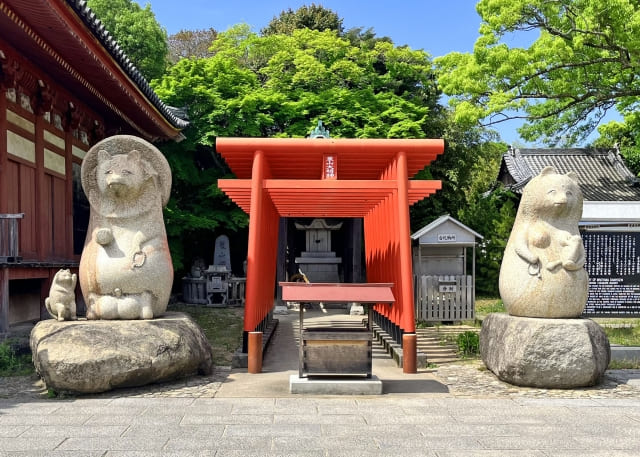
Tasaburou is traditionally regarded as a protector of Yashima. According to local legends, he was known for his remarkable powers of transformation and became a guardian deity of Yashima-ji Temple.
According to one local legend, the monk Kūkai became lost in the thick fog on Yashima. Tasaburou appeared to him disguised as an old man and guided him safely to the mountaintop.
Unlike the mischievous tricksters often found in tanuki folklore, Tasaburou is remembered more as a guardian figure.
Bake-Danuki in Modern Anime and Film
The image of the bake-danuki has continued to appear in modern Japanese anime and film, often blending traditional folklore with contemporary storytelling. Here are three well-known examples.
The Eccentric Family (Uchouten Kazoku)
The Eccentric Family is an anime series set in Kyoto and follows a family of tanuki who can transform into human form. The story mixes tanuki folklore with humans, tengu, family drama, and plenty of humor.
It offers a more modern and complex portrayal of tanuki, while still drawing on the traditional idea of tanuki as shapeshifters.


Poco’s Udon World
Poco’s Udon World is set in Kagawa Prefecture and features a mysterious child named Poco, who is actually a tanuki capable of taking human form.
The series combines everyday life, family relationships, and the traditional image of the shape-shifting tanuki in a warm and gentle story.
I definitely recommend watching Poco’s Udon World. I read the manga, and Poco, the bake-danuki, was so adorable that I completely fell in love with the story!


Pom Poko


Pom Poko, directed by Isao Takahata and produced by Studio Ghibli, is one of the best-known modern films featuring tanuki.
In the story, tanuki living near Tokyo use their transformation abilities to resist the destruction of their natural habitat caused by urban development. The film draws heavily on traditional tanuki folklore while exploring environmental and social issues.
These works show that the traditional image of the shape-shifting tanuki has not disappeared. Instead, it continues to evolve, finding new roles in modern Japanese storytelling.

Pom Poko is a classic when it comes to movies about shape-shifting tanuki! I watched it as part of a school event when I was a student.
Frequently Asked Questions About Bake-Danuki
- QWhat is a bake-danuki?
- A
A bake-danuki is a supernatural tanuki from Japanese folklore that is said to have the ability to transform its appearance. Depending on the region and story, bake-danuki may take the form of humans, animals, objects, or even supernatural beings.
Although they are often portrayed as mischievous tricksters, not all bake-danuki are dangerous or evil. Some are helpful, friendly, or even revered as protective spirits.
- QWhy do tanuki shapeshift in Japanese folklore?
- A
Tanuki are often associated with shapeshifting because Japanese folklore traditionally portrayed them as clever and mysterious creatures capable of deceiving humans.
Their ability to transform also makes them perfect characters for stories about trickery, humor, temptation, and encounters between humans and the supernatural.
The exact reason why tanuki became associated with transformation varies depending on the legend and region.
- QAre bake-danuki good or evil?
- A
Neither, necessarily. Bake-danuki are often portrayed as mischievous and capable of causing trouble, but they are not always evil. Some stories portray them as helpful creatures, while others describe them as protectors or benevolent spirits.
This ambiguity is one of the most interesting aspects of bake-danuki folklore.
- QWhat can a bake-danuki transform into?
- A
According to different Japanese legends, bake-danuki can take many forms, including humans, animals, objects, and supernatural figures.
Some stories even describe tanuki transforming leaves or other ordinary objects into something more valuable.
The exact abilities vary from one legend to another, so there is no single fixed list of what every bake-danuki can do.
- QAre tanuki considered lucky in Japan?
- A
Yes. Tanuki are often associated with good fortune and prosperity in Japan, especially through the familiar tanuki statues displayed outside restaurants and shops.
One reason is a Japanese wordplay that connects tanuki with ta-nuki, which can be interpreted as “surpassing others.” This association helped make tanuki a popular symbol of success and prosperity, particularly in connection with business.
However, the cultural image of the tanuki is much broader than that of a lucky charm. In Japanese folklore, tanuki have also long been known as mischievous tricksters and supernatural shapeshifters.
If you’ve ever wondered why these distinctive tanuki statues are displayed outside Japanese shops and restaurants, you can learn more in my guide to tanuki statues in Japan.
 Why Are Tanuki Statues Placed at Entrances in Japan?Have you ever seen a plump and charming tanuki (raccoon dog) statue at the entrance of a shop or on the streets of Japan? Let's dive into the history, symbolism, and best placement for tanuki statues.manekinekogames.vidaennippon.com
- QWhat is the difference between a tanuki and a bake-danuki?
- A
A tanuki is the animal itself, while a bake-danuki is a supernatural tanuki from folklore.
In other words, not every tanuki is a bake-danuki!
A real tanuki is a wild animal native to Japan and other parts of East Asia. A bake-danuki, on the other hand, belongs to the world of Japanese folklore and is traditionally believed to possess supernatural abilities such as shapeshifting.
Final Thoughts
Bake-danuki are much more than simple tricksters from old Japanese folktales.
They can be mischievous, clever, humorous, frightening, generous, or even protective. Some stories describe them deceiving humans, while others portray them helping people or being worshiped as guardian spirits.
Their personalities and abilities also vary from one region to another. The stories of Danzaburou-danuki, Shibaemon-danuki, and Tasaburou-danuki show just how different these legendary tanuki can be.
Perhaps that is what makes bake-danuki so fascinating. They do not fit neatly into the categories of “good” or “evil.” Like many memorable characters in Japanese folklore, they exist somewhere in between—mischievous yet sometimes kind, mysterious yet surprisingly human.
And their stories have not disappeared. Bake-danuki continue to appear in modern anime, films, and other forms of Japanese popular culture, where traditional folklore is blended with new ideas and storytelling.
If you have ever seen a tanuki statue outside a Japanese restaurant or encountered a tanuki character in anime, you may be looking at a small piece of this much larger and surprisingly entertaining folklore tradition.

Oh By the way! If you are interested in Yokai or in Japanese Culture and you are a gamer, you may love these games!
Let’s play!
Yes! I can’t wait to play these games!
Let’s Play!
Comments