






- What Is an Ichimatsu Doll? History, Meaning & Japanese Ghost Stories
- What Is an Ichimatsu Doll?
- What Were Ichimatsu Dolls Used For?
- What Do Ichimatsu Dolls Symbolize?
- Why Are Ichimatsu Dolls Associated With Ghost Stories?
- Why Do Ichimatsu Dolls Look So Unsettling?
- Are Ichimatsu Dolls Really Haunted?
- Ichimatsu Dolls vs. Hina Dolls
- Otsuki’s Ichimatsu Doll: A Doll From My Childhood
- Can You Buy an Ichimatsu Doll Today?
- Ichimatsu Doll Q&A
- Final Thoughts about Ichimatsu doll
What Is an Ichimatsu Doll? History, Meaning & Japanese Ghost Stories
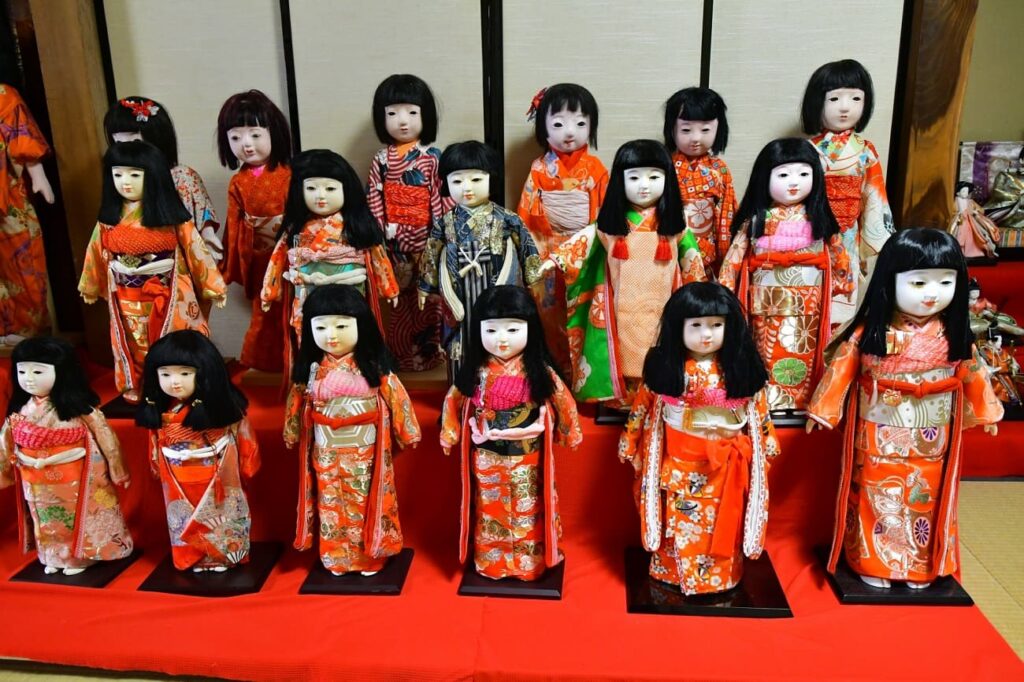
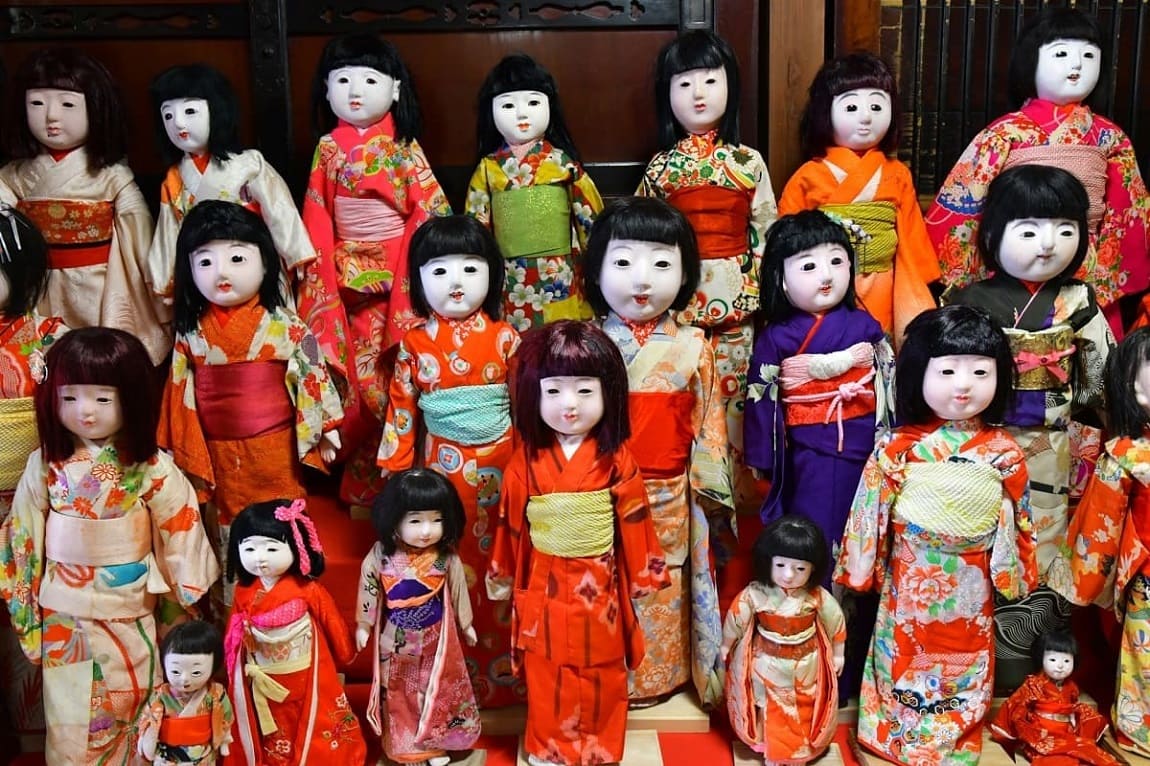
Ichimatsu dolls are beautiful traditional Japanese dolls with delicate features, elaborate kimono, and long black hair. For generations, they have been cherished as children’s dolls and treasured as gifts from family members.
But these familiar dolls also have a mysterious side. You may have heard stories about Ichimatsu dolls whose hair supposedly grows, or dolls that seem to move on their own at night. Such stories have given Ichimatsu dolls a surprisingly spooky reputation.
So, are Ichimatsu dolls really associated with ghosts and curses? Not quite. Behind the eerie stories is a long history of craftsmanship, childhood memories, and Japanese popular culture.
In this article, let’s take a closer look at what Ichimatsu dolls are, how they got their name, what they have meant to Japanese families, and why these beloved dolls became the subject of so many mysterious stories.

I also share the story of my own Ichimatsu doll later in the article, so be sure to check it out!
What Is an Ichimatsu Doll?
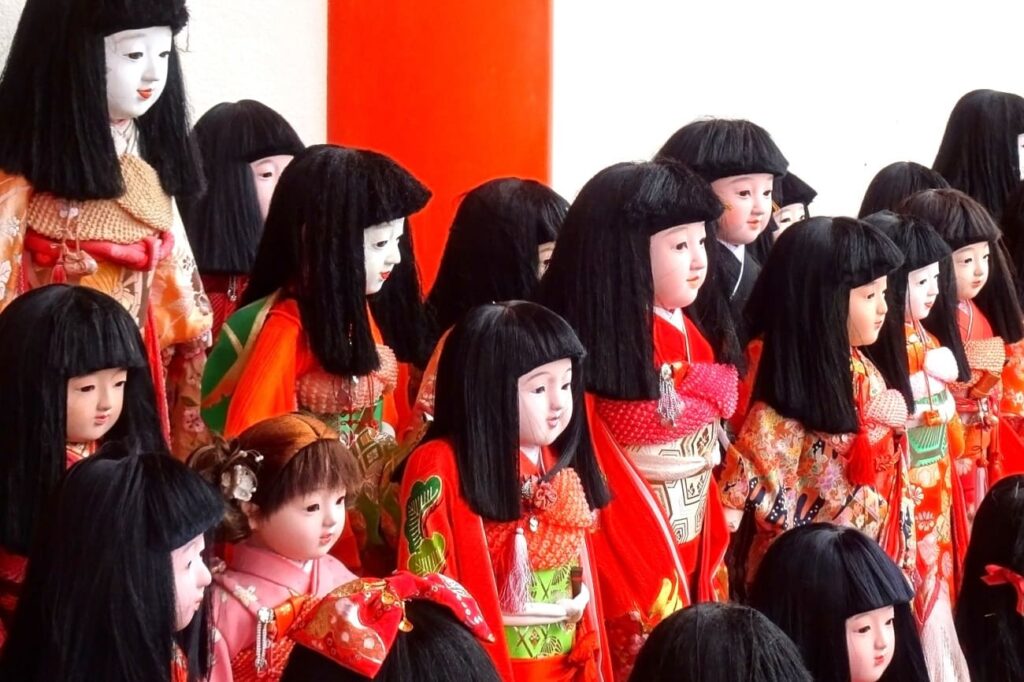
An Ichimatsu doll is a traditional Japanese costume doll known for its realistic childlike appearance, carefully styled hair, and beautiful kimono. Historically, Ichimatsu dolls were not made only for display. They were also enjoyed as dolls to hold, dress, and play with.
The dolls are generally associated with the image of a young girl today, but their history is closely connected to kabuki and popular culture in the Edo period. The name “Ichimatsu” is said to come from Sanogawa Ichimatsu, an 18th-century kabuki actor who was admired for his handsome appearance.
What Does “Ichimatsu” Mean?
The name “Ichimatsu” is said to come from Sanogawa Ichimatsu (1722–1762), a popular kabuki actor of the Edo period. Dolls modeled after his appearance became popular, and the name Ichimatsu eventually became associated with this type of doll.
But who was Sanogawa Ichimatsu?
Who Was Sanogawa Ichimatsu?
Sanogawa Ichimatsu was a popular kabuki actor in 18th-century Japan. He was admired for his handsome appearance, and dolls modeled after him became fashionable among his fans. In a way, these dolls were something like the celebrity merchandise of their time.
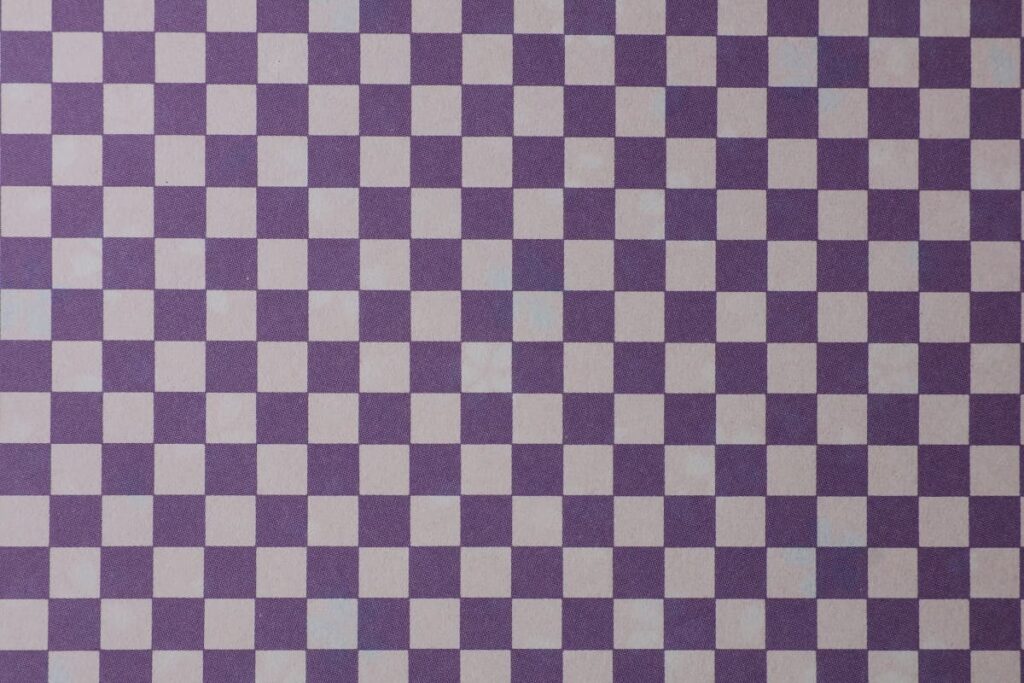
The name “Ichimatsu” is also associated with the checkered pattern known as ichimatsu-moyō. The pattern became strongly associated with Sanogawa Ichimatsu, although the exact history of how the pattern came to bear his name is more complicated than the popular story suggests.

I had no idea that the name “Ichimatsu” came from a Kabuki actor named Sanogawa Ichimatsu!
What Were Ichimatsu Dolls Used For?
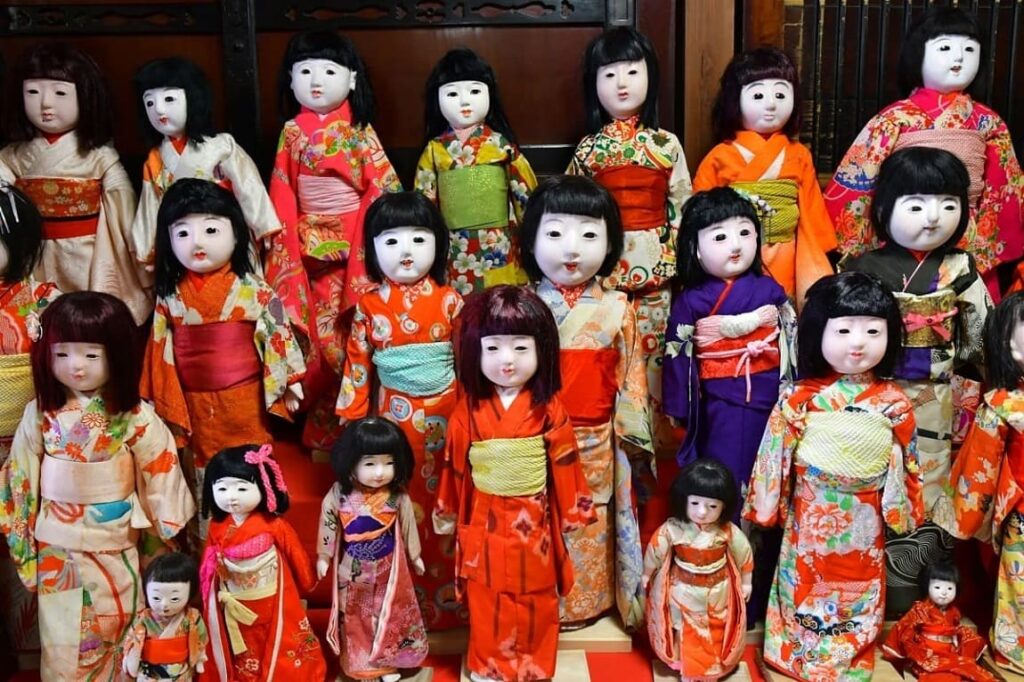
Ichimatsu dolls were not simply made to be displayed. From the Meiji period through the years before World War II, they were also enjoyed as dolls to hold, carry, and dress. Some were made with movable arms and legs so that their clothes could be changed more easily.
In some early examples, the dolls were even sold without clothes, allowing their owners to dress them themselves.

I didn’t know that some Ichimatsu dolls were sold without clothes!
This is strongly supported by the Kyoto National Museum: its collection describes Ichimatsu dolls as popular dakiningyō (cuddling dolls) from the Meiji period through the prewar years, with movable arms and legs for dressing. Another museum example from around 1884 was sold without clothes for the owner to dress.
This reminds me of my own childhood.
When I was a child, I would carry my Ichimatsu doll around the house in my arms. She was quite heavy for me at the time, but I treated her almost like my little sister.
These historical descriptions make my own childhood memories feel surprisingly familiar.
What Do Ichimatsu Dolls Symbolize?
Ichimatsu dolls have not had just one fixed meaning throughout their history. Depending on the period and the family, they could be playthings, treasured gifts, or beautiful dolls cared for over many years.
For some families, an Ichimatsu doll could also represent wishes for a child’s healthy growth and happiness. In other cases, the doll became a keepsake connected to an important family memory.
Wishes for a Child’s Growth
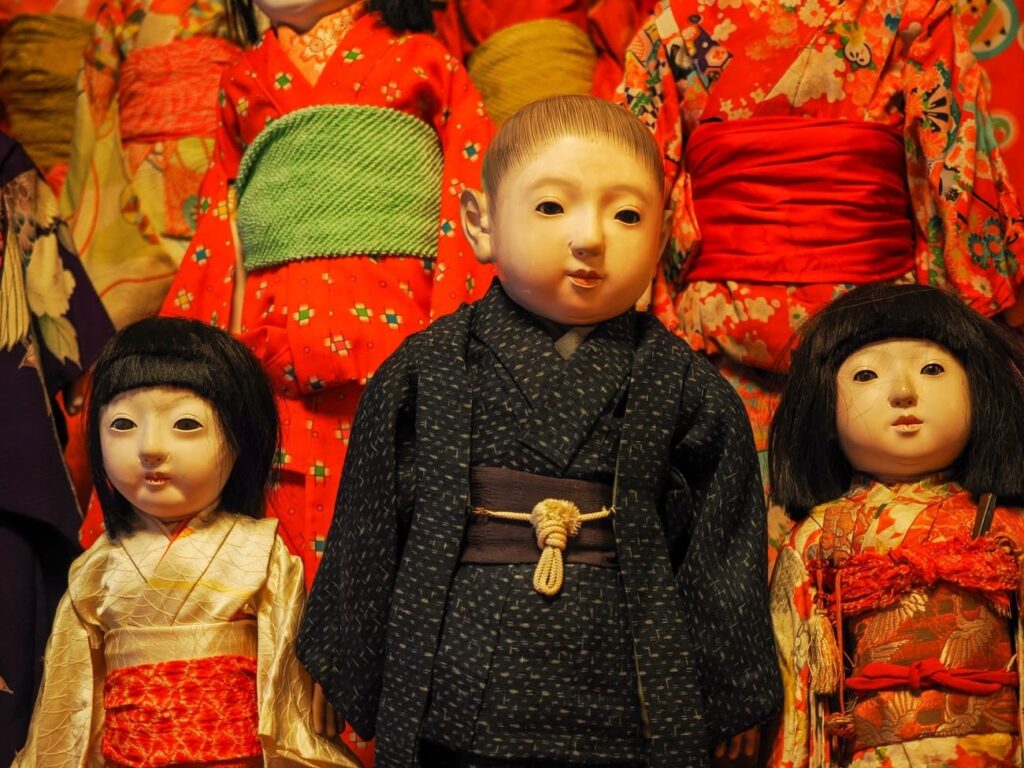
Ichimatsu dolls were sometimes given as special gifts to celebrate a child’s birth or other important occasions.
For example, museums preserve Ichimatsu dolls that were made to commemorate the birth of a child during the Meiji period. Some of these dolls were carefully crafted and dressed in beautiful clothing, showing that they were more than ordinary toys.
Rather than having one universal meaning, the significance of an Ichimatsu doll could come from the occasion for which it was given and the relationship between the giver and the child.
In this sense, an Ichimatsu doll could carry a simple but heartfelt wish:
“May this child grow up healthy and happy.”

So, people have been giving Ichimatsu dolls as birth gifts for a very long time!
More Than a Doll: A Family Keepsake
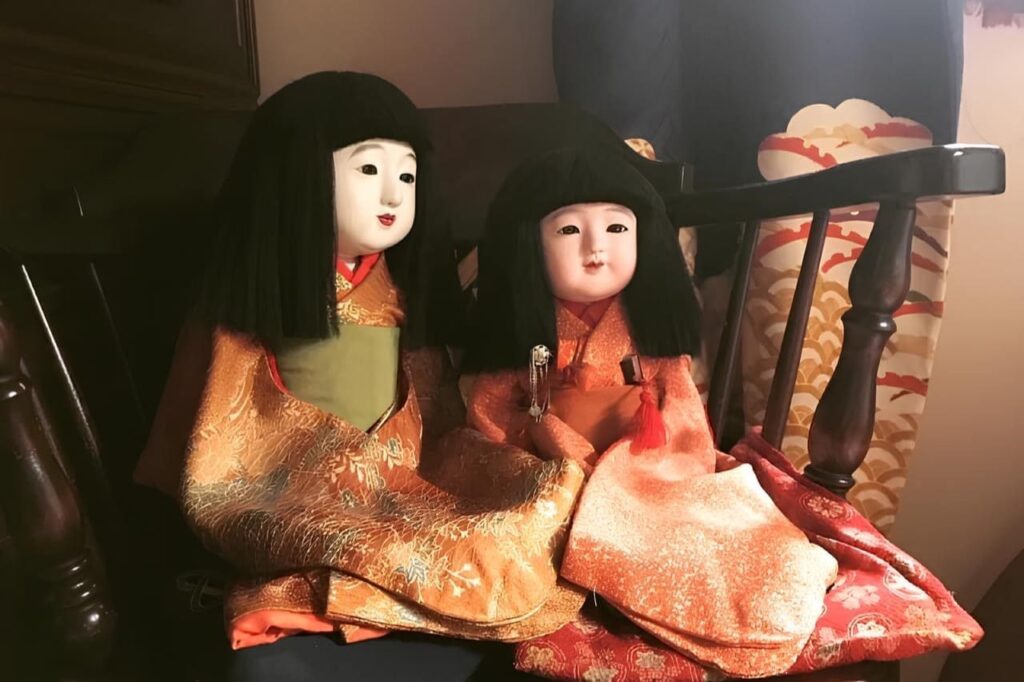
For a child, an Ichimatsu doll could be much more than a beautiful object.
She could be someone to hold, dress, play with, and care for. As the years passed, the doll could also become a keepsake filled with childhood memories.
A doll that was once carried around in a child’s arms might later be carefully stored and passed down within the family.
In this way, an Ichimatsu doll can carry memories from one generation to the next.

My own Ichimatsu doll is a good example.
My grandmother bought her when I was born, and she has remained part of my family ever since.
Why Are Ichimatsu Dolls Associated With Ghost Stories?
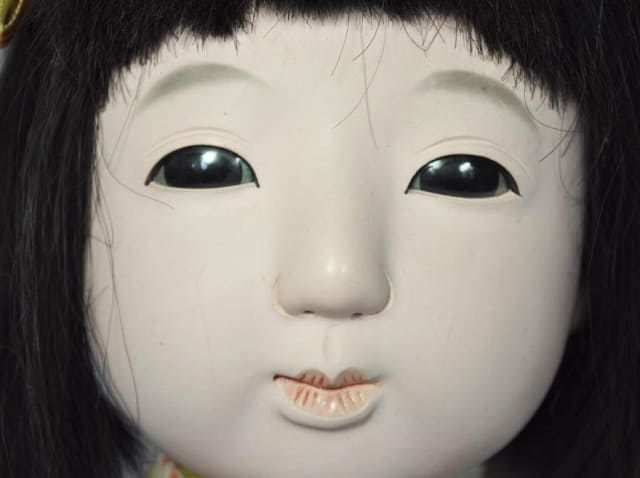
For all their beauty and sentimental value, Ichimatsu dolls also have a surprisingly spooky reputation in Japan.
You may have heard stories about an Ichimatsu doll whose hair mysteriously grows longer, or a doll that seems to move when no one is watching.

Stories about Ichimatsu dolls whose hair seems to grow are especially well known.
These stories have become a familiar part of Japanese horror culture. But there is an important distinction to make: the ghost stories surrounding Ichimatsu dolls are not the same thing as the cultural meaning of the dolls themselves.
So, where did the image of the “haunted Ichimatsu doll” come from?
The Story of the “Growing Hair”
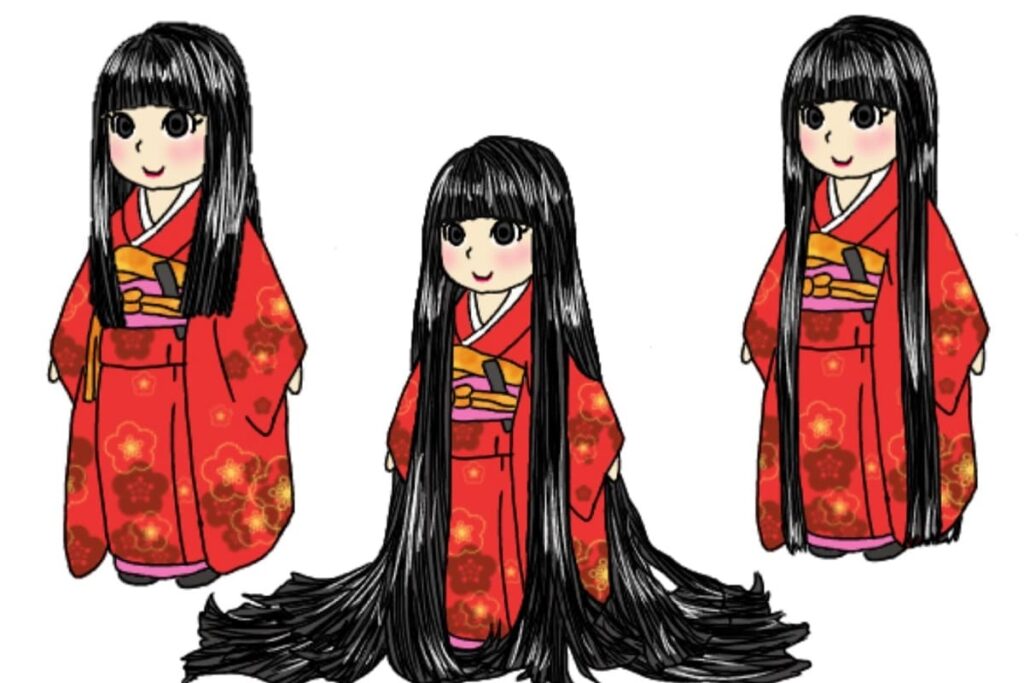
One recurring theme in stories about Ichimatsu dolls is the idea that their hair mysteriously grows longer over time.
In these tales, a doll may be placed somewhere in a house with neatly cut hair. Then, little by little, someone notices that the hair seems longer than before.
The doll may be associated with a deceased child, an unhappy spirit, or some other unexplained event. Sometimes the hair is cut, only to appear long again later.
The unsettling part is not simply the doll itself. It is the idea that something that should be completely still has somehow changed when nobody was watching.
But Does Doll Hair Really Grow?
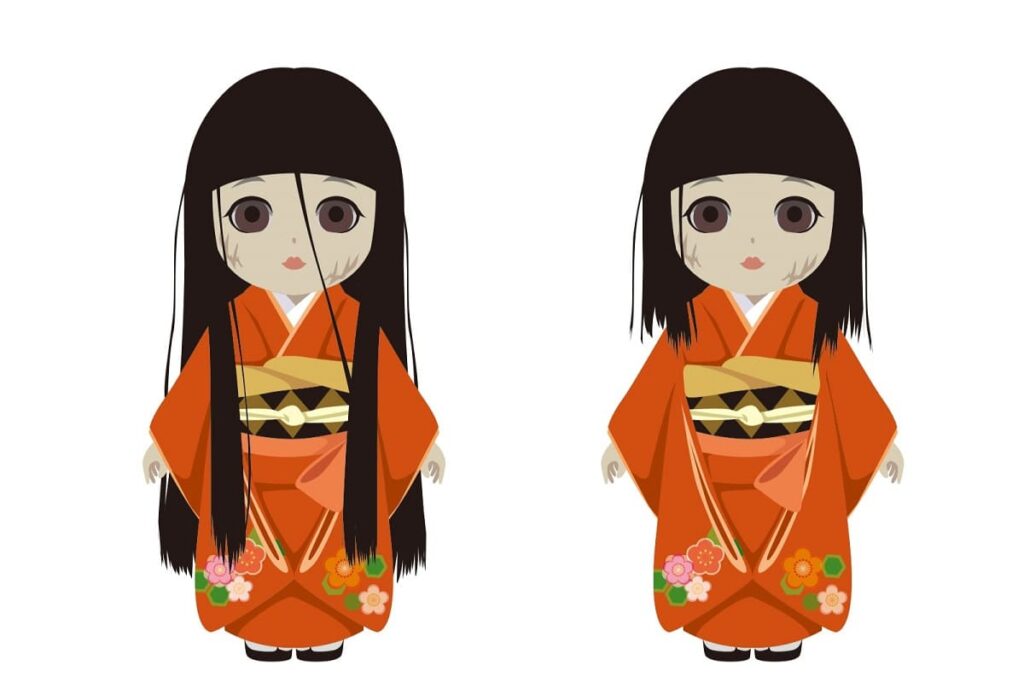
An old doll’s hair can appear to change over time for ordinary reasons, such as changes in the way the hair is arranged or the condition of the materials.
However, this does not mean that the hair is literally growing like hair on a living person.
As a doll ages, its materials can change, shift, or become damaged. The way the hair is arranged may also change, making it appear longer or different from before.
So, while the stories are fascinating, there is no need to assume that a doll must be haunted simply because its hair looks different one day.
Still, imagine this.
You look at your Ichimatsu doll before going to bed.
Her hair is just above her shoulders.
The next morning, you look at her again.
And somehow, it looks a little longer.
Maybe the hair has simply shifted.
Maybe the lighting is different.
Or maybe…
you really don’t want to look too closely.
Why Do Ichimatsu Dolls Look So Unsettling?
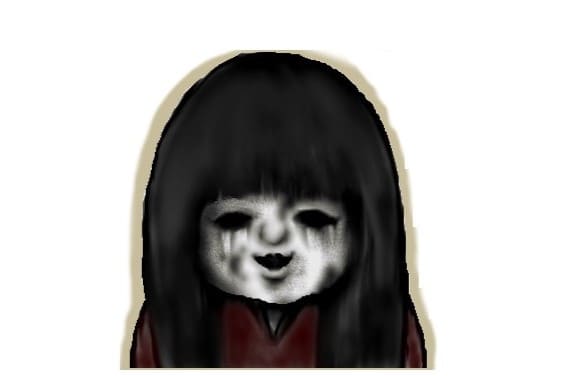
Part of the answer may lie in the dolls’ lifelike appearance.
Ichimatsu dolls have delicate, childlike faces, carefully styled hair, and clothing that can make them look surprisingly human. Their realistic features can be beautiful during the day, but under different lighting—or when seen alone in a quiet room—they may feel strangely unsettling.
There is something uncanny about a doll that looks almost human but never quite comes alive.
This feeling is not unique to Ichimatsu dolls. This feeling is not unique to Ichimatsu dolls. Dolls and other human-like figures often appear in ghost stories and horror fiction.
Perhaps that is part of what makes them so effective in scary stories: they are familiar enough to feel almost human, yet still enough to remind us that they are not.
Are Ichimatsu Dolls Really Haunted?
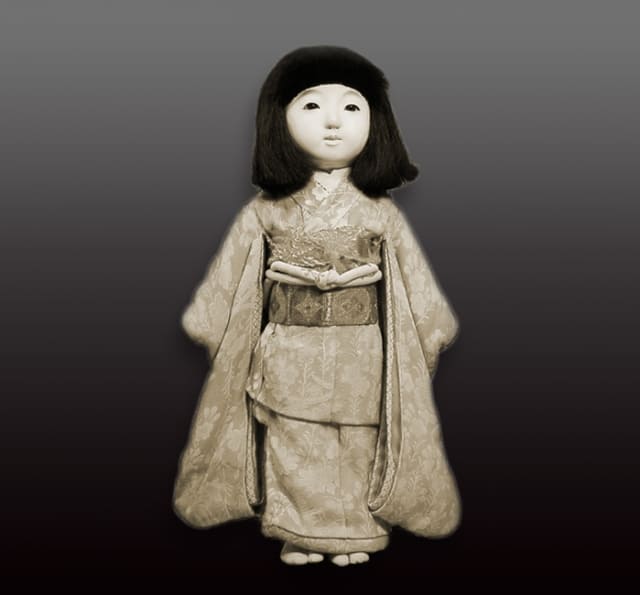
No one can prove that an Ichimatsu doll is haunted simply because its hair appears to change.
But that does not mean the stories are meaningless.
Ghost stories are part of the cultural life of dolls, too. They tell us something about how people respond to objects that look almost human, carry memories, and remain in families for generations.
In other words, the spooky stories surrounding Ichimatsu dolls are only one part of their much longer story.
Behind the eerie tales are dolls that have been held, dressed, cherished, and, in some families, passed down through generations.
And one of those dolls has been part of my own life since I was born.
Ichimatsu Dolls vs. Hina Dolls
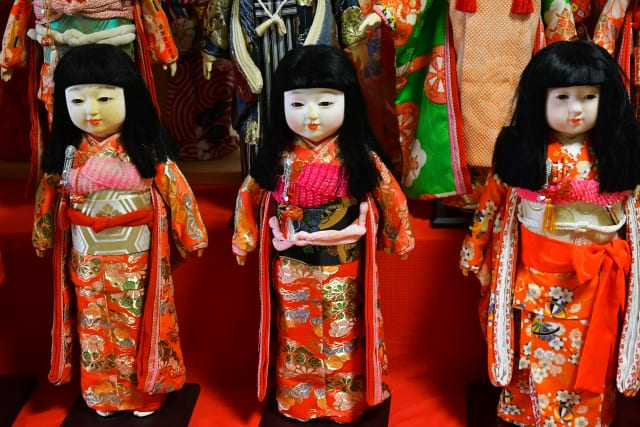
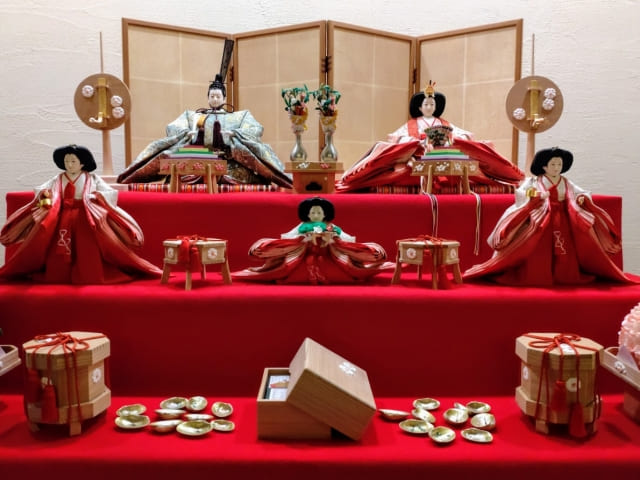
Ichimatsu dolls and Hina dolls are both traditional Japanese dolls, but they have different histories and roles.
Ichimatsu dolls
- childlike dolls associated with dress-up and companionship
- historically connected to Sanogawa Ichimatsu and kabuki
- could be held, dressed, and played with
- could become treasured family keepsakes
Hina dolls
- associated with Hinamatsuri, the Doll Festival
- traditionally arranged as a ceremonial display
- represent the imperial court in the classic Hina doll arrangement
- connected with wishes for girls’ health and happiness
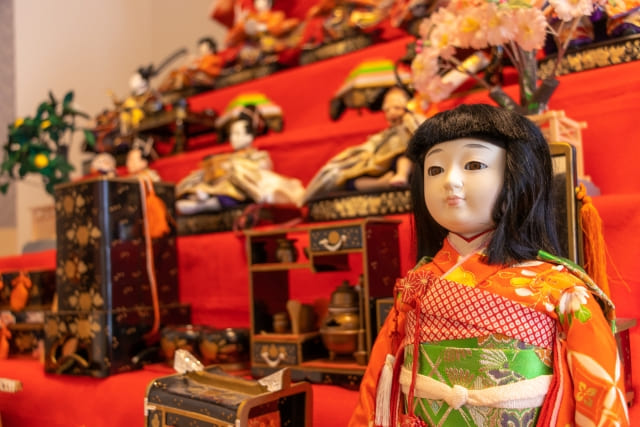
So, if you see an Ichimatsu doll standing beside a set of Hina dolls, don’t assume that she is one of the Hina dolls. She is a different kind of traditional doll—and in some families, she may simply be a beloved companion who has been invited to join the celebration.
In my family, we had an Ichimatsu doll standing beside our Hina dolls, too.
Otsuki’s Ichimatsu Doll: A Doll From My Childhood
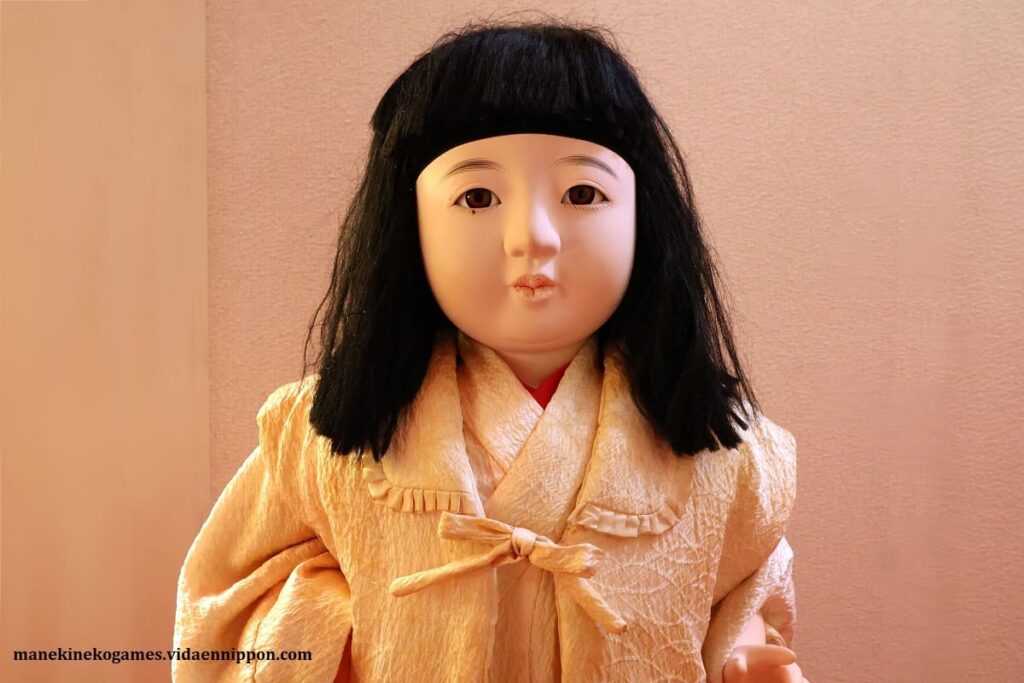

This is my own Ichimatsu doll.
I was wearing this kimono when I was a baby.
The color is already faded now and I am planning to sew a new Kimono for her.
Of all the things I’ve learned about Ichimatsu dolls while researching this article, this is the most personal part of the story. I have had my own Ichimatsu doll since I was born.
My grandmother bought her for me when I was born, and she has been part of my family ever since. Even her kimono has a special connection to me—it was originally a baby kimono that I wore when I was little.
When I was a child, I would carry her around the house in my arms. She must have been quite heavy for me at the time, but I treated her almost like my little sister.
Even now, I still think she is beautiful and precious. I would love to make her a new kimono someday, too.
There is, however, one small problem.
I’m a bit of a scaredy-cat around dolls at night.
During the day, I can look at my Ichimatsu doll and think, “She’s so beautiful!” But at night, things feel a little different. If I have to walk past a room filled with dolls late at night, I turn on the lights and try not to look at them too closely.
And once, when I was staying at my parents’ house, my younger sister decided to make things even more frightening.
There was a motion-sensor light placed near my Ichimatsu doll’s feet. My sister had set it up so that the light would turn on when I approached the room at night.
And it worked perfectly.
As I walked toward the room, the light suddenly came on, illuminating my Ichimatsu doll from below in the darkness.
I nearly jumped out of my skin.
My sister had apparently been waiting for exactly that moment.
It was such an elaborate prank that I almost had to admire it.
I love my Ichimatsu doll dearly. She has been part of my life for as long as I can remember, and she carries so many memories for me.
But after dark, I think it is perfectly reasonable to give her—and my sister—a little extra space.
After all, even a beloved childhood doll can look a little different in the middle of the night.
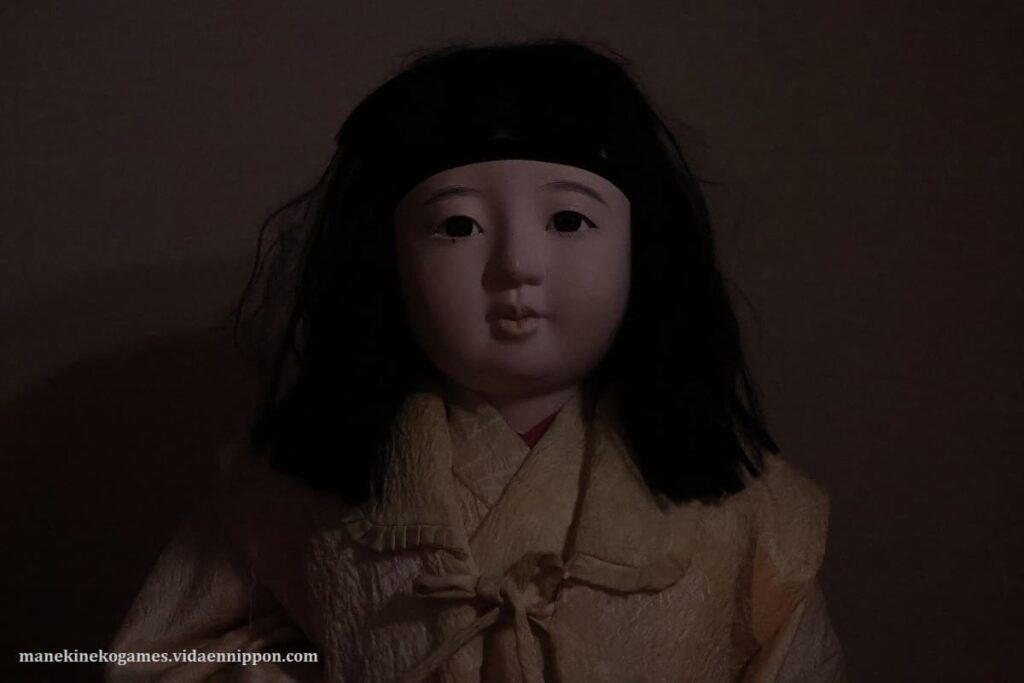

I took this picture at night because Taro wanted to use it as a horror image.
How rude… Taro!
I don’t look like a scary doll!

I am so sorry!!!!!
Can You Buy an Ichimatsu Doll Today?

If you have fallen in love with Ichimatsu dolls while reading this article, you may be wondering whether you can still buy one today.
Yes, you can.
Ichimatsu dolls can still be found through Japanese doll shops and online stores, although they are quite different from the mass-produced dolls and modern toys many people are familiar with.
Today, they may be appreciated as traditional crafts, beautiful decorative dolls, or cherished keepsakes. Depending on the doll, you may find differences in its hairstyle, kimono, size, materials, and level of craftsmanship.
If you are interested in owning an Ichimatsu doll, it is worth taking a little time to look at different dolls and learn about the craftsmanship behind them.
Looking for an Ichimatsu Doll?
If you would like to see Ichimatsu dolls currently available in Japan, I found a Japanese doll shop “Suzukatsu” that offers international shipping by EMS.

Looking for an Ichimatsu doll?
Visit Ningyo no Suzukatsu.
You can take a look at their selection here:
![[商品価格に関しましては、リンクが作成された時点と現時点で情報が変更されている場合がございます。]](https://hbb.afl.rakuten.co.jp/hgb/57e970ba.7c5e3a3f.57e970bb.0c7e4069/?me_id=1209580&item_id=10028887&pc=https%3A%2F%2Fthumbnail.image.rakuten.co.jp%2F%400_mall%2Fsuzukatu%2Fcabinet%2Fitimatsu%2Fki-k-122-1g-ap63.jpg%3F_ex%3D240x240&s=240x240&t=picttext "[商品価格に関しましては、リンクが作成された時点と現時点で情報が変更されている場合がございます。]")

International shipping fees and other charges may apply, so please check the shop’s current shipping information before ordering.
Ichimatsu Doll Q&A
- QWhat Is an Ichimatsu Doll?
- A
An Ichimatsu doll is a traditional Japanese costume doll with a realistic, childlike appearance. Ichimatsu dolls have a long history as dolls to hold, dress, and play with, although today they are often made and appreciated as decorative dolls.
- QWhy Is It Called an Ichimatsu Doll?
- A
The name is said to come from Sanogawa Ichimatsu, an 18th-century Kabuki actor known for his handsome appearance. Dolls modeled after him became popular among his fans, and the name Ichimatsu came to be associated with these dolls.
- QWere Ichimatsu Dolls Made to Be Played With?
- A
Yes. Ichimatsu dolls were not only display dolls. They were also enjoyed as dolls to hold and dress, and some were made with movable arms and legs so their clothes could be changed. Early Ichimatsu dolls were even sold without clothes for their owners to dress themselves.
- QAre Ichimatsu Dolls the Same as Hina Dolls?
- A
No. Ichimatsu dolls and Hina dolls are different types of Japanese dolls.
Hina dolls are displayed for Hina Matsuri on March 3, a festival associated with wishes for girls’ healthy growth and happiness. Ichimatsu dolls, on the other hand, have a history as costume and play dolls and are not part of the standard Hina doll set.
- QAre Ichimatsu Dolls Haunted?
- A
Not necessarily. Ichimatsu dolls have appeared in Japanese ghost stories and are sometimes associated with eerie tales, such as stories about dolls whose hair seems to grow. However, being haunted is not a defining feature of Ichimatsu dolls.
They have a much longer history as beloved dolls that were held, dressed, played with, and treasured.
- QCan You Still Buy Ichimatsu Dolls Today?
- A
Yes. Ichimatsu dolls are still made and can be found through Japanese doll shops and online stores. Modern dolls can vary in size, hairstyle, kimono, materials, and craftsmanship.
If you are interested in owning one, it is worth taking some time to learn about the doll and the craftsmanship before choosing one.
Final Thoughts about Ichimatsu doll
Ichimatsu dolls have a fascinating history that is much more than their spooky reputation.
They began as dolls connected to the popularity of Kabuki actor Sanogawa Ichimatsu and later became beloved companions for children. They were held, dressed, played with, and treasured by families, and some became keepsakes that carried childhood memories from one generation to the next.
At the same time, their lifelike faces and quiet presence have made them perfect subjects for ghost stories. Perhaps that is part of their strange charm. An Ichimatsu doll can be beautiful and comforting in one moment, yet a little uncanny when you see her sitting alone in a dark room.
For me, that contrast feels especially familiar.
I love my own Ichimatsu doll. She has been part of my life since I was born, and she carries memories that go back to my childhood. I still think she is beautiful and precious.
But would I want to walk past her in a dark room at midnight?
…Probably not.
Maybe that is one of the most interesting things about Ichimatsu dolls. They can be beautiful, sentimental, traditional, and just a little bit spooky—all at the same time.
And perhaps that is exactly why these dolls have remained so memorable.

If you are interested in Japanese culture, you may love these games!
Let’s play!

Yes! Let’s play!
Comments