






Imagine a god powerful enough to control thunder, win legendary battles, and even pin down a giant catfish believed to cause earthquakes.
That god is Takemikazuchi, one of the most powerful and respected deities in Japanese mythology.
For more than a thousand years, he has been worshipped as a god of thunder, swords, courage, and victory. His stories appear in Japan’s oldest myths, his spirit is enshrined at one of the country’s most important shrines, and his influence can still be seen in festivals, martial arts, and even modern video games.
Whether you’re interested in Japanese mythology, Shinto, or legendary yokai like Onamazu, learning about Takemikazuchi offers a fascinating glimpse into how ancient beliefs continue to shape Japanese culture today.
In this article, we’ll explore who Takemikazuchi is, what his name means, his greatest legends, and why he remains one of Japan’s most beloved gods.
- Who Is Takemikazuchi?
- What Does the Name “Takemikazuchi” Mean?
- Takemikazuchi in Japanese Mythology
- The Legendary Contest with Takeminakata
- Takemikazuchi and Onamazu
- Why Is Kashima Shrine So Important?
- Takemikazuchi in Modern Games and Popular Culture
- Why Do People Still Worship Takemikazuchi Today?
- Frequently Asked Questions
- Final Thoughts about Takemikazuchi
Who Is Takemikazuchi?
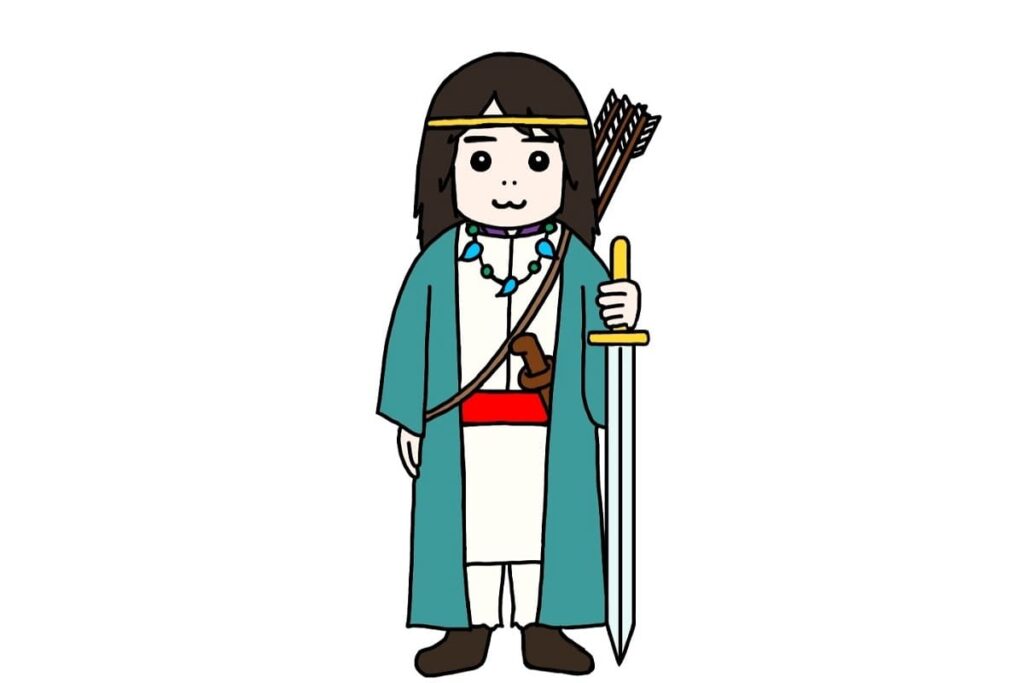
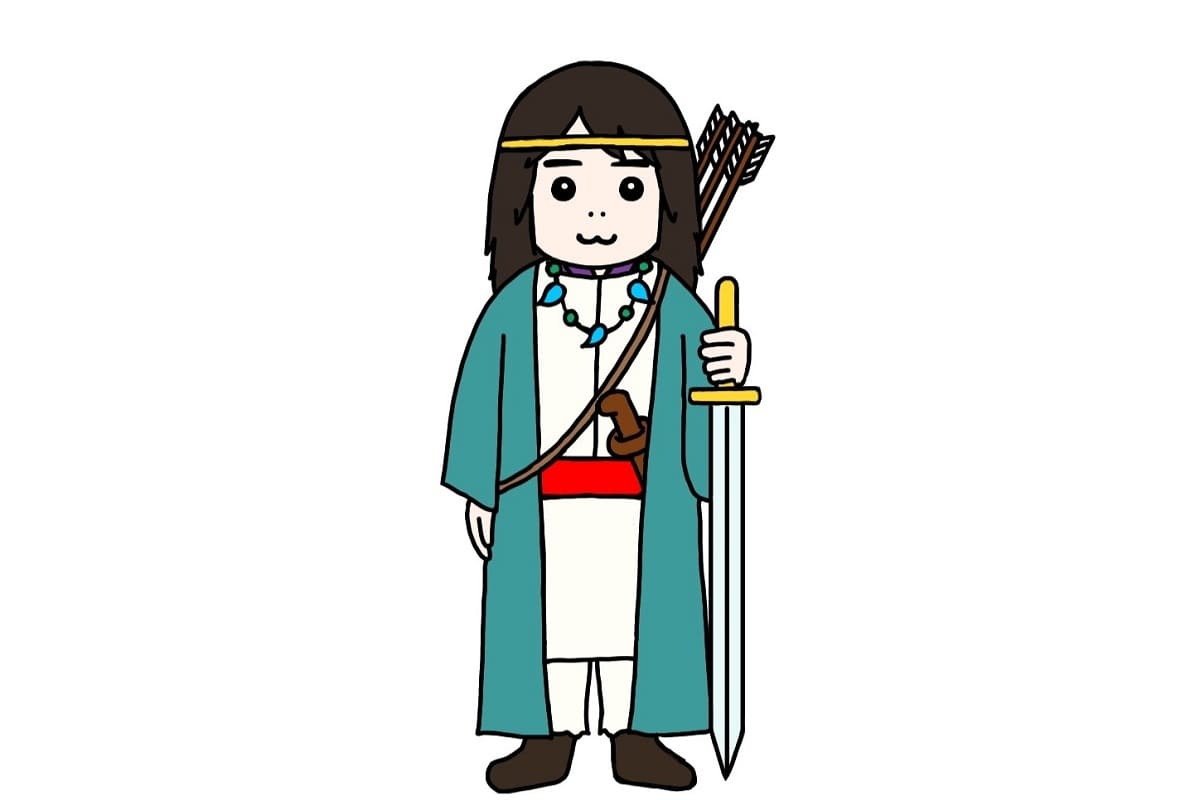
Takemikazuchi (建御雷神) is one of the most important gods in Japanese mythology and Shinto.
He is best known as the god of thunder, swords, martial strength, and victory. Throughout Japanese mythology, he appears as a fearless warrior who protects order, defeats powerful enemies, and carries out the will of the heavenly gods.
Unlike many mythological heroes who rely on magical powers alone, Takemikazuchi often succeeds through courage, wisdom, and unwavering determination. Because of these qualities, he has long been admired by warriors, martial artists, and people praying for success in competitions, work, or important life events.
Today, he is still worshipped at shrines across Japan, especially at Kashima Shrine in Ibaraki Prefecture, where countless visitors come to pray for strength, protection, and victory.
What Does the Name “Takemikazuchi” Mean?
Japanese deity names often carry symbolic meanings, and Takemikazuchi is no exception.
Although there are different interpretations, his name can be understood roughly as:
- Take (建 / 武) – brave, strong, or warrior-like
- Mika (御雷) – honorable thunder
- Zuchi (神) – an ancient word related to deity or divine spirit
Together, the name reflects a powerful divine being closely associated with thunder, strength, and martial power.
Thunder held a special place in ancient Japan. Long before modern science explained lightning, people viewed it as an awe-inspiring force of nature. Because of this, gods connected with thunder were respected not only for their incredible power but also for their role in maintaining order in the natural world.
Takemikazuchi perfectly represents this balance of overwhelming strength and divine authority.
Takemikazuchi in Japanese Mythology
Takemikazuchi appears in both the Kojiki and the Nihon Shoki, Japan’s oldest written records of mythology and history.
According to these ancient texts, he was born from the blood of the fire god Kagutsuchi after the creator god Izanagi struck Kagutsuchi with his sword.

The story of why Izanagi struck down Kagutsuchi is incredible, too! If you’re curious, be sure to check out my articles about Izanagi and Izanami below.

His extraordinary birth immediately set him apart from other gods. Rather than beginning as a child, Takemikazuchi entered mythology as a powerful divine warrior closely connected with swords and battle.
He later became one of the central figures in the famous Kuniyuzuri, or “Transfer of the Land,” one of the most important stories in Japanese mythology.
The heavenly gods wished to bring the land of Japan under their rule, but it was already governed by earthly deities. Takemikazuchi was chosen as their messenger because of his unmatched strength and unwavering resolve.
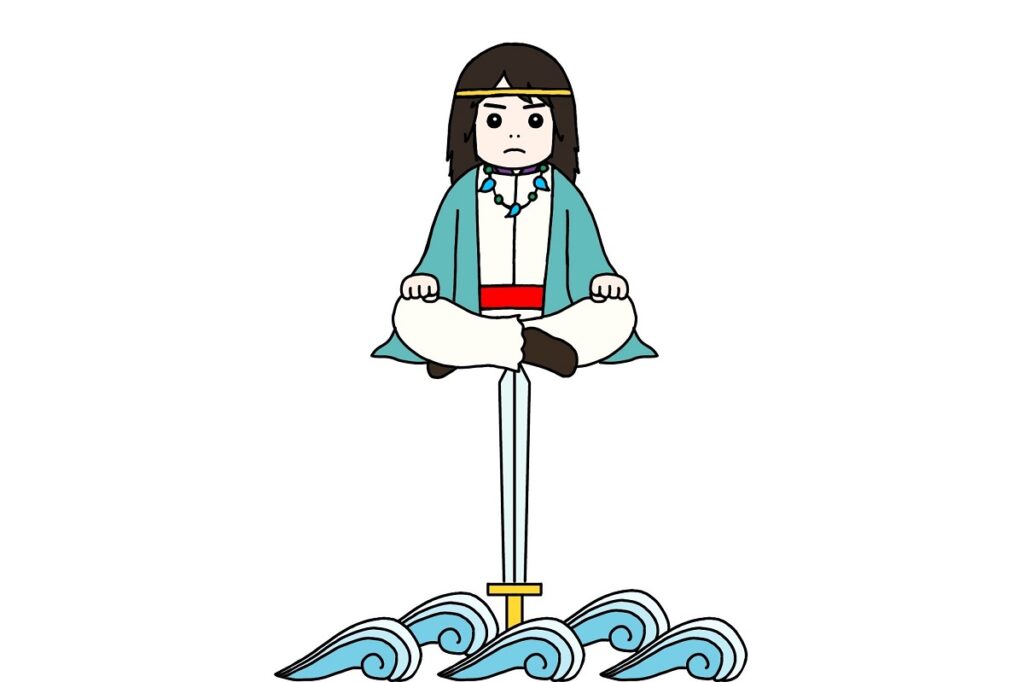
When he arrived, he planted his sword upside down into the ground and calmly sat upon its blade while negotiating with the earthly gods. This unforgettable image immediately demonstrated his confidence and divine authority.
Most of the earthly gods accepted the decision peacefully. However, one powerful deity refused…

Negotiating while sitting on the tip of a sword? Now that’s an unforgettable entrance!
The Legendary Contest with Takeminakata
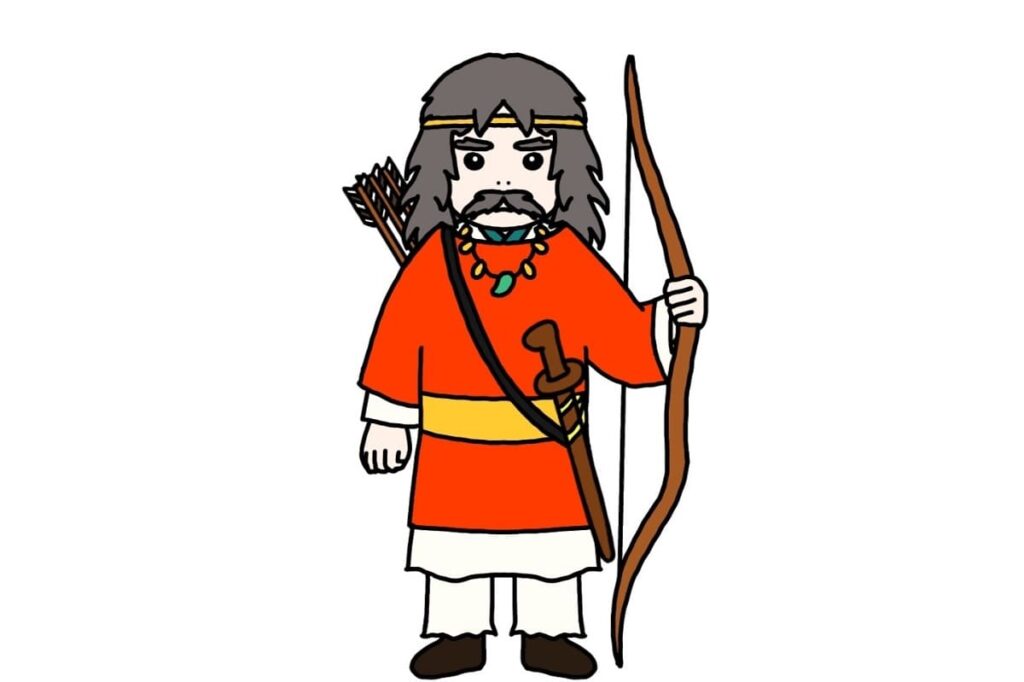
Although many of the earthly gods accepted the heavenly gods’ decision, one powerful deity refused to surrender.
His name was Takeminakata, a mighty god known for his incredible physical strength.
Rather than starting a war, Takeminakata challenged Takemikazuchi to a contest of strength.
According to the legend, Takeminakata grabbed Takemikazuchi’s arm, hoping to overpower him.
But something astonishing happened.
Takemikazuchi calmly transformed his arm into solid ice, then into the blade of a mighty sword.
Unable to hold it, Takeminakata immediately lost his advantage.
Takemikazuchi then seized Takeminakata, threw him to the ground, and defeated him with overwhelming ease.
After his defeat, Takeminakata agreed to withdraw to the land of Suwa, where he would later be worshipped as the principal deity of Suwa Taisha, one of Japan’s oldest and most important shrines.
Rather than simply telling the story of one god defeating another, this legend symbolizes the transfer of authority from the earthly gods to the heavenly gods, marking an important turning point in Japanese mythology.
Takemikazuchi and Onamazu
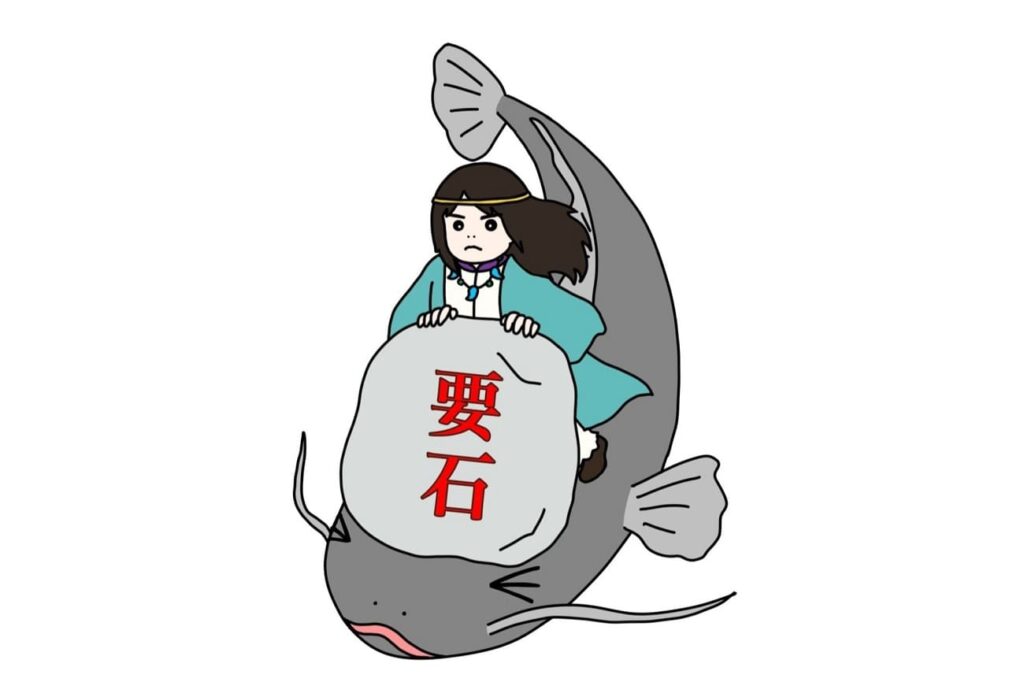
Outside of mythology, Takemikazuchi is perhaps best known for another famous legend.

When people think of Takemikazuchi, the legend of Onamazu is probably the first story that comes to mind.
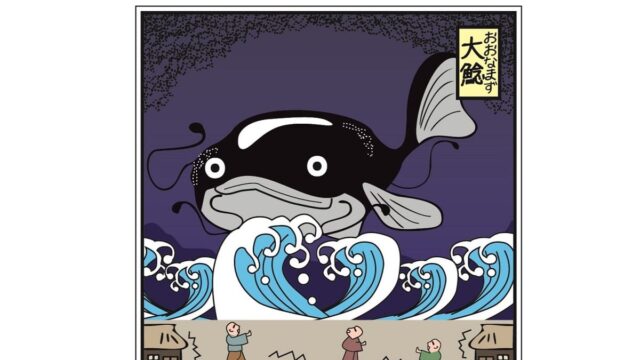
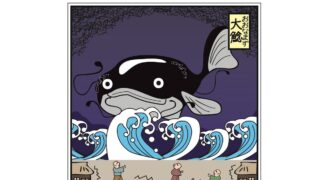
According to Japanese folklore, a gigantic catfish called Onamazu lives deep beneath the islands of Japan.
Whenever the giant catfish moves violently, earthquakes occur.
To prevent this from happening, Takemikazuchi uses a sacred stone called the Kaname-ishi to pin the enormous catfish beneath the earth.
The Kaname-ishi can still be seen today at Kashima Shrine, although most of the stone is believed to remain buried underground.
For centuries, many people visited the shrine to pray for protection from earthquakes.
Today, the legend remains one of Japan’s most fascinating examples of how mythology and natural disasters became closely connected in people’s imagination.
If you are interested in Onamazu, please check the article below as well.
Why Is Kashima Shrine So Important?
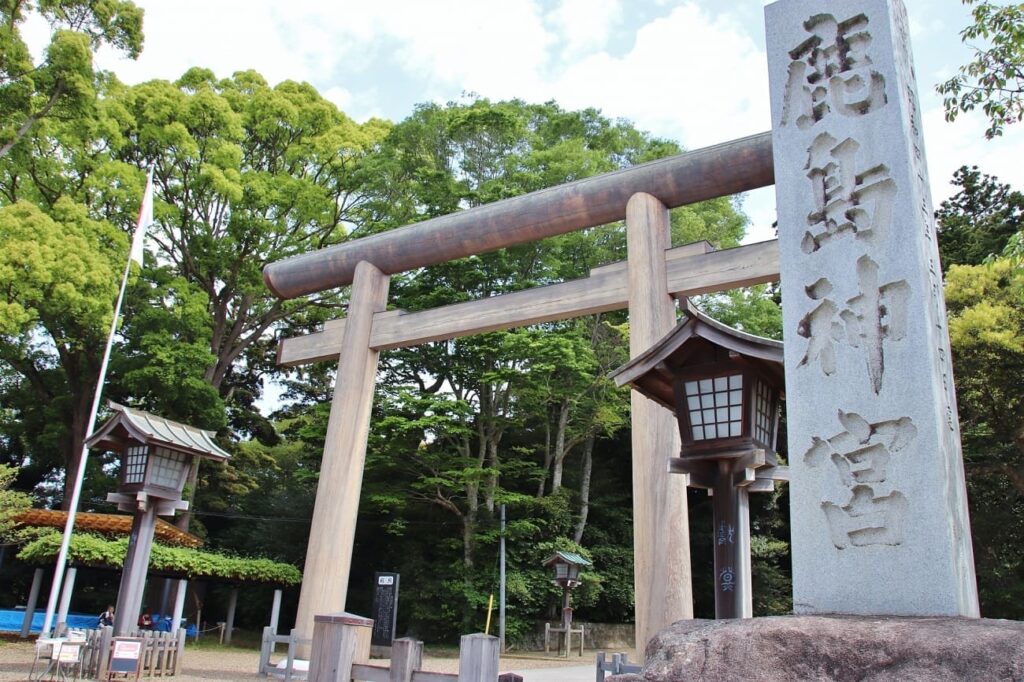
Takemikazuchi is enshrined at Kashima Shrine in Ibaraki Prefecture, one of Japan’s oldest and most respected Shinto shrines.
Founded more than 2,600 years ago according to tradition, the shrine has long been associated with military success, courage, and protection.
Throughout history, many famous samurai are said to have visited Kashima Shrine before important battles to pray for victory.
Even today, visitors come to pray for success in sports, martial arts, examinations, business, and other personal goals.
The shrine is also home to the legendary Kaname-ishi, making it an important destination for anyone interested in Japanese mythology and folklore.

Kashima Shrine is definitely on my travel bucket list!
Takemikazuchi in Modern Games and Popular Culture
Although Takemikazuchi first appeared in myths written over a thousand years ago, his influence continues today.
He appears in numerous video games, anime, manga, and other works inspired by Japanese mythology.
Many players first encounter Takemikazuchi while exploring fantasy worlds based on ancient Japan.
His image as a fearless warrior and powerful thunder god makes him a popular character in modern entertainment.
For many international fans, games become the first step toward discovering the rich world of Japanese mythology.

Takemikazuchi also appears in popular anime such as Sound of the Sky and Is It Wrong to Try to Pick Up Girls in a Dungeon? You’ll also find him in games like Shin Megami Tensei, Idle Girls, Digimon, and many others.
Why Do People Still Worship Takemikazuchi Today?
Unlike many mythological figures who exist only in ancient stories, Takemikazuchi continues to be worshipped throughout Japan.
People pray to him for:
- Victory in competitions
- Success in martial arts
- Protection during travel
- Good fortune in business
- Courage to overcome life’s challenges
His enduring popularity reflects an important aspect of Japanese culture.
Rather than viewing mythology as something belonging only to the distant past, many people continue to see these ancient deities as part of everyday life.
Frequently Asked Questions
- QWho is Takemikazuchi?
- A
Takemikazuchi is one of the most important gods in Japanese mythology. He is worshipped as the god of thunder, swords, martial strength, and victory.
- QWhat is Takemikazuchi famous for?
- A
He is famous for helping the heavenly gods during the Kuniyuzuri (Transfer of the Land), defeating Takeminakata, and restraining the giant catfish Onamazu beneath Japan.
- QCan you visit Takemikazuchi’s shrine?
- A
Yes. The most famous shrine dedicated to Takemikazuchi is Kashima Shrine in Ibaraki Prefecture.
- QIs Takemikazuchi still worshipped today?
- A
Yes. Many people continue to pray to him for victory, courage, protection, and success.
Final Thoughts about Takemikazuchi
Takemikazuchi is far more than a character from ancient mythology.
He is a symbol of courage, strength, and determination whose influence can still be felt throughout Japan today.
From the pages of the Kojiki and Nihon Shoki to the sacred grounds of Kashima Shrine, from the legend of Onamazu to modern video games, his story has continued to inspire people for centuries.
By learning about Takemikazuchi, we discover more than just one powerful god.
We also gain a deeper understanding of how Japanese mythology continues to shape the country’s culture, traditions, and way of thinking.
Perhaps that’s why these ancient stories remain just as fascinating today as they were over a thousand years ago.
Perhaps that is why, after centuries of cultural change, the King of Hell continues to watch over the Japanese imagination.

Oh By the way! If you are interested in Yokai or in Japanese Culture and you are a gamer, you may love these games!
Let’s play!
Yes! I can’t wait to play these games!
Let’s Play!
Comments